Caregivers & Home Health Aides
Caregiver and home health aide jobs
Measured from 22,519 distinct advertised rates, across 2782 employers. 15,159 of the 50,671 open jobs here state no hourly rate; 187 advertise only a maximum ("up to $X/hr"), which is excluded.
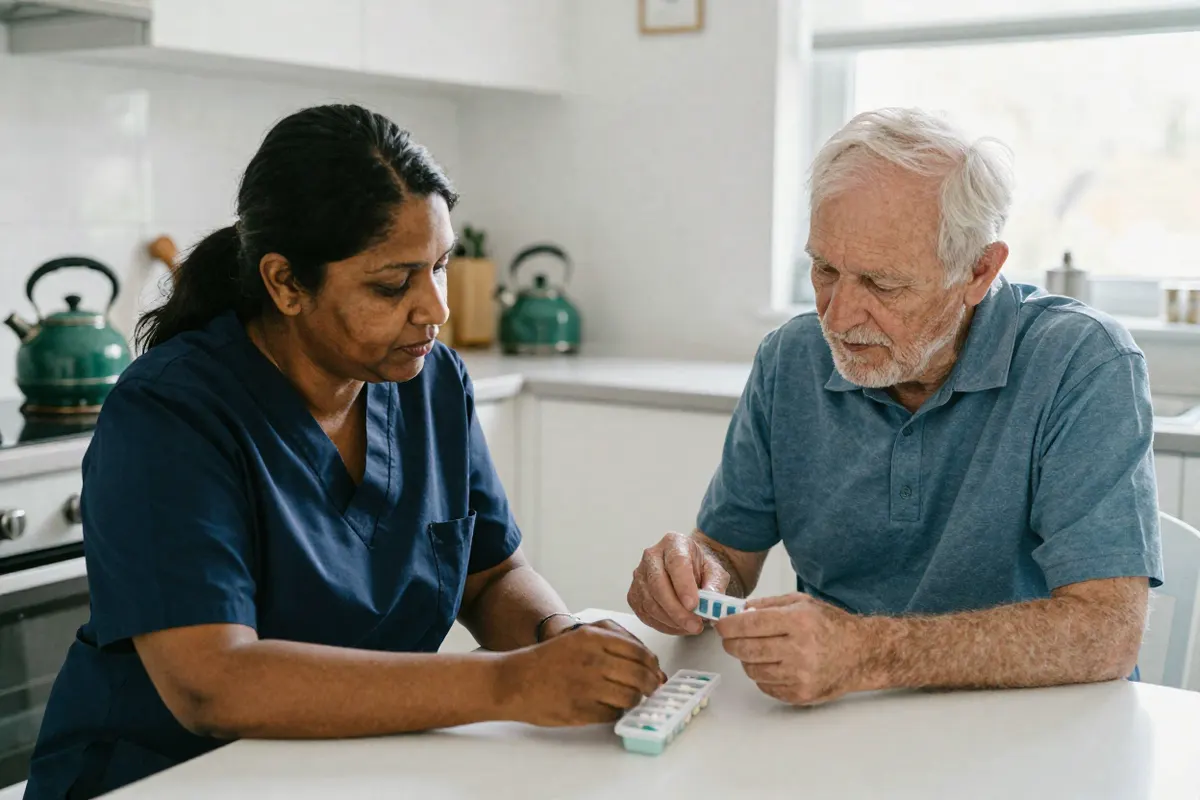
Home health aides, personal care aides, caregivers and direct support professionals help older adults and people with disabilities live safely: personal care, meals, mobility, medication reminders and companionship. Many agencies hire people without experience and train them, and hours are often flexible.
Open caregivers jobs
Updated 20 Nov 2026, 06:03 UTCCaregiver in Frederick City (opens the job details)
SYNERGY HomeCare (Frederick, MD) · Frederick, MD · 3w agoDetails
$19/hr- $9.00/hr

Personal Care Aide (PCA or HHA) (opens the job details)
Broadway Home Care · Orchard Park, NY · 3w agoDetails
$18.65/hr $18.65–$19.50/hr

DCW/ Direct Care Workers (opens the job details)
BAYADA Home Health Care · Canton, NC 28716 · 3w agoDetails
$16.50/hr
 This job may have closed since. Check the employer's posting.
AM Caregiver (opens the job details)
PACS Group · Assisted Living on Jensen · 1mo agoDetails
$19.00–$25.00/hrThis job may have closed since. Check the employer's posting.
Direct Support Professional (N. Coast & Willamette Valley) (opens the job details)
Premier Community Supports · Eugene, OR · 1mo agoDetails
$24–$26/hr $19.00/hr

Resident Aide (opens the job details)
Tutera Senior Living & Health Care · Deatsville, AL · 1mo agoDetails
- $16.00–$18.50/hr
Selected agencies hiring now
All agencies and apps →
Cross Country HealthcareTravel nursing agency
A national staffing company placing travel nurses, allied professionals, therapists and locum tenens providers, with local and per diem work too.
Places: Nurses, NPs & PAs, Doctors, CNAs & PCTs

White Glove PlacementTravel nursing agency
Places travel, local, per diem and locum tenens clinicians across nursing, allied health, behavioral health and physician roles.
Places: Nurses, NPs & PAs, Doctors, CNAs & PCTs
These agencies and apps pay CareJobs.Now a referral fee when someone we introduce is placed or signs up. It costs you nothing and never changes your pay. Hospital and clinic jobs below keep their own order.
Caregivers alerts
Caregivers: new openings every week
Every week we gather the newest Caregivers openings from the hospitals, clinics and care employers we follow, straight from their careers sites. Free, stop anytime.
Only job openings in your inbox. Leave anytime with one click.
In short
Caregivers & Home Health Aides. Home health aides, personal care aides, caregivers and direct support professionals help older adults and people with disabilities live safely: personal care, meals, mobility, medication reminders and companionship. Open jobs that post a rate typically pay $16–$25/hr, with a live median of $18/hr. 3,773 employers are hiring right now, including Sevita, Senior Helpers and Amada Senior Care NorthShore.
What the job is
- Where you work
- Clients' homes, assisted living, group homes and hospice
- What you need
- Training rules vary by state; aides at Medicare-certified home health agencies need at least 75 hours of training
- A typical moment
- Visit three clients a day to help with bathing, meals and medication reminders.
Home health and personal care aide median hourly wage
BLS OEWS, May 2025 · as of 2026-10-13
Projected job growth over ten years
BLS Employment Projections, 2025 to 2035 · as of 2026-10-13
Openings per year, projected
BLS Employment Projections, 2025 to 2035 · as of 2026-10-13
Direct care workers in or near poverty
PHI, Key Facts & FAQ · as of 2026-10-13
Who is hiring caregivers









Show every employer hiring
- Griswold Home Care437 open · $16–$25/hr
- Home Helpers Home Care411 open · $15–$20/hr
- Executive Home Care362 open · $18–$25/hr
- Stand Out Home Care357 open · $16–$18/hr
- Gardenview Home Care317 open · $16–$19/hr
- Kindly Direct Care305 open · $19–$25/hr
- Family Resource Home Care274 open · $20–$25/hr
- Guardian Angel Senior Services262 open · $20–$25/hr
- Addus HomeCare260 open · $12–$20/hr
- It'S Your Home Care248 open · $12–$15/hr
- Services for the Underserved243 open · $19–$20/hr
- RHA Health Services241 open · $15–$20/hr
- Caring Senior Service226 open · $14–$20/hr
- Right at Home Northeast & Central Nebraska222 open · $16–$25/hr
- The Lakes Home Care222 open · $15/hr
- Preferred Care at Home220 open · $17–$20/hr
- YAI215 open · $17–$20/hr
- TLC Care Services204 open · $18–$20/hr
- Elara Caring202 open · $15–$20/hr
- Sanzie HealthCare Services194 open · $12–$14/hr
- Helping Hearts USA188 open · $18–$25/hr
- Flat Irons Flex Care182 open · $18–$19/hr
- Community Options181 open · $16–$19/hr
- Trilogy Health Services173 open · $15–$20/hr
- Oak Hill168 open · $20/hr
- Atria Senior Living167 open · $19–$25/hr
- BrightStar Care Franchise Network165 open · $16–$25/hr
- Lifesteps163 open · $16–$19/hr
- At Peace Health Care Agency161 open · $15–$20/hr
- S & S Home Health Care159 open
- Abound Health152 open · $16–$35/hr
- Nurse Next Door San Mateo152 open · $20–$25/hr
- Modani Care150 open
- CommuniCare Health Services147 open · $14–$19/hr
- Action Behavior Centers144 open
- Dungarvin144 open · $17–$25/hr
- Family Pillars Homecare142 open · $16–$17/hr
- PACS Group142 open · $18–$25/hr
- AFNB Home Care141 open · $10–$14/hr
- StoryPoint140 open · $16–$20/hr
- AHRC Nassau139 open · $18–$20/hr
- Maxim Healthcare Services139 open · $18–$25/hr
- Redwood Family Care Network136 open · $16–$25/hr
- Right at Home Southern Oregon132 open · $20/hr
- Care Advantage130 open · $13–$18/hr
- Cambrian Homecare123 open · $19/hr
- Trinity Health123 open · $19–$25/hr
- Independent Home Health122 open · $15–$17/hr
- FirstLight Home Care121 open · $17–$25/hr
- Maya Home Care120 open · $19/hr
- The New York Foundling120 open · $20/hr
- Elite Home Care Day Centers & Transportation119 open · $14–$15/hr
- UniversaCare119 open · $18–$25/hr
- Aloma Healthcare118 open · $14–$16/hr
- Bancroft117 open · $19–$20/hr
- Homewatch CareGivers117 open · $15–$20/hr
- Devereux Advanced Behavioral Health115 open · $19–$25/hr
- Golden Years In Home Senior Care110 open · $19–$20/hr
- Associated Home Care109 open · $20–$25/hr
- Phoenix Home Care and Hospice108 open · $16–$20/hr
- Safe Life Private Duty Home Care107 open · $18–$20/hr
- Almost Family106 open · $20–$25/hr
- Venture Community Services105 open · $18–$19/hr
- Advocates104 open · $18–$19/hr
- One You Love Homecare103 open · $16–$20/hr
- AmeriCare Plus101 open · $15–$17/hr
- Health Services100 open · $14–$19/hr
- LCS (Life Care Services)98 open · $17–$25/hr
- Personal Care Services MidSouth98 open · $14–$25/hr
- Comfort Keepers96 open · $13–$16/hr
- Live Well Home Care96 open · $20–$25/hr
- ASG Home Care95 open · $20–$25/hr
- Integral Senior Living94 open
- MBK Senior Living92 open · $18–$20/hr
- Huntsville Hospital Health System90 open
- Home Health Services of Virginia89 open · $16–$25/hr
- Visiting Angels Greater Philadelphia88 open · $16–$20/hr
- Right at Home Southeast San Antonio87 open · $12–$15/hr
- Benedictine85 open · $20–$25/hr
- Senior Lifestyle84 open · $17–$20/hr
- The Verland Foundation84 open · $20/hr
- UnitedHealth Group84 open · $16–$25/hr
- Fairview Health Services83 open · $25–$30/hr
- Harmony Senior Services83 open · $17–$20/hr
- Benchmark Senior Living79 open · $19–$25/hr
- Affirmed Home Care77 open · $20/hr
- Right at Home Greater Montgomery County77 open · $16–$19/hr
- Royal Community Support77 open · $25–$30/hr
- People Incorporated76 open · $20/hr
- PurposeCare74 open · $19/hr
- Cheer Home Care73 open · $20–$25/hr
- Genesis HealthCare72 open · $16–$20/hr
- Because We Care71 open · $12–$15/hr
- Quality Living Home Care71 open · $14–$16/hr
- Oakmont Senior Living70 open · $18–$20/hr
- Family First Care69 open · $12–$16/hr
- Caregiver, Inc.67 open · $11–$16/hr
- Right at Home Greater Jax67 open · $15–$20/hr
- LakeHouse Senior Living66 open
- Saber Health Group66 open · $15–$20/hr
- Seniors Prefer Homecare66 open · $11–$12/hr
- Eagle Home Care65 open · $19–$20/hr
- Serenity NJ65 open · $25/hr
- SYNERGY HomeCare64 open · $17–$20/hr
- American House Senior Living63 open · $17–$18/hr
- Compassus63 open · $20–$30/hr
- Discovery Senior Living63 open
- CareSphere61 open · $17–$20/hr
- Caring for Others61 open · $20–$25/hr
- Richcroft61 open · $20–$25/hr
- Silverado61 open · $19–$25/hr
- CareDiem Home Care60 open
- TerraBella Senior Living60 open
- Beyond Home Health Care59 open · $20–$25/hr
- C & C Home Care59 open · $16–$17/hr
- Keystone Human Services59 open · $20–$25/hr
- Monarch59 open
- Orion Associates58 open · $20–$25/hr
- Visiting Angels58 open · $15–$20/hr
- AbleLight57 open · $20–$25/hr
- Cedarhurst56 open · $17–$20/hr
- Elite Healthcare Consultants56 open · $19–$20/hr
- Professional Care Match54 open · $20–$30/hr
- Seniors Helping Seniors Merrimack Valley53 open · $20/hr
- Aegis Living52 open · $20–$25/hr
- Seniors Helping Seniors Ozarks52 open · $15–$16/hr
- Angels Care Home Health51 open
- BrightCare HomeCare51 open · $13–$15/hr
- Companions and Homemakers51 open · $19–$20/hr
- Pinnacle Senior Living51 open
- Elwyn50 open · $20–$25/hr
- Seniors Helping Seniors Lanier50 open · $14–$18/hr
- Avid Health at Home Illinois49 open · $18–$20/hr
- Mind & Mobility49 open
- Valley Home Care49 open · $13–$14/hr
- Care Options for Kids48 open · $16–$19/hr
- DON Services48 open · $14/hr
- Mosaic48 open · $15–$20/hr
- Ocean Healthcare48 open · $20/hr
- Allegro Senior Living47 open · $17–$20/hr
- CareMaxx47 open
- Right at Home Central New Jersey47 open · $19–$20/hr
- Guardian Light Family Services46 open · $20/hr
- CorsoCare45 open · $17–$20/hr
- Covenant Case Management Services45 open · $16–$19/hr
- Home Matters of Greater Boston West45 open · $20/hr
- Sanford Health45 open · $18–$25/hr
- Charter Senior Living44 open · $16–$20/hr
- Always Compassionate Home Care43 open · $20–$25/hr
- Humana43 open
- Right at Home El Dorado Hills43 open · $20/hr
- Right at Home Rhome Texas43 open
- Family First Home Companions Long Island NY42 open · $20/hr
- Kalix42 open
- Right At Home Indianapolis West42 open · $16–$17/hr
- Cogir Management, USA41 open · $20–$25/hr
- North Suffolk Community Services41 open · $20/hr
- Presbyterian Homes & Services41 open · $20–$25/hr
- Safe and Sound Home Care41 open
- Team Select Home Care41 open · $13–$18/hr
- Visiting Angels - Auburn41 open · $20/hr
- CareOne40 open · $18–$25/hr
- Clarvida40 open · $16–$19/hr
- Right at Home Cleveland West40 open · $16–$18/hr
- Braverhood39 open · $19–$20/hr
- Cornerstone Caregiving39 open · $20–$40/hr
- Elite Home Health Care39 open · $19–$20/hr
- Eminence Home Care39 open · $18–$20/hr
- Marquis Home and Health Care39 open
- Spectrum Retirement Communities39 open · $17–$20/hr
- Life Care Centers of America38 open
- Maximum Care38 open
- Phoenix Senior Living38 open · $14–$17/hr
- Right at Home Montgomery38 open · $14–$15/hr
- CareRing Health37 open
- Right at Home Midlothian, TX37 open · $14–$16/hr
- Visiting Angels - Carlisle, PA37 open · $16–$18/hr
- Care Connect at Home36 open · $18–$30/hr
- Great Lakes Management36 open · $20–$25/hr
- Home Care Assistance of Dallas36 open
- Home Instead - We Care Senior Care36 open · $15–$20/hr
- The Goodman Group36 open · $17–$25/hr
- Allcare Homecare35 open · $20–$25/hr
- BrightSpring Health Services35 open · $17–$20/hr
- Brightview Senior Living35 open · $20–$25/hr
- Caresense Home Health35 open · $13–$18/hr
- Journey Nursing Services35 open · $20–$25/hr
- Premier Community Supports35 open · $25/hr
- Right at Home South Shore Long Island35 open · $20/hr
- Senior LIFE35 open · $20–$25/hr
- Bridge Senior Living34 open
- European Service at Home34 open · $20/hr
- Pacifica Senior Living34 open
- Attend Home Care33 open
- AW Holdings33 open · $16–$25/hr
- Comfort Keepers - Gulfport, MS33 open · $10–$12/hr
- CommonSpirit Health33 open · $18–$25/hr
- Epic Healthcare33 open · $18–$20/hr
- Commonwealth Senior Living32 open · $16–$20/hr
- Home Matters Caregiving of Pittsburgh/Philadelphia/Cleveland32 open · $16–$18/hr
- Mainstream Nonprofit Solutions32 open · $15–$20/hr
- Right at Home Boston Northwest32 open · $19–$20/hr
- SYNERGY HomeCare (Bloomington, IL)32 open · $18–$20/hr
- Synergy Senior Management32 open · $16–$20/hr
- UCP Central Pa32 open · $18–$20/hr
- Villas of Holly Brook32 open · $18–$20/hr
- Your Home Assistant32 open · $19–$20/hr
- Center for Disability Services31 open · $19–$25/hr
- Cooperative Home Care31 open · $16–$17/hr
- Jaybird Senior Living31 open · $17–$20/hr
- Kisco Senior Living31 open · $18–$25/hr
- Right at Home Peninsula31 open · $20–$35/hr
- Suite Living Senior Care31 open · $20–$25/hr
- Touchmark31 open · $19–$25/hr
- Unicare Home Care31 open · $20/hr
- Wellsential Health31 open
- WVU Medicine31 open
- A Place At Home West Chester30 open · $16–$17/hr
- Ameriwell Care30 open · $25–$30/hr
- Arvum Senior Living30 open
- Aveanna Healthcare30 open · $15–$25/hr
- Caring Places Management30 open · $20–$25/hr
- Crane Home Care30 open · $20/hr
- Encore Senior Living30 open · $19–$20/hr
- Familiar Roads Home Healthcare Agency30 open · $14–$16/hr
- Family and Friends Homecare30 open · $19–$20/hr
- Golden Heart Senior Care30 open · $18–$20/hr
- Home Care Placement30 open · $20–$25/hr
- Right at Home Fremont, CA30 open · $20–$25/hr
- Southern Companions30 open · $15–$16/hr
- The Center for Family Support30 open · $19–$20/hr
- Chrysalis29 open · $16–$18/hr
- Etairos Health29 open · $16–$17/hr
- Lutheran SeniorLife29 open · $16–$18/hr
- Qualicare KC Home Care29 open · $17–$18/hr
- Therapeutic Alternatives29 open
- Charles Lea Center28 open · $18/hr
- Elderwood28 open · $17–$20/hr
- HomeCentris28 open · $16–$18/hr
- Integral Care Home Care28 open · $17–$18/hr
- Right at Home Westchester28 open · $20/hr
- Vinfen28 open · $20–$25/hr
- VitalCaring28 open · $14–$17/hr
- B'zoe Care27 open · $25/hr
- Comfort Keepers of North Georgia27 open · $18–$25/hr
- Community27 open · $19–$20/hr
- Eden Health27 open
- Hartford HealthCare27 open
- Mt Olivet Rolling Acres27 open · $18–$20/hr
- Primrose Retirement Communities27 open
- Seniors Helping Seniors Lorain27 open · $17/hr
- Wall Residences27 open · $15–$20/hr
- ADAPT of Hudson Valley26 open · $18–$20/hr
- Alpine Home Care26 open · $16–$17/hr
- Amaray Care26 open · $18–$20/hr
- Clementine Home Care26 open · $20/hr
- Embark Care26 open · $14–$17/hr
- Family Tree Care Provider26 open · $17–$20/hr
- Frontida26 open · $20–$25/hr
- Giving Home Health Care26 open · $17–$20/hr
- Passavant Memorial Homes26 open · $20–$25/hr
- Peregrine Senior Living26 open · $16–$19/hr
- Quality Home Care: Michigan Private Duty Aides26 open
- Supported Living Group26 open · $18/hr
- United Energy Workers Healthcare26 open · $16–$20/hr
- Care 365 Homecare25 open
- Clearwater Living25 open · $20–$25/hr
- Columbia Care Services25 open · $20–$25/hr
- Encompass Care25 open
- Envision Unlimited25 open · $25/hr
- Help Usa25 open
- Home Matters Caregiving North Atlanta25 open · $18–$20/hr
- Korean Women's Association/KWA25 open · $25/hr
- Leisure Living25 open · $16–$18/hr
- Masonicare25 open · $17–$25/hr
- Omatochi25 open · $20–$25/hr
- Right at Home Anne Arundel25 open · $18–$20/hr
- A Special Touch In Home Care24 open · $14–$16/hr
- ADAPT Community Network24 open · $20–$25/hr
- Care and Help Home Care24 open
- Comfort Keepers of Anoka, MN24 open · $20–$25/hr
- Gaddiel Home Care Services24 open
- Interim HealthCare of Bay Area24 open · $20–$25/hr
- Monarch Communities24 open · $20–$25/hr
- New Hope In-Home Care24 open · $14–$15/hr
- NuChoice Health Partners24 open · $14–$15/hr
- Right at Home South Shore24 open · $18–$20/hr
- SYNERGY HomeCare (Glendale, CA)24 open · $25–$30/hr
- Thrive CSS24 open · $20–$25/hr
- Thrive USA Home Care24 open · $20–$25/hr
- University Home Care24 open · $16–$19/hr
- A Place at Home Yorba Linda23 open · $18–$20/hr
- Access: Supports for Living23 open · $20/hr
- Anchor Health23 open · $25–$30/hr
- At Home Care Missouri23 open · $20/hr
- Cascadia Senior Living23 open
- CiminoCare23 open · $17–$20/hr
- Erickson Senior Living23 open · $18–$25/hr
- Home Matters Caregiving23 open · $16–$19/hr
- Kairos Home Care Services23 open · $15/hr
- Nonotuck Resource Associates23 open
- Right at Home Main Line23 open · $16–$17/hr
- Right at Home Prince George's County23 open
- SYNERGY HomeCare (Brunswick, OH)23 open · $16–$18/hr
- AbilityFirst22 open · $20/hr
- About You Sitting Service22 open · $14/hr
- America's Home Health Services22 open · $14–$15/hr
- Cassia22 open · $19–$25/hr
- Community Access Services22 open · $20–$25/hr
- Dentserv Dental Services22 open · $19–$25/hr
- Enhabit Home Health & Hospice22 open
- Friendly Faces Senior Care22 open · $14–$17/hr
- Haven Home Care22 open
- Hope Haven22 open
- Right at Home Birmingham22 open · $14–$15/hr
- Right at Home Central Michigan22 open · $16–$19/hr
- Rochester Regional Health22 open · $19–$20/hr
- SYNERGY HomeCare (Holbrook, MA)22 open · $20–$25/hr
- The Senior Company22 open · $20/hr
- UCP of South Carolina22 open · $17–$18/hr
- AbaCares Services21 open · $14–$15/hr
- Alay Home Care21 open · $25–$35/hr
- Arc of Opportunity21 open · $20/hr
- Broadway Home Care21 open · $19/hr
- Castle Rock Home Care21 open · $20–$25/hr
- Imagine The Possibilities21 open · $17–$19/hr
- In Good Company21 open · $20–$25/hr
- J & L Innovations21 open · $12–$14/hr
- New Avenues to Independence21 open · $16–$18/hr
- Renewal Memory Partners21 open · $20–$25/hr
- Right at Home Cullman21 open · $14–$15/hr
- Sycamore Rehabilitation21 open
- Talem Home Care21 open · $16–$20/hr
- UnityPoint Health21 open
- VNS Health21 open · $20/hr
- Alora Supports20 open · $20–$25/hr
- Always Best Care of Rock Hill20 open · $16–$17/hr
- At Home Care Partners20 open · $20/hr
- Charis Hearts20 open · $16–$17/hr
- Commonwise Home Care20 open · $18–$25/hr
- Easterseals Southern California20 open · $20/hr
- emmUcare Home Health of Clinton County, PA20 open · $14–$15/hr
- HomeWell Care Services of New Jersey20 open · $19–$20/hr
- InReach20 open · $18–$20/hr
- Preventive Measures20 open · $12–$17/hr
- Right at Home Seymour20 open · $17–$19/hr
- SYNERGY HomeCare (Alamo, CA)20 open
- SYNERGY HomeCare (Provo, UT)20 open · $16–$18/hr
- The Wealshire20 open · $20/hr
- United Counseling Service of Bennington County20 open · $20–$25/hr
- Vertical Home Health20 open
- 24 Hour Home Care19 open · $18–$20/hr
- Altra Homecare of North Indy19 open
- American Baptist Homes of the Midwest19 open · $17–$19/hr
- Cambridge Caregivers19 open · $15–$20/hr
- Ciel Senior Living19 open · $18–$20/hr
- Ciena Healthcare19 open
- CMK Home Care19 open · $20–$25/hr
- Families Choice Home Care19 open · $17–$18/hr
- Hands of Heartland19 open · $16–$20/hr
- HouseWorks Home Care19 open · $20/hr
- LIFE, Inc.19 open · $18/hr
- Right at Home Westside19 open · $18–$20/hr
- Affinity Hospice Management18 open
- Always Best Care of Greater Bristol18 open · $18/hr
- Better Living SL18 open · $16–$20/hr
- Bristol Adult Resource Center18 open · $19–$20/hr
- Glen Park Senior Living18 open · $18–$20/hr
- Hearts and Hands of Care18 open
- Legacy Concierge18 open · $25/hr
- Ohel Children's Home and Family Services18 open · $18–$25/hr
- Ohio Living18 open
- Open Arms & FCS18 open · $18/hr
- Reliance Home Health Caregivers18 open · $18–$20/hr
- Rever Grand18 open · $25/hr
- Right at Home Chattanooga18 open · $15–$18/hr
- Right at Home South Central Michigan18 open · $14–$16/hr
- Rockaway Home Care18 open · $20/hr
- Seniors Helping Seniors KC Metro South18 open · $18/hr
- Southern Arizona Seniors Helping Seniors18 open · $18–$20/hr
- SYNERGY HomeCare (Houston, TX)18 open · $12–$14/hr
- Transforming Age18 open · $20–$30/hr
- Tucson Residence Foundation18 open · $16/hr
- Tutera Senior Living & Health Care18 open · $17–$19/hr
- Vista Prairie Communities18 open · $20/hr
- Amada Senior Care Westfield Morristown17 open · $19–$20/hr
- Brightli17 open · $19–$20/hr
- Care at Home - OR17 open · $20/hr
- Catholic Charities of the Diocese of Rochester17 open · $19–$20/hr
- Concordia Lutheran Ministries17 open
- DABS17 open · $19–$25/hr
- Guardian Angel Home Care17 open
- Hillside Children's Center17 open
- Interim HealthCare - Knaus Organization17 open · $15–$17/hr
- Living Resources17 open · $19–$20/hr
- Marquis Companies17 open
- Mercy Health (Ohio and Kentucky)17 open
- Moore Center Services17 open · $20/hr
- Northeast Arc17 open · $25/hr
- Optalis Health & Rehabilitation17 open
- Otterbein SeniorLife17 open
- Right at Home Collin County17 open · $16–$18/hr
- Right at Home Lino Lakes17 open · $20/hr
- Right at Home Stafford, VA17 open
- Senior Helpers of West Houston17 open · $14–$15/hr
- Spring Oak Senior Living17 open · $15–$20/hr
- SYNERGY HomeCare (Frederick, MD)17 open · $19/hr
- TURN Community Svcs17 open · $16/hr
- Visiting Angels (Maple Valley, WA)17 open · $25/hr
- Visiting Angels of Kansas City17 open · $16–$18/hr
- Visiting Angels Utah County17 open · $20–$30/hr
- WelbeHealth17 open · $25–$35/hr
- Achieve Ny16 open · $20–$25/hr
- Alliance Home Care16 open
- Amada Senior Care - Oregon/Washington16 open · $25/hr
- Amada Texas16 open · $13–$16/hr
- apace16 open
- ArchCare16 open
- Assisted Care For Seniors16 open
- Assisted Living Services16 open · $19–$20/hr
- Cape Cod Healthcare16 open
- Cardinal Senior Care16 open · $16/hr
- Catholic Charities Family and Community Services16 open
- Centers Health Care16 open
- Complete Home Care Holdings16 open
- Danville Services16 open · $16–$20/hr
- Deluxe Home Care16 open
- Discovery At Home16 open
- Integrated Real Estate Group16 open · $15–$18/hr
- Intermountain Health16 open · $20–$25/hr
- Marquis Health Consulting Services16 open · $16–$30/hr
- No Worries Care Tacoma16 open · $25–$30/hr
- Senior Solutions16 open · $14–$16/hr
- SYNERGY HomeCare (Colts Neck, NJ)16 open · $17–$20/hr
- SYNERGY HomeCare (Hickory, NC)16 open · $18–$20/hr
- The Aspenwood Company16 open · $16–$18/hr
- Upscale Home Care16 open · $17–$20/hr
- Visiting Angels of Southern Shenandoah Valley16 open · $17/hr
- Whole Hearted Home Care16 open · $20–$25/hr
- AdvantageCare Home Health15 open · $12–$13/hr
- Amada Senior Care Monmouth15 open · $19–$20/hr
- Angels In Your Home LHCSA15 open
- CA53, SYNERGY HomeCare of Temecula15 open · $20–$25/hr
- CAMBA15 open · $19–$20/hr
- Carepoint Home Care Agency15 open · $18–$20/hr
- Danbury Senior Living15 open · $17–$20/hr
- Easter Seals TN15 open · $15/hr
- EOM Home Care15 open
- Etairos Care at Home15 open · $15–$17/hr
- FirstLight HomeCare15 open · $20–$25/hr
- Freedom Caregivers15 open · $16–$18/hr
- Homewatch Caregivers of St Cloud Minneapolis St Paul15 open · $20/hr
- Interim HealthCare - Houston, TX (Bloomer)15 open · $12–$13/hr
- Light Bearers Home Care15 open
- Right at Home Chesterfield15 open · $16/hr
- Right at Home Columbia15 open · $14–$15/hr
- Right at Home Huntsville15 open · $14–$15/hr
- Right at Home Rosenberg15 open · $14–$15/hr
- Samaritan Daytop Village15 open · $25/hr
- Sholom15 open · $20–$25/hr
- Skills of Central Pennsylvania15 open · $18–$20/hr
- SYNERGY HomeCare (Bedford, NH)15 open · $25–$35/hr
- SYNERGY HomeCare (Manassas, VA)15 open
- Visiting Angels - Milford15 open · $20/hr
- Wallick Communities15 open
- Active Day14 open
- AltaMed Health Services14 open · $25–$30/hr
- Americare14 open · $20/hr
- Arc GLOW14 open · $19/hr
- Caregiver's Home Solutions14 open
- Catalight14 open · $18–$20/hr
- Cherished Companions Home Care14 open · $17–$18/hr
- Community Services Group14 open · $17–$19/hr
- Covenant Living14 open · $18–$25/hr
- Dial-a-Nurse14 open
- Elite Home Healthcare14 open
- Extended Family Home Care14 open
- GBMC HealthCare14 open · $20–$25/hr
- Geisinger14 open
- Grow Development Disability Solutions14 open · $25/hr
- Hammer Residences14 open · $17–$18/hr
- Helping Hand Nurse14 open · $14/hr
- HomeCare Advocacy Network of Southwest Iowa14 open · $17–$18/hr
- Hope At Home Health Care14 open
- InTandem14 open · $17–$20/hr
- Needs Center14 open · $20/hr
- Progressive Directions, Inc. (PDI)14 open · $16/hr
- Right at Home Iowa City14 open · $18–$20/hr
- Seven Counties Services14 open
- SYNERGY HomeCare (Dallas, TX)14 open
- SYNERGY HomeCare (Justin, TX)14 open · $14–$15/hr
- SYNERGY HomeCare (Pasadena, CA)14 open · $20–$25/hr
- SYNERGY HomeCare (Wisconsin Rapids, WI)14 open · $16/hr
- Tribute Home Care14 open
- Visiting Angels of York County14 open · $15–$16/hr
- Western Slope in Home Care14 open · $18–$25/hr
- AEDD13 open · $14–$16/hr
- Alls Well13 open · $18–$20/hr
- Always Best Care Glenview & The North Shore13 open
- American Healthcare Management Group13 open · $16–$20/hr
- Attentive Home Care13 open · $20–$25/hr
- Benchmark Human Services-IN13 open · $16–$17/hr
- Caremate Wellness Solutions13 open · $13/hr
- Chileda Institute13 open · $19–$25/hr
- Circle of Life13 open
- Companion Care Home Care13 open
- Easterseals New Hampshire and Vermont13 open · $20–$25/hr
- Endearment Unlimited13 open · $19–$20/hr
- Halcyon Home13 open · $18–$20/hr
- Hamister Group13 open
- HCR Home Care13 open · $20–$25/hr
- Home Life13 open
- Independence Village13 open · $16–$18/hr
- Interim HealthCare of North Central Pennsylvania13 open · $15–$18/hr
- Kennedy Care13 open · $18–$20/hr
- Legacy Behavioral Health Services13 open
- Mains'l13 open · $18–$20/hr
- Marrakech13 open · $19–$20/hr
- Momentum13 open
- Nurse Next Door Fresno North13 open · $17–$18/hr
- Nurse Next Door Santa Monica13 open · $20/hr
- Powell Supportive Services13 open
- Prime Providers13 open · $19–$20/hr
- Purpose-SC13 open
- Right at Home Calabasas13 open
- Right at Home Denville13 open · $19–$20/hr
- Right at Home South Columbus Metro13 open · $16–$17/hr
- Right at Home Torrance13 open · $20/hr
- RM Management13 open · $20/hr
- Suncrest Health Services13 open · $20–$30/hr
- SYNERGY HomeCare (Chicago, IL)13 open · $19–$20/hr
- SYNERGY HomeCare (Rochester, MN)13 open
- Universal Health Services13 open · $20–$25/hr
- A Helping Hand Home Care Services12 open · $15–$16/hr
- Adelmo Family Care12 open · $15/hr
- Always Best Care Cleveland South12 open · $16–$18/hr
- Avera Health12 open · $20–$30/hr
- Barber National Institute12 open · $18/hr
- Beth Israel Lahey Health12 open · $25–$30/hr
- Brickyard Healthcare12 open
- BrightStar Care12 open · $16–$17/hr
- Care at Home - MI12 open · $19–$20/hr
- Care Partners12 open · $20–$25/hr
- Cima Senior Living12 open · $16–$19/hr
- Community Care Home Health Services - White Plains12 open · $20/hr
- Easterseals Arkansas12 open
- Franciscan Ministries12 open · $17–$20/hr
- Gallagher Home Health, Hospice, and Home Care12 open · $16–$19/hr
- Guided Steps12 open · $25–$35/hr
- Hackensack Meridian Health12 open · $19–$20/hr
- Hands at Home Care Services12 open · $20–$25/hr
- Home Care Assistance of Arlington12 open
- Hope Home Health12 open · $15–$17/hr
- Hospice of the Valley12 open
- In-Home Care Connection12 open · $20–$25/hr
- Instant Quality Home Care12 open
- Institute on Aging12 open · $25/hr
- Integrity Home Care12 open
- Interim HealthCare of Mercer12 open
- Live Star Home Care12 open · $19–$20/hr
- Mercy12 open
- North Oak Senior Living12 open
- On Lok12 open
- Preferred Care at Home of Thousand Oaks12 open · $19–$20/hr
- Right at Home Columbus12 open · $16–$18/hr
- Right at Home East Tennessee Foothills12 open · $16/hr
- Right at Home Mid Ohio Valley12 open · $15–$16/hr
- Right at Home Omaha Metro12 open · $17–$18/hr
- Sample Supports12 open · $20/hr
- Seniors Helping Seniors KC North12 open · $17–$18/hr
- Springbrook12 open · $17–$20/hr
- StoneBridge Senior Living12 open · $16–$18/hr
- SYNERGY HomeCare (Apex, NC)12 open · $14–$16/hr
- SYNERGY HomeCare (Apollo Beach, FL)12 open · $18–$20/hr
- SYNERGY HomeCare (Dardenne Prairie, MO)12 open
- SYNERGY HomeCare (Little Elm, TX)12 open · $18–$20/hr
- SYNERGY HomeCare of Macomb-Grosse Pointe12 open · $16–$18/hr
- SYNERGY HomeCare (Phoenix, AZ)12 open · $17–$18/hr
- SYNERGY HomeCare (West Des Moines, IA)12 open
- The Arc Jefferson-St. Lawrence12 open
- TriHealth12 open
- University of Utah Health12 open
- UPMC12 open · $25–$30/hr
- Visiting Angels-Maia12 open · $16–$18/hr
- Visiting Angels of Harford & Cecil Counties12 open · $18–$19/hr
- 3MS Services11 open
- A Place at Home Kirkland11 open · $25–$30/hr
- Abernathy Home Care11 open · $20–$25/hr
- Adventist Health11 open · $25–$30/hr
- Always Best Care Austin11 open · $16–$20/hr
- Always Best Care Senior Services of Pittsburgh11 open · $16–$18/hr
- Amada Senior Care Cincinnati11 open · $16–$20/hr
- Cap City Supported Living11 open · $18–$19/hr
- CarDon & Associates11 open
- CareOne Senior Care11 open · $15–$17/hr
- Christian Care11 open
- Companions Forever11 open · $17–$18/hr
- Cornerstone Caregiving. (Dallas, GA)11 open · $18–$20/hr
- Cornerstone Companies11 open · $17–$25/hr
- Empower U.11 open
- Endurance Holistic Care11 open · $20–$25/hr
- Family Relief Resources11 open · $25/hr
- Healing Hands Homecare Agency11 open
- Homewatch CareGivers of New Haven and the Shoreline11 open · $18–$20/hr
- HomeWell Care Services - Everett, WA11 open · $25/hr
- HomeWell Care Services Northern Colorado11 open · $20–$25/hr
- HomeWell Care Services of Orlando11 open · $18/hr
- Interim HealthCare of Sonoma-Marin, CA11 open · $25–$30/hr
- KenCrest11 open
- May Institute11 open · $20/hr
- Nurse Next Door (Coeur d'Alene, ID)11 open · $19–$20/hr
- One Vision11 open · $17/hr
- Out of the Box Solutions11 open · $25/hr
- Piedmont Community Services11 open
- Preferred Care at Home of South Nashville11 open · $15–$16/hr
- Right at Home Fargo11 open · $17–$18/hr
- Right at Home Franklin, TN11 open · $16–$18/hr
- Right at Home Hendersonville TN11 open · $16–$18/hr
- Right at Home Langhorne11 open · $16–$19/hr
- Right at Home - Louisville/Indiana11 open · $16–$17/hr
- Right at Home Middle Tennessee11 open · $16–$18/hr
- Right at Home Mobile11 open · $14–$16/hr
- Right at Home Montgomery County West11 open
- Right at Home Morgantown11 open · $14–$15/hr
- Seniors Helping Seniors Provo Sandy11 open · $17–$19/hr
- Shema Kolainu-Hear Our Voices11 open · $20/hr
- SYNERGY HomeCare (Allen, TX)11 open · $18–$20/hr
- SYNERGY HomeCare (Chula Vista, CA)11 open · $20–$25/hr
- SYNERGY HomeCare (Indian Harbour Beach, FL)11 open · $18–$20/hr
- SYNERGY HomeCare (Rock Hill, SC)11 open · $16–$17/hr
- The Waters11 open · $20/hr
- Towne Home Care11 open
- White River Area Agency on Aging11 open
- A Place at Home Fairfield South10 open · $18–$20/hr
- A Place at Home Philadelphia West10 open · $18–$19/hr
- Alivia Care10 open
- Allaire Health Services10 open · $16–$25/hr
- Amada Senior Care Nowthen10 open · $20/hr
- Amada Senior Care Southwest Washington10 open · $18–$20/hr
- Amanacare10 open
- AmeriCare - Silicon Valley10 open · $20–$25/hr
- Angels Among Us10 open · $17–$19/hr
- Ascend Services10 open
- Avid Health at Home10 open · $16–$17/hr
- Avid Health at Home North Carolina10 open
- Aware10 open · $20–$35/hr
- Care Advantage (Wilmington, DE)10 open · $18–$19/hr
- CareBuilders at Home - Merrimack Valley MA10 open · $20/hr
- Caring Hearts of Georgia Health10 open · $14–$15/hr
- Child & Family Focus10 open
- Cornerstone Home Care10 open · $16–$17/hr
- Desire Home Care10 open · $18–$20/hr
- DSP Connections10 open · $25–$30/hr
- Ennoble Care10 open · $20/hr
- Family Care10 open
- Fox Trail Memory Care10 open · $18–$19/hr
- Golden Care10 open · $20–$25/hr
- Goodworks Unlimited10 open · $16–$18/hr
- Griswold Home Care for Troy, Utica & Macomb10 open · $15–$17/hr
- Guthrie10 open
- Hillcrest Health & Living10 open
- Interim HealthCare - Barr Organization10 open · $18–$20/hr
- Interim HealthCare - Dubois, PA10 open
- Interim HealthCare - FL Panhandle10 open · $15–$18/hr
- Interim HealthCare of Bellevue10 open · $20–$25/hr
- Katahdin Friends10 open · $19–$20/hr
- Kentucky River Community Care10 open
- Koru Health10 open
- Lifespace Communities10 open · $18–$25/hr
- McKenney Home Care10 open · $18–$20/hr
- National Health Care Associates10 open · $17–$25/hr
- Northern Light Health10 open · $20/hr
- Partners in Care10 open
- Planned Parenthood Hudson Peconic10 open
- Pleasant Hill Senior Services10 open
- Preferred Care at Home Coral Springs10 open · $16–$20/hr
- Right at Home Grand Rapids and Kalamazoo10 open · $17–$19/hr
- Right at Home Kingwood10 open · $14–$15/hr
- Right at Home Long Beach10 open · $20/hr
- Right at Home Nashville, TN10 open · $16–$18/hr
- Right at Home North Phoenix / Scottsdale10 open · $19/hr
- Right at Home Santa Clara10 open · $25/hr
- Right at Home Upstate SC10 open · $15–$16/hr
- Rimland10 open · $20–$25/hr
- Senior Helpers Lexington10 open · $17–$18/hr
- Senior Helpers of the Peninsula10 open · $25/hr
- Senior Solutions Management Group10 open
- Spartanburg Regional Healthcare System10 open
- SYNERGY HomeCare (Clearwater, FL)10 open · $18–$20/hr
- SYNERGY HomeCare (DeLand, FL)10 open · $20/hr
- SYNERGY HomeCare (Fremont, CA)10 open · $25/hr
- SYNERGY HomeCare (Goldsboro, NC)10 open · $17–$20/hr
- SYNERGY HomeCare (Plainfield, IL)10 open · $20/hr
- Tessa Care - Erie/Warren10 open · $13–$15/hr
- The Arc of Cumberland and Perry Counties10 open · $18/hr
- The Arc Ontario10 open · $19–$20/hr
- The Child Center of NY10 open
- Trinity Services10 open · $20–$25/hr
- Visiting Angels Chelsea10 open · $18–$20/hr
- Visting Angels of Washington PA10 open · $18–$20/hr
- 21st Century Home Health Services9 open
- A Better Solution in Home Care Tennessee9 open
- AHRC New York City9 open · $20/hr
- All About Caring Home Care9 open · $19–$25/hr
- Always Best Care Greenville9 open
- Amada - East Texas9 open · $13–$15/hr
- Arcadia New England Home Care9 open · $19–$20/hr
- Avalon Essential Home Care9 open
- Benchmark Human Services-GA9 open · $17–$20/hr
- Blue Rose Legacy Home Care9 open · $17–$20/hr
- Care Runners Home Care Services9 open · $15–$16/hr
- Caring Hands United9 open
- Comfort Keepers - Asheville9 open
- Community Bridges9 open
- Community Home Health Care & CIHC9 open · $17–$18/hr
- Cura Health9 open
- Elite Home Care Day Centers & Transportation Spartanburg9 open · $14–$15/hr
- Essential Services9 open · $25/hr
- ETTA9 open · $20–$35/hr
- Extended Family of Maine9 open
- Fresh Perspective Home Care9 open
- Gallaher Signature Living9 open · $20–$25/hr
- Griswold Homecare for South Palm Beach9 open · $17–$20/hr
- Home Helpers Home Care of Burlington, MA9 open · $20–$30/hr
- Homecare Heroes of Texas9 open · $17–$20/hr
- Ideal Home Care Services9 open · $19–$20/hr
- Interim HealthCare Northern CA, NV, OR9 open · $18–$25/hr
- Interim HealthCare of Dothan, AL9 open · $15–$16/hr
- Lighthouse Senior Living9 open · $17/hr
- MAS Home Care9 open
- Mom's Home Care9 open · $20–$25/hr
- Mozaic9 open · $18–$20/hr
- New Communities9 open · $16–$25/hr
- Opportunity Enterprises9 open · $18–$19/hr
- Our House9 open · $20/hr
- PathPoint9 open · $25/hr
- Personal Care Senior Living9 open · $20/hr
- Preferred Care at Home of Central Fairfield9 open · $19–$20/hr
- Preferred Care at Home of North East Orlando9 open · $18–$20/hr
- Pride PHC Services9 open
- Right at Home Eastern LI9 open · $20/hr
- Right at Home Greater Orlando9 open · $16–$17/hr
- Right at Home Lima9 open
- Right at Home Lincoln9 open · $18–$30/hr
- Right at Home Plantation and Stuart9 open · $20–$25/hr
- River Edge Behavioral Health9 open
- Senior Helpers North Hudson9 open · $19–$25/hr
- Senior Helpers North Metro9 open · $20/hr
- Senior Helpers of Portage/Geauga9 open · $16–$19/hr
- Senior Helpers of the Kenai Peninsula9 open · $20–$25/hr
- Seniors Helping Seniors Central Oklahoma9 open
- SYNERGY HomeCare (Auburn, AL)9 open
- SYNERGY HomeCare (Centreville, VA)9 open · $16–$18/hr
- SYNERGY HomeCare (Columbia, SC)9 open · $16–$17/hr
- SYNERGY HomeCare (Duarte, CA)9 open · $19–$20/hr
- SYNERGY HomeCare (Livonia, MI)9 open · $16–$18/hr
- SYNERGY HomeCare (Toms River, NJ)9 open · $20/hr
- The Arc Oneida-Lewis9 open · $18–$20/hr
- Timesavers Caregiving & Concierge9 open · $15–$16/hr
- Training and Evaluation Center of Hutchinson9 open · $18–$19/hr
- Trove Home Care9 open · $20–$25/hr
- Visiting Angels (Bethesda, MD)9 open · $18/hr
- Visiting Angels - Mandeville, LA9 open
- Visiting Angels - West Chester9 open · $18–$20/hr
- A Peaceful Way Home Care8 open · $20/hr
- A Place at Home Encinitas8 open · $19–$20/hr
- A Place at Home Inland Empire West8 open · $19–$20/hr
- Absolute Health Professionals8 open
- Advacare Homecare8 open · $20–$25/hr
- AJ's Safe Place Residential Group Home8 open · $15–$18/hr
- All Day Comfort Senior Care8 open · $20–$25/hr
- Altra Homecare of South Bend8 open
- Always Best Care Boerne8 open · $15–$17/hr
- ameriCARE Cherry Hill8 open
- ameriCARE of Greater Richmond8 open · $18–$20/hr
- ameriCARE - Pinellas8 open · $16–$17/hr
- Anchor Home8 open · $17–$18/hr
- Arion Care Solutions8 open
- Athena Home Health & Hospice8 open · $17/hr
- Attentive Angels8 open
- Baywood Home Care8 open · $20–$25/hr
- BrightStar Care of Valparaiso8 open · $16–$17/hr
- Care Initiatives8 open
- CareDiem Home Care of Downers Grove8 open · $20/hr
- Catholic Charities of Long Island8 open
- Central Florida Care Group8 open · $17–$18/hr
- Centre for Neuro Skills8 open · $17–$25/hr
- Circle City ABA8 open
- Cleveland Clinic8 open
- Damascus Home Care8 open · $20/hr
- DePaul8 open · $18–$19/hr
- Dependable Nurses8 open
- Dove Healthcare8 open
- Elite Home Care Day Centers & Transportation Laurens8 open · $14–$15/hr
- Empowered Services8 open · $25/hr
- Firefly Home Care8 open · $17–$19/hr
- Graceworks Lutheran Services8 open · $17/hr
- Gratitude Homecare8 open · $20/hr
- Harmony at Home Senior Care8 open · $12–$15/hr
- Home Again Assisted Living8 open · $18–$20/hr
- Home Instead - 212, OR8 open · $20/hr
- Home of Hope8 open · $10–$15/hr
- Horst Group8 open · $18–$19/hr
- Interim HealthCare - North Charleston, SC8 open · $18/hr
- Interim HealthCare of Northwest Georgia8 open · $14–$16/hr
- Job Path8 open · $20/hr
- LifePoint Health8 open
- Luminary Hospice8 open
- Macomb Residential Opportunities8 open · $17/hr
- Mercy Home for Children8 open · $18/hr
- Moore Care8 open · $14–$15/hr
- North River Home Care8 open · $20–$25/hr
- Orchard Rehabilitation and Nursing Center8 open
- PALS8 open · $20–$30/hr
- Preferred Care at Home of Wake Forest, Zebulon, and Henderson8 open · $16–$18/hr
- Primecare Home Care8 open
- PruittHealth8 open
- Refuge for Women8 open
- Right at Home Deland, FL8 open · $18–$20/hr
- Right at Home East Atlanta8 open · $14–$16/hr
- Right at Home Marysville8 open · $25–$30/hr
- Right at Home Monterey Bay8 open · $20/hr
- Right at Home Northeast MS8 open
- Right at Home Rockwall8 open
- Right at Home Tampa Bay8 open
- Senior Helpers - Corpus Christi8 open · $14–$15/hr
- Senior Helpers of Central NC8 open
- Senior Helpers of Lake Country8 open · $19–$20/hr
- Senior Helpers Westchester County NY8 open
- Senior Home Companions8 open
- Seniornest8 open · $20–$25/hr
- SIGMA HomeCare8 open · $17–$18/hr
- SilverCrest8 open · $20–$25/hr
- Solinity8 open · $18–$25/hr
- St Coletta of Wisconsin8 open
- Stay in Home Care8 open · $17/hr
- Sunbreak Society8 open · $25/hr
- SYNERGY HomeCare (Benson, AZ)8 open · $16–$17/hr
- SYNERGY HomeCare (Bloomfield, NJ)8 open · $19–$20/hr
- SYNERGY HomeCare (Bowdon, GA)8 open · $13–$15/hr
- SYNERGY HomeCare (Dayton, OH)8 open
- SYNERGY HomeCare (Lithonia, GA)8 open
- SYNERGY HomeCare (New Bern, NC)8 open · $15–$16/hr
- SYNERGY HomeCare (Paradise Valley, AZ)8 open
- SYNERGY HomeCare (Raleigh, NC)8 open · $16–$25/hr
- SYNERGY HomeCare (San Rafael, CA)8 open
- SYNERGY HomeCare (Stevenson Ranch, CA)8 open · $20–$25/hr
- Synergy HomeCare (Yuma, AZ)8 open · $18/hr
- The Arc Wayne (Previously Wayne ARC)8 open · $18–$20/hr
- Valley Hill Health and Rehab8 open
- Visiting Angels (Winchester, VA)8 open
- Visiting Nurse Association Community Services8 open · $14/hr
- VNA Health Group8 open · $20–$25/hr
- Abilities Network7 open · $17–$20/hr
- AbriCare7 open · $16–$18/hr
- Achieving True Self7 open
- Affordable Family Care Services7 open · $14–$16/hr
- Agape of Appleton7 open · $18–$20/hr
- Allied Community Care7 open · $16/hr
- Alpha Health Service7 open · $19–$20/hr
- Alternative Services Inc - Michigan7 open
- Always Better Care7 open
- Amada Senior Care - Central Houston7 open · $14–$16/hr
- Amada Senior Care (Franklin, MA)7 open · $20/hr
- Anderson Center for Autism7 open · $20–$25/hr
- Ascension7 open · $19–$25/hr
- Avancer Homes7 open · $20–$25/hr
- Bay Area Angels7 open · $20–$25/hr
- Bayshore Home Care7 open · $16/hr
- Benevolent Hearts Home Care - Bedford, TX7 open · $17–$18/hr
- Benhaven7 open
- Blueline Homecare7 open · $20/hr
- Broward Health7 open
- Buckeye State Health and Family Services7 open
- CAN of Minnesota7 open · $19–$20/hr
- Care Advantage (Columbia, SC)7 open
- Care New England7 open
- Centria Healthcare7 open
- Choices for People Center7 open · $18–$20/hr
- Christian Health Care Center7 open · $18–$20/hr
- Comfort Keepers (Antioch, CA)7 open · $18–$20/hr
- Comfort Keepers of Central Florida7 open
- Comfort Keepers of Yuba Sutter and Nevada Counties7 open · $19–$20/hr
- Community Care (Charleroi, PA)7 open
- Community Link7 open · $20/hr
- Connections for Life7 open · $20–$25/hr
- Cornerstone Support Services7 open · $18/hr
- Cottages Senior Living7 open
- Direct Access Counseling and Supportive Services7 open
- Faith Health Care7 open · $17–$20/hr
- FirstLight Home Care of West Suburban Boston7 open · $20–$25/hr
- Franciscan Health7 open
- Garden Spot Village7 open · $16–$18/hr
- Griswold Care Pairing for Chester & Lancaster Counties7 open · $20/hr
- Griswold Care Pairing for Myrtle Beach7 open · $18–$20/hr
- Haven Access Works7 open · $20–$25/hr
- Holbrook Life Management7 open
- Home Care Assistance - Philadelphia7 open · $16–$17/hr
- HomeWell Care Services of Delaware7 open · $16–$17/hr
- Institute for Applied Behavior Analysis7 open · $20–$25/hr
- Inteli-Care7 open
- Interim Delaware7 open
- Interim HealthCare - New Boston, OH7 open · $15–$17/hr
- Learnability7 open
- Legend DDD Services7 open
- Life Unlimited7 open · $20/hr
- Lumibility7 open · $20/hr
- Meals on Wheels Central Texas In Home Care7 open · $13–$18/hr
- Monument Health7 open · $18–$19/hr
- National Home HealthCare7 open · $19–$20/hr
- Nestvy Senior Placement and Home Care7 open
- Nurse Next Door7 open · $20/hr
- Oasis Habilitation7 open · $20–$25/hr
- PACS Pennyrile Allied Community Services7 open
- Park Vista Senior Housing Management7 open
- ParkVista at Rancho Mission Viejo7 open · $20–$25/hr
- Potomac Courts Assisted Living7 open
- Preferred Care at Home of Cary, Raleigh, Durham, and Chapel Hill7 open · $17–$20/hr
- Preferred Care at Home of Champlain Valley7 open · $25–$35/hr
- Prestige Home Care Angels7 open · $20/hr
- Promenade Senior Living7 open · $18–$20/hr
- Right at Home Clarksville, TN7 open · $16–$18/hr
- Right at Home Durham-Chapel Hill7 open · $17–$19/hr
- Right at Home Fresno7 open · $18/hr
- Right at Home Hillsborough7 open · $20–$25/hr
- Right at Home Northwest Houston7 open · $14/hr
- Right at Home Ocean County7 open · $20–$25/hr
- Right at Home San Antonio7 open · $12/hr
- Right at Home Sonoma, CA7 open · $20–$25/hr
- Right at Home South Bend7 open · $19–$20/hr
- Right at Home South Orange County7 open · $20/hr
- Right at Home South Placer7 open
- Riverside Healthcare (Kankakee)7 open · $20–$25/hr
- Salus Homecare - San Diego7 open · $20–$25/hr
- Sarasota Memorial Health Care System7 open
- Senior Helpers Baltimore and Central Maryland7 open · $18–$19/hr
- Senior Helpers East Plano7 open · $16–$17/hr
- Senior Helpers Foothills7 open · $20/hr
- Senior Helpers of East Central Indiana7 open · $16–$18/hr
- Senior Helpers of East Columbia7 open · $15–$17/hr
- Senior Helpers of Sugar Land7 open · $15–$16/hr
- Senior Helpers Santa Clarita - Lancaster7 open · $18–$20/hr
- Senior Helpers Southwest Columbus7 open
- Symphony Care Network7 open
- SYNERGY HomeCare (Antioch, CA)7 open
- SYNERGY HomeCare (Beaumont, TX)7 open · $13–$15/hr
- SYNERGY HomeCare (Boise, ID)7 open · $19–$20/hr
- Synergy HomeCare (Columbus, OH)7 open · $18–$19/hr
- Synergy HomeCare (Danbury, CT)7 open · $25–$35/hr
- SYNERGY HomeCare (Duncanville, TX)7 open · $14–$17/hr
- Synergy HomeCare (Fairfield, CT)7 open · $20–$25/hr
- SYNERGY HomeCare (Huntington Beach, CA)7 open · $20/hr
- SYNERGY HomeCare (Lubbock, TX)7 open · $12–$13/hr
- SYNERGY HomeCare of Chatsworth7 open · $20–$25/hr
- SYNERGY HomeCare of Madison7 open
- SYNERGY HomeCare of Redmond7 open · $20/hr
- SYNERGY HomeCare of Whittier7 open · $20–$25/hr
- SYNERGY HomeCare (Plainfield, NJ)7 open · $18–$20/hr
- Synergy HomeCare (Prescott Valley, AZ)7 open
- Synergy HomeCare (Richmond, IN)7 open
- SYNERGY HomeCare (Tucson, AZ)7 open · $17–$20/hr
- TLC Companions Home Health Care7 open
- Touching Hearts at Home of Central VA7 open
- United Care ABA-New York7 open
- United Methodist Communities7 open · $18–$25/hr
- Victory Programs7 open
- Yale New Haven Health7 open · $20–$35/hr
- A Place At Home Denver Metro South6 open · $20–$25/hr
- A Place at Home The Woodlands6 open · $14–$16/hr
- Abilities First6 open · $19–$20/hr
- Advantage PCA & Senior Care6 open
- Aging in Place6 open · $15–$17/hr
- Alaris Health6 open · $16–$18/hr
- ALC Health Care Services6 open · $20–$25/hr
- All Hands Home Care6 open
- Alliance Homecare - NYC6 open · $20–$25/hr
- Altra Homecare of Kokomo6 open
- Aluma Home Care6 open
- Amada Senior Care the Villages6 open · $18–$20/hr
- ameriCARE Denver6 open · $20/hr
- Anne Carlsen Center6 open
- Aqua Care Home Care6 open
- Arc of Greater New Orleans6 open
- Arc of Onondaga6 open · $20/hr
- Aspire Indiana Health6 open
- Assisting Hands - Tampa Bay6 open
- At Your Side Home Care Services - Willowbrook6 open · $14–$15/hr
- Atlantic Health6 open · $25–$30/hr
- Aviva Senior Living6 open
- Bay Cove Human Services6 open · $20/hr
- BayCare Health System6 open
- Better at Home6 open · $17–$18/hr
- Blossom: Modern Home Care Solutions of Western New York6 open
- BrightStar Care (Bluffton, GA)6 open
- BuildAbility6 open · $20–$25/hr
- Capital Health6 open · $19–$20/hr
- Cardinal McCloskey Community Services6 open · $18–$20/hr
- CareBuilders at Home - Central and East Orlando FL6 open · $16–$18/hr
- CareBuilders at Home - Fairfield CT6 open · $20–$25/hr
- CareBuilders at Home - Prosper TX6 open
- CareCruiz Home Care Agency6 open · $12–$13/hr
- Carefield Senior Living6 open
- Caresense - Harrisburg6 open · $14–$16/hr
- Cerebral Palsy Association of the North Country6 open · $19/hr
- Chancellor Health Care6 open · $18–$20/hr
- Comfort Keepers (Schaumburg, IL)6 open · $18/hr
- COMHAR6 open · $18/hr
- Compass Health6 open · $19–$20/hr
- Concierge Care - Villages/Ocala6 open · $19–$25/hr
- Constant Care Health Services6 open · $20/hr
- Creative Solutions in Healthcare6 open
- CVHCare6 open
- DaVita6 open · $17–$30/hr
- Echoing Hills Village6 open · $17–$19/hr
- Elite Home Care Day Centers & Transportation Greenville6 open · $14–$15/hr
- English Rose6 open
- EPAGA Home Care6 open · $18–$20/hr
- Faith & Family Care6 open · $15–$16/hr
- Fields Senior Living6 open · $19–$20/hr
- Freedom Home Care6 open · $16–$18/hr
- Freedom Home Care (Mankato, MN)6 open · $20–$25/hr
- Friendship Village6 open
- Galaxy Home Care6 open
- Griswold Care Pairing for Broward County6 open
- Griswold Care Pairing for Charleston6 open
- Griswold Home Care for Baton Rouge, LA6 open
- Griswold Home Care For Central Contra Costa6 open · $25–$30/hr
- Griswold Home Care for Cypress6 open · $15–$16/hr
- Griswold Home Care for Hampden & Berkshire Counties6 open · $19–$20/hr
- Griswold Home Care for Lakewood & Golden, CO6 open · $20/hr
- Griswold Home Care for Southeast Houston6 open · $14–$15/hr
- Griswold Home Care for the Valley6 open · $19–$20/hr
- Griswold Home Care for Wilmington6 open · $17–$20/hr
- Guardian Home Care Of Mi6 open
- Haddon Home Care6 open
- Health Care Connectors6 open · $20–$25/hr
- Health Group6 open · $19–$25/hr
- Heart Havens6 open · $18–$20/hr
- Home Helpers of Hagerstown-Frederick6 open · $17–$19/hr
- Home Helpers of Martinsburg6 open · $16–$18/hr
- Home Instead - Charlottesville, VA6 open · $20/hr
- Home Matters of North Denver6 open · $20/hr
- Home Watch Caregivers of Bridgewater6 open
- HomeWell Senior Care6 open · $19–$25/hr
- Hospice of Michigan6 open
- Human Touch Health Care6 open · $18–$19/hr
- Infinity Healthcare Services6 open · $18–$20/hr
- Interim HealthCare - Charlotte, NC6 open · $15–$18/hr
- Jet Health6 open · $16–$17/hr
- Jewish Family and Children's Services6 open · $25/hr
- Liberty ARC6 open · $20–$25/hr
- Liberty Healthcare Management6 open
- Living Roots6 open · $16–$17/hr
- Loretto Management6 open
- Lorian Health6 open
- Los Angeles Homecare6 open
- Love Is Home Care6 open
- MaineTouch6 open · $18–$19/hr
- Maple Hill Senior Living6 open · $20/hr
- McIntosh Trail Community Service Board6 open
- MGM Healthcare6 open
- MI11 - SYNERGY HomeCare of Waterford6 open · $18–$20/hr
- Mosaic Pediatric Therapy6 open
- National Church Residences6 open
- Northbridge Communities6 open
- Nurse Next Door San Jose6 open · $20–$25/hr
- Right at Home Arcadia6 open · $18–$25/hr
- Right at Home Boston Southwest6 open · $18–$19/hr
- Right at Home Cleveland Northeast6 open · $15/hr
- Right at Home Coachella Valley6 open · $20–$25/hr
- Right at Home Decatur6 open · $14–$15/hr
- Right at Home Eastern Worcester County6 open · $19–$20/hr
- Right at Home Fort Wayne6 open · $16–$19/hr
- Right at Home Greater Galveston6 open · $13–$15/hr
- Right at Home Lafayette, LA6 open · $12/hr
- Right at Home Nassau Suffolk and Queens6 open · $20–$25/hr
- Right at Home North County6 open · $20/hr
- Right at Home Northwest6 open · $20–$25/hr
- Right at Home Plant City6 open
- Right at Home Raleigh6 open · $16–$18/hr
- Right at Home Riverside6 open · $17–$18/hr
- Right at Home Sacramento Davis6 open · $19–$20/hr
- Right at Home Southwest Orlando6 open · $15–$16/hr
- Salus Homecare - Los Angeles6 open
- Senior Helpers East Metro Atlanta6 open
- Senior Helpers Fargo6 open · $16–$18/hr
- Senior Helpers Huntsville6 open
- Senior Helpers of Central Phoenix6 open · $18/hr
- Senior Helpers of Redlands, CA6 open
- Senior Helpers of The Wasatch Mountains6 open · $17–$20/hr
- Senior Trusted Home Care6 open
- Seniors Helping Seniors Treasure Coast South6 open
- Sheppard Pratt6 open
- St. Joseph's Home Health6 open
- St. Luke's University Health Network6 open
- Stage Coach6 open · $18–$20/hr
- Suffolk Primary Health6 open · $35–$55/hr
- Sunny Day Senior Services6 open · $16–$19/hr
- SYNERGY HomeCare (Anaheim, CA)6 open
- SYNERGY HomeCare (Annapolis, MD)6 open
- Synergy HomeCare (Campbell, CA)6 open · $25/hr
- Synergy HomeCare (Cheshire, CT)6 open · $18–$19/hr
- SYNERGY HomeCare (Columbus, MN)6 open · $20–$40/hr
- SYNERGY HomeCare (Escondido, CA)6 open · $20/hr
- SYNERGY HomeCare (Glassboro, NJ)6 open · $18–$20/hr
- SYNERGY HomeCare (Gurnee, IL)6 open · $20/hr
- SYNERGY HomeCare (Hillsborough County, FL)6 open · $16–$20/hr
- Synergy HomeCare (Kent, WA)6 open · $20–$25/hr
- SYNERGY HomeCare (Lakewood, OH)6 open · $17–$18/hr
- SYNERGY HomeCare (Lansdale, PA)6 open · $20–$25/hr
- SYNERGY HomeCare (Pennington, NJ)6 open
- SYNERGY HomeCare (Salt Lake City, UT)6 open · $16–$18/hr
- Synergy HomeCare (Scarsdale, NY)6 open · $19–$25/hr
- SYNERGY HomeCare (Toledo, OH)6 open · $18–$20/hr
- The Arc of Ocean County6 open · $20–$25/hr
- The Opportunity Alliance6 open · $20/hr
- United Cerebral Palsy Assoc. of the North Country6 open · $19/hr
- Values Into Action6 open · $19–$20/hr
- Vertical Health Services6 open · $16–$20/hr
- Visiting Angels Columbus West6 open · $16–$19/hr
- Visiting Angels Hygeia6 open · $16–$18/hr
- Visiting Angels - Plano/Lewisville6 open · $18/hr
- Visiting Angels (Washington, DC)6 open
- A Gentle Touch Home Care5 open · $16–$19/hr
- A Place at Home Kansas City South5 open · $18–$19/hr
- A Place At Home Merrimack Valley5 open · $25/hr
- Access Community Care5 open · $20/hr
- Acti-Kare Responsive In-Home Care - Bellevue5 open · $20–$25/hr
- Adaptive Home Health5 open · $17–$25/hr
- Advocate Health5 open · $25–$35/hr
- AEC Living5 open · $20–$25/hr
- Aging Well Health Care5 open · $18–$20/hr
- Altra Home Health5 open
- Anova Premier Home Care5 open · $19–$25/hr
- Arc of Carroll County5 open · $20/hr
- Asbury Communities5 open
- Aspirus Health5 open
- Assist Care5 open · $12–$15/hr
- Atrium Centers5 open
- Beacon Home Care5 open
- Bloom Concierge Home Care5 open · $20/hr
- Boone Supported Living5 open · $19–$20/hr
- Breaking Ground5 open
- Brien Center for Mental Health5 open
- BrightStar Care of Louisville5 open · $16–$17/hr
- BrightStar Care of TX - Irving / Dallas Metro5 open
- Butterfly Home Care5 open · $17–$20/hr
- By Your Side Home Care5 open
- Care Healthcare of Washington5 open · $25/hr
- Care Right Home Care5 open · $17–$18/hr
- CareBuilders at Home - Pittsburgh PA5 open · $16–$19/hr
- CarePath Injury Centers of Pennsylvania5 open · $18–$20/hr
- Caresense Living5 open · $17–$18/hr
- CareWorks Health Services5 open · $20/hr
- Carey Services5 open · $14–$15/hr
- Comfort Keepers - Somerset - London - Corbin, KY5 open
- Comfort Keepers (Southern Pines, NC)5 open · $16–$17/hr
- Community Connection Programs5 open · $10–$11/hr
- Community Resources for Justice5 open · $20/hr
- Concierge Care - Palm Beach, FL5 open · $20–$25/hr
- Concierge Care - Tampa Bay / Clearwater5 open · $19–$25/hr
- Continuum of Colorado5 open · $19–$20/hr
- Creative Care Resources5 open · $20–$25/hr
- Damar Services5 open · $15/hr
- Dignity Care5 open · $20–$30/hr
- Dovida Jacksonville5 open
- East End Home Care5 open · $25/hr
- Easter Seals Blake Foundation5 open · $16/hr
- Easterseals Northern California5 open · $20/hr
- Els for Autism Foundation5 open · $18–$20/hr
- Embark Behavioral Health5 open · $19–$20/hr
- Empowered Milestones5 open · $20/hr
- EPOCH Senior Living5 open · $17–$20/hr
- FaithCare Hawaii5 open
- Fallon Health5 open · $20/hr
- Family First Healthcare Services5 open · $17–$19/hr
- Flathead Industries5 open · $18–$20/hr
- Frank Residences5 open · $25/hr
- Generations Home Care5 open · $16–$25/hr
- Gilead Community Services5 open · $19–$20/hr
- Griswold Care Pairing for North Central Pennsylvania5 open
- Griswold Home Care for Anoka County5 open
- Griswold Home Care for Atlanta5 open
- Griswold Home Care for Bucks County5 open · $18–$19/hr
- Griswold Home Care For Cupertino5 open · $25–$30/hr
- Griswold Home Care For Durham and Chapel Hill5 open · $16–$17/hr
- Griswold Home Care for Greensburg5 open · $15–$18/hr
- Griswold Home Care for Howard County, Maryland5 open · $20–$25/hr
- Griswold Home Care for Lehigh Valley5 open · $16–$18/hr
- Griswold Home Care for Merrimack Valley5 open · $20/hr
- Griswold Home Care for North Houston5 open · $12–$14/hr
- Griswold Home Care for Sussex & Kent Counties5 open · $16–$18/hr
- Griswold Home Care for Westminster, Broomfield & Boulder5 open · $20–$25/hr
- HarborChase5 open
- Harry Meyering Center5 open · $18–$20/hr
- HASC Center5 open · $18–$20/hr
- Hawaiian Legacy Home Care5 open · $20–$25/hr
- Heartstrings5 open · $19/hr
- Help Foundation5 open · $18/hr
- Henry Ford Health5 open
- Heritage Healthcare Services5 open · $13–$15/hr
- Home Instead - Bloomington, IN5 open
- Home Instead - Evansville, IN5 open · $16/hr
- Home Instead - West Indianapolis, IN5 open
- Home Instead - Wilson County or Lebanon5 open
- Home Matters Caregiving, East Valley5 open · $17–$20/hr
- iHomecare Solutions5 open · $15–$18/hr
- Independence Association5 open · $18–$20/hr
- Inspired Homecare5 open
- IntelliChoice Home Care5 open · $16–$20/hr
- Interim HealthCare - Blakely, PA5 open · $15–$20/hr
- Interim HealthCare - Irvine, CA5 open
- Interim HealthCare - Northern Colorado5 open · $17–$18/hr
- Interim HealthCare of the Black Hills5 open
- Interim HealthCare of Wichita5 open
- J Arthur Trudeau Memorial Center5 open · $20–$25/hr
- King David Post Acute Nursing & Rehabilitation5 open
- La Vita Bella Home Health and Hospice5 open
- Lakes Region Community Services Council5 open · $19–$20/hr
- Liberty Frontida5 open
- Liberty Resources5 open · $19–$25/hr
- Lo-Har Senior Living5 open · $19/hr
- Lorien Health Services5 open · $16–$18/hr
- Meadowbrook Village Christian Retirement Community5 open · $19–$20/hr
- Merrick5 open · $19/hr
- Merriment Assisted Living Residence5 open
- Minn Care Home Health5 open · $18/hr
- Mission Healthcare5 open · $25–$30/hr
- MUSC Health5 open
- NeuLife5 open · $14–$17/hr
- North Country Home Services5 open · $20/hr
- Ohana Pacific Health5 open · $25–$35/hr
- PAI5 open · $20/hr
- PandaDoc5 open
- Parc Center for Disabilities5 open · $16–$19/hr
- PASCO/SW Home Health5 open
- Personal Touch Home Care of Virginia5 open · $16–$18/hr
- Pines of Newmarket5 open
- Pinnacle Services5 open · $16–$20/hr
- Powers Health5 open · $16–$20/hr
- Preferred Care at Home of Apex, Garner, and Fuquay-Varina5 open · $18–$20/hr
- Preferred Care at Home of Virginia Beach5 open · $16–$17/hr
- Prime Healthcare5 open
- Privatus - Long Island5 open · $20–$30/hr
- Providence Life Services5 open · $18–$20/hr
- R&M Welty5 open
- Renown Health5 open
- Right at Home Ann Arbor5 open · $17–$20/hr
- Right at Home Belleville, IL5 open
- Right at Home Boston MetroWest5 open · $25–$35/hr
- Right at Home Bowling Green5 open
- Right at Home Florence, SC5 open · $14–$15/hr
- Right at Home Hill Country5 open · $16–$19/hr
- Right at Home Las Cruces5 open · $18–$25/hr
- Right at Home North Atlanta5 open
- Right at Home - Northern Colorado5 open · $19–$25/hr
- Right at Home Northwest Suburban5 open
- Right at Home Reno5 open
- Right at Home Tallahassee5 open · $17–$18/hr
- Right at Home Tucson5 open · $18–$19/hr
- Right at Home Wallingford5 open
- Right at Home West Houston5 open · $13/hr
- Right at Home York5 open
- Right at Home Yuba City5 open · $18–$20/hr
- Riverview Industries5 open
- RVNAhealth5 open · $19–$20/hr
- San Francisco Campus for Jewish Living5 open · $25–$30/hr
- Senior Helpers Burlington5 open · $19/hr
- Senior Helpers of Central Mississippi5 open
- Senior Helpers of Edmonds WA5 open · $25/hr
- Senior Helpers of Grand Rapids5 open · $17–$20/hr
- Senior Helpers of Greater Arlington5 open
- Senior Helpers of Greater Grand Rapids5 open · $17–$18/hr
- Senior Helpers of Lawrence5 open · $16–$18/hr
- Senior Helpers of Northwest Pittsburgh5 open · $17–$19/hr
- Senior Helpers of San Francisco5 open · $25/hr
- Senior Helpers of Sun City West, AZ5 open · $18/hr
- Senior Helpers of the Smoky Mountains5 open · $16–$18/hr
- Senior Helpers of Warrenton5 open · $18–$20/hr
- Senior Helpers Tallahassee5 open · $18–$20/hr
- Senior Helpers Waxhaw-Monroe5 open · $16–$18/hr
- Shanadoa Home Health5 open · $16–$20/hr
- Signature HealthCARE (Louisville, KY)5 open
- Southwest General5 open
- Starkey5 open · $16–$19/hr
- Sunnyhill5 open · $20/hr
- Sunshine Village5 open
- Sutter Health5 open · $30–$45/hr
- SYNERGY HomeCare (Barboursville, WV)5 open · $16–$20/hr
- SYNERGY HomeCare (Bay City, TX)5 open
- Synergy HomeCare (Broomfield, CO)5 open · $20/hr
- Synergy HomeCare (Burnsville, MN)5 open · $19–$20/hr
- SYNERGY HomeCare (Burtonsville, MD)5 open
- Synergy HomeCare (Camp Hill, PA)5 open
- SYNERGY HomeCare (Crestview, FL)5 open · $16–$19/hr
- Synergy HomeCare (Englewood, CO)5 open · $20–$25/hr
- SYNERGY HomeCare (Greensboro, NC)5 open · $14–$16/hr
- SYNERGY HomeCare (Hurst, TX)5 open · $15–$17/hr
- SYNERGY HomeCare (Los Angeles, CA)5 open · $20–$25/hr
- SYNERGY HomeCare (Round Rock, TX)5 open · $17–$20/hr
- Tender Care5 open · $19–$25/hr
- Texas Health Resources5 open
- The Grand at Broomfield5 open · $20–$25/hr
- The Kidz Club5 open
- The Opportunity Tree5 open · $15–$16/hr
- The Roads Home Health Care5 open
- ThedaCare5 open
- United Church Homes5 open
- Valley of the Sun Homecare5 open · $19–$20/hr
- VIA of the Lehigh Valley5 open · $17–$18/hr
- Vibra Healthcare5 open
- Visiting Angels Central Coast5 open · $20–$25/hr
- Visiting Angels of the Berkshires5 open · $19–$25/hr
- Visiting Angels - Torrance5 open · $19–$20/hr
- Visiting Nurse Services Westchester5 open · $20/hr
- Wesley Glen Ministries5 open · $17/hr
- Woodlands Senior Living5 open · $20–$30/hr
- WW Healthcare Consultants5 open
- Young At Heart Home Care5 open · $18–$19/hr
- A Place at Home Omaha4 open · $16–$17/hr
- A Place At Home Somerville4 open · $19–$20/hr
- A Place At Home Westwood New Jersey4 open · $20–$25/hr
- A Touch of Love Home Care4 open · $14–$16/hr
- Above and Beyond Therapy4 open · $25–$30/hr
- Accord Services4 open
- Adara Home Health4 open
- Alameda Care Hospice4 open
- AlfaBEST Home Care4 open · $19–$20/hr
- All Care Homecare4 open · $18–$20/hr
- All Home Care Services4 open · $17/hr
- Always Best Care of Gloucester City4 open · $20/hr
- Always Best Care of Greater Cleveland4 open
- Always Best Care of Studio City4 open · $20–$25/hr
- Always Best Care Senior Services Arizona4 open · $15–$19/hr
- Always Best Care Senior Services Frisco-Denton4 open · $16–$17/hr
- Always Best Care Senior Services of Asheville - Hendersonville4 open
- Always Best Care Senior Services -Toledo, OH4 open
- ameriCARE Marin4 open · $20–$30/hr
- Angel Senior Care4 open · $20–$25/hr
- Appalachian Regional Healthcare4 open
- Applewood Our House4 open · $20–$25/hr
- Area Agency on Aging of Western Arkansas4 open
- Artis Senior Living of Chestnut Ridge4 open · $18–$20/hr
- Artis Senior Living of Potomac4 open · $20–$30/hr
- Artis Senior Living of Somers4 open · $20–$30/hr
- Ashtabula County Medical Center4 open
- Assisting Your Loved Ones Homecare4 open
- Autism Treatment Center4 open
- Bassett Healthcare Network4 open · $16–$35/hr
- Belmont Village Geneva Road4 open · $18–$19/hr
- Belmont Village Lincoln Park4 open · $18–$20/hr
- Belmont Village Turtle Creek4 open · $15–$18/hr
- Benchmark Human Services-NJ4 open · $20–$25/hr
- Bittersweet4 open · $17–$19/hr
- Bloom Senior Living4 open
- Bluelake Homecare4 open
- Bolingbrook Place Memory Care4 open · $19–$20/hr
- BrightStar Care - Bucks County, PA4 open · $15–$17/hr
- BrightStar Care of Central DuPage4 open · $19–$25/hr
- BrightStar Care of Central Western Riverside Co.4 open · $17–$20/hr
- BrightStar Care of Chattanooga4 open · $16/hr
- BrightStar Care of Huntington Beach4 open · $20–$25/hr
- Butterfly Home Care - Manassas4 open
- Cambridge Caregivers -Austin4 open · $20/hr
- Cape Senior Home Healthcare4 open · $20–$25/hr
- Care with Dignity at Home4 open
- CareBuilders at Home - Duluth GA4 open
- CareBuilders at Home - Kingston PA4 open
- CareBuilders at Home - Upper Darby PA4 open · $17–$20/hr
- CaroMont Health4 open
- Celestial Care4 open
- ChildServe4 open · $17–$19/hr
- Christian Senior Care Services4 open · $12–$13/hr
- Christian Social Service of Illino4 open
- Christopher's Bridge Home Care4 open · $16–$18/hr
- Comfort Keepers - Durango, CO4 open
- Comfort Touch Health Agency4 open · $19–$20/hr
- Community Access Unlimited4 open · $20/hr
- Community Care Home Health Services - Rochester4 open · $18–$20/hr
- Compassionate Connections Home Care4 open · $18–$19/hr
- Connections In Ohio4 open · $19–$20/hr
- Cornerstone Healthcare4 open
- Covenant Glen of Frankenmuth4 open
- CoxHealth4 open
- Croyle-Nielsen Therapeutic Associates4 open
- Destiny's Child4 open · $13–$15/hr
- Easterseals New Jersey4 open
- Elite Home Care Day Centers & Transportation Greenwood4 open · $14–$15/hr
- Eriksmoen Cottages4 open · $16–$18/hr
- Essentia Health4 open · $20–$25/hr
- Excelin Home Health4 open
- Family & Nursing Care - Eastern PA (Select)4 open · $19/hr
- FirstLight Home Care of Asheville4 open
- FirstLight Home Care of Napa4 open · $20–$25/hr
- Four Seasons Compassion for Life4 open
- Four Seasons Healthcare Solutions4 open · $19/hr
- Friends For Life4 open · $20–$25/hr
- Gateways To Change4 open
- Good Shepherd Hospice4 open
- Gowanda Rehabilitation & Nursing Center4 open
- Granite Peak Home Health4 open
- Griswold Home Care For Greater Mission Viejo4 open · $20/hr
- Griswold Home Care for NEPA4 open · $16–$17/hr
- Griswold Home Care for Oahu4 open · $20–$25/hr
- Griswold Home Care for Saint Louis Park4 open · $19/hr
- Griswold Home Care for South St. Louis4 open · $18/hr
- Griswold Home Care for West Houston4 open · $14–$16/hr
- Griswold Rabinovitz Division4 open
- Hampton-Newport News Community Services Board4 open
- Health Care Associates and Community Care Givers4 open
- Healthmark Services4 open · $14–$16/hr
- Healthy At Home Caregivers4 open
- HearthStone Communities4 open
- Hearts in Homes MN4 open · $20/hr
- Heartspring4 open · $18–$20/hr
- Home Helpers Home Care of Newnan GA4 open · $17–$19/hr
- Home Instead - Lorain County4 open
- Home Instead - Portland4 open · $19–$20/hr
- Home Instead - Salem4 open · $17–$19/hr
- Home Instead - Spokane, WA4 open
- Home Instead - Waukee Region4 open · $17–$18/hr
- Home Is Where The Heart Is Home Care4 open
- Home With Help4 open · $17–$20/hr
- HomeCare Assistance - Wexford, PA4 open
- HomeWell Care Services of Salt Lake City4 open · $17–$19/hr
- iCare Health Network4 open · $19–$20/hr
- Interim HealthCare - Allentown, PA4 open · $20/hr
- Interim HealthCare - Broward County, FL4 open · $15–$18/hr
- Interim HealthCare - Byrd Organization4 open
- Interim HealthCare - Modesto, CA4 open
- Interim HealthCare of Central Montana4 open
- Interim HealthCare of Central Oregon4 open
- Interim HealthCare of Central VA4 open · $15–$25/hr
- Interim HealthCare of Newnan, GA4 open
- Interim HealthCare - Sioux Falls, SD4 open · $20/hr
- Interim HealthCare - West Springfield, MA4 open
- Intrinsic Holdings4 open
- Jubilee Association of Maryland4 open · $20/hr
- KidsPeace Childrens Hospital4 open · $19–$20/hr
- Lexington ARC4 open
- LifeSpire of Virginia4 open · $17–$20/hr
- Longevity Senior Living4 open
- Lotus Gardens4 open
- Lotus Village4 open
- Macklyn Home Care4 open · $16–$17/hr
- Magnolia Health Systems4 open
- Meadow Falls of Richmond4 open
- Merrill Gardens at Hillsboro4 open
- Mid-South Care Services4 open · $14–$16/hr
- Monarch Healthcare Management4 open
- Mountain View Retirement Village4 open
- Multicultural Community Services of the Pioneer Valley4 open
- Nala Care4 open
- New England Homes For The Deaf4 open
- New Outlook of Central Oregon4 open · $20–$25/hr
- Nexus Family Healing4 open · $20/hr
- North Jersey Friendship House4 open
- O Colorado4 open · $20/hr
- Olive Branch Home Care4 open
- Olney Assisted Living4 open · $20/hr
- Omnia Healthcare Group4 open
- OOS Management (LBAPS)4 open · $20–$30/hr
- Outfield Healthcare Partners4 open
- Pacific Senior Care4 open · $25–$30/hr
- PCAH of Metrowest Boston4 open · $19–$20/hr
- Peregrine Guilderland4 open · $17–$19/hr
- Pineview Cottage4 open · $20/hr
- Preferred Care at Home Cape Coral & Fort Myers4 open · $17–$18/hr
- Preferred Care at Home of Monmouth and Ocean County4 open · $19–$20/hr
- Presbyterian Medical Services4 open
- Privatus - Boston4 open
- Privatus - Fairfield County4 open
- Privatus - Palm Beach County4 open · $20/hr
- Project Chesapeake4 open
- Providence4 open · $20–$25/hr
- Qualicare, SF Bay4 open · $20–$25/hr
- Regency Home HealthCare4 open · $16–$19/hr
- Regency Park4 open · $20–$25/hr
- Renew Health4 open
- Right at Home Edwards4 open · $20–$30/hr
- Right at Home Far North Texas4 open · $16/hr
- Right at Home Gainesville Northeast Georgia4 open · $15–$16/hr
- Right at Home Northern Kansas City4 open · $17–$20/hr
- Right at Home Northern Michigan4 open · $15/hr
- Right at Home Northern Westchester4 open · $20/hr
- Right at Home NW Ohio4 open · $17–$18/hr
- Right at Home Phoenix West4 open · $18–$20/hr
- Right at Home Scranton4 open · $16–$20/hr
- Right at Home Southern Arizona4 open · $17–$18/hr
- Right at Home Tolland4 open · $17–$19/hr
- Right at Home Weston4 open
- Rise and Shine Social Enterprise4 open · $20–$25/hr
- Rolling Hills Developmental Center4 open
- Rudolph Community and Care4 open
- Safe Life Home Health Care4 open
- SanStone Health & Rehabilitation4 open
- SEARHC4 open · $30/hr
- Senior Helpers of Buffalo4 open · $20–$25/hr
- Senior Helpers of Central Oregon4 open · $25/hr
- Senior Helpers of Cincinnati4 open · $19–$20/hr
- Senior Helpers of Colorado Springs4 open · $18–$19/hr
- Senior Helpers of East Brooklyn4 open · $20/hr
- Senior Helpers of Fitchburg4 open · $19–$20/hr
- Senior Helpers of Golden4 open · $20–$25/hr
- Senior Helpers of Johnson County4 open · $18–$19/hr
- Senior Helpers of Maryville, TN4 open
- Senior Helpers of New Haven Coast4 open · $20/hr
- Senior Helpers of North West Hartford4 open
- Senior Helpers of Pelham, AL4 open
- Senior Helpers of Southeast Columbus4 open · $18–$20/hr
- Senior Helpers of SWVA4 open
- Senior Helpers Worcester4 open
- Seniors Helping Seniors of Savannah, GA4 open · $16–$17/hr
- Sentara Health4 open · $25–$30/hr
- Shalom Hospice of Washington4 open · $25/hr
- St. Joseph's Health4 open · $30–$40/hr
- St Marys Home for Disabled Children4 open · $18–$20/hr
- Stepping Up Santa Cruz4 open · $20/hr
- SYNERGY HomeCare (Ashburn, VA)4 open
- SYNERGY HomeCare (Avon, IN)4 open
- SYNERGY HomeCare (Barrington, IL)4 open
- Synergy HomeCare (Bel Air, MD)4 open · $18–$20/hr
- SYNERGY HomeCare (Bellevue, WA)4 open · $25–$30/hr
- Synergy HomeCare (Billings, MT)4 open
- SYNERGY HomeCare (Branford, CT)4 open · $19–$20/hr
- SYNERGY HomeCare (Burleson, TX)4 open · $14/hr
- Synergy HomeCare (Charleston, SC)4 open
- SYNERGY HomeCare (Coppell, TX)4 open
- SYNERGY HomeCare (Destrehan, LA)4 open
- SYNERGY HomeCare (Eagan, MN)4 open · $25–$30/hr
- SYNERGY HomeCare (Edwardsville, IL)4 open
- SYNERGY HomeCare (Hackettstown, NJ)4 open
- SYNERGY HomeCare (Henderson, NV)4 open
- SYNERGY HomeCare (Hudson, WI)4 open · $20–$25/hr
- Synergy HomeCare (Laguna Beach, CA)4 open
- SYNERGY HomeCare (Matawan, NJ)4 open · $20–$25/hr
- Synergy HomeCare (Middletown, DE)4 open · $20–$25/hr
- Synergy HomeCare (Oak Lawn, IL)4 open · $18–$20/hr
- SYNERGY HomeCare of Bountiful4 open · $17–$19/hr
- SYNERGY HomeCare of Camarillo4 open · $20–$25/hr
- SYNERGY HomeCare of Mt. Laurel4 open
- Synergy HomeCare (Richmond, VA)4 open · $16–$17/hr
- SYNERGY HomeCare (Roseville, MN)4 open · $19–$20/hr
- Synergy HomeCare (San Diego, CA)4 open · $20/hr
- Synergy HomeCare (Sheridan, WY)4 open · $17–$19/hr
- SYNERGY HomeCare (Stamford, CT)4 open
- Synergy HomeCare (Vancouver, WA)4 open · $20–$25/hr
- The Delmar Gardens Family4 open
- The Jewish Board4 open
- The Learning Center for the Deaf4 open · $25–$30/hr
- The Minute Man Arc for Human Services4 open
- The Plaza Assisted Living4 open
- The Watermark at Marco Island4 open
- Touching Hearts at Home4 open · $18–$19/hr
- Tri-FLEXSI Home Health Care4 open · $14–$16/hr
- Tri-State Life Care4 open
- UNM Health4 open
- VCU Health4 open
- Vetter Senior Living4 open
- Visiting Angels - Boston4 open · $20/hr
- Visiting Angels - Bridgeport, WV4 open · $14–$15/hr
- Visiting Angels CPD4 open
- Visiting Angels South Central Michigan4 open
- Visiting Angels Westerville4 open · $16–$17/hr
- Visiting Angels -Wexford4 open · $17–$18/hr
- VNA of Florida4 open · $17–$20/hr
- WA12, SYNERGY HomeCare of Tri-Cities4 open · $20–$25/hr
- Wayside Youth & Family Support Network4 open
- Wendell Foster4 open · $16/hr
- West Bay RI4 open · $20–$25/hr
- Willowbrook Hills4 open
- Winning Wheels4 open · $16–$17/hr
- With A Little Help4 open · $20–$30/hr
- A Place At Home East Brunswick3 open · $20–$25/hr
- A Place at Home Katy3 open · $14/hr
- A Place at Home Montclair3 open · $20/hr
- A & T Moore Health Care3 open · $16–$18/hr
- Ability and Choice Services3 open · $16–$130/hr
- Acacia Care Rehabilitation and Nursing Center3 open
- Access TLC3 open
- AccuCare Home Health Care of St. Louis3 open
- Actual Homecare3 open
- Affinity Care of NJ3 open
- Alexander Guest House3 open
- Aligned In-Home Care3 open
- Alleghany Highlands Community Services3 open
- Always Best Care of Wallingford and New Haven3 open · $18–$19/hr
- Always Best Care Senior Services of Greater Lexington3 open · $17–$18/hr
- Americana Davison3 open
- Angels of Care Pediatric Home Health3 open
- Angels Senior Home Solutions3 open
- Apex Home Care3 open
- Arbor Terrace Basking Ridge3 open · $20–$25/hr
- Artis Senior Living of Eatontown3 open · $20/hr
- Artis Senior Living of West Shore3 open · $16–$18/hr
- Asociacion Puertorriquenos En Marcha3 open
- Assisted Family Care3 open · $20–$25/hr
- Assured Quality Homecare - Connecticut3 open · $20–$230/hr
- Assured Quality Homecare (Norwich, CT)3 open · $20–$230/hr
- Astrocare Home Healthcare3 open · $13/hr
- Autumn Wind Mineola3 open
- Aviata Health Group3 open
- Baystate Health3 open · $20–$25/hr
- Beacon Specialized Living3 open
- Bellwood Developmental Center3 open · $16–$17/hr
- Belmont Village Aliso Viejo3 open · $20/hr
- Belmont Village Buffalo Grove3 open · $18–$20/hr
- Belmont Village Cardiff by the Sea3 open · $20/hr
- Belmont Village La Jolla3 open · $20/hr
- Belmont Village Lakeway3 open · $20/hr
- Belmont Village Sabre Springs3 open · $20–$25/hr
- Belmont Village West University3 open
- Beloit Health System3 open · $20–$25/hr
- Benchmark Human Services-OH3 open
- Bethesda3 open · $20/hr
- Bon Secours3 open · $20–$25/hr
- Brazos Home Care3 open · $15–$16/hr
- Briarfield Health Care Centers3 open
- BrightStar Care - Anchorage3 open
- BrightStar Care - Greater Minneapolis Market3 open
- BrightStar Care of Central Contra Costa County/Walnut Creek3 open · $18/hr
- BrightStar Care of Fort Wayne3 open · $18–$20/hr
- Brightstar Care of Ft. Myers/Naples3 open
- BrightStar Care of Northern Michigan3 open
- BrightStar Care of Richmond3 open
- BrightStar Care of Santa Barbara3 open
- BrightStar Care of Somerset3 open · $20–$30/hr
- BrightStar Care of Springfield/Decatur3 open
- BrightStar Care of Venice/Port Charlotte3 open
- BrightStar Care of West Bend3 open · $17–$20/hr
- Bringing About Independence3 open · $13–$14/hr
- Cantata Adult Life Services3 open
- CareBuilders at Home - Solon OH3 open
- CareMed Home Care3 open
- Caremed (Jetersville, VA)3 open
- Catholic Charities Archdiocese of New Orleans3 open
- Catholic Health (Buffalo)3 open
- Center for Youth Services3 open
- Centers Assisted Living Program3 open · $19–$20/hr
- Child & Family Support Services3 open · $19–$20/hr
- Children's Mercy KC3 open · $17–$18/hr
- Clatsop Care Center Health District3 open
- Claxton-Hepburn Medical Center3 open
- Clearwater at Rancharrah3 open
- Coastal Care Partners3 open
- Colorado Springs Independence Center3 open · $17–$18/hr
- Comfort Keepers 521 - Coronado, CA3 open
- Comfort Keepers #5813 open · $20/hr
- Comfort Keepers - Lubbock3 open
- Comfort Keepers - Montgomery County, PA3 open
- Comfort Keepers of Clarksville, TN3 open · $15–$16/hr
- Community and Family Resources3 open
- Community Living3 open · $20/hr
- Community Living And Support Services (CLASS)3 open · $15–$17/hr
- Companion Health Services3 open
- Concierge Care - Fort Myers / Naples3 open
- Concierge Care (New York, NY)3 open · $20–$25/hr
- Concierge Care - Orlando, FL3 open · $19–$20/hr
- CP Rochester3 open
- Crestwood Behavioral Health3 open · $25–$45/hr
- Crossroads3 open · $15–$17/hr
- Crosswinds Counseling & Wellness3 open · $16/hr
- CRS & Home Health Advantage3 open
- Deer Meadows3 open
- Dunwoody Village3 open
- Easterseals Hawaii3 open
- Easterseals Iowa3 open · $16–$19/hr
- Elevate Senior Living at Clearwater3 open · $17–$18/hr
- Encore Village of Schaumburg3 open · $18–$19/hr
- Endeavor HCBS3 open · $20/hr
- Epilepsy-Pralid3 open · $20–$25/hr
- Episcopal Church Home3 open · $19–$20/hr
- Equip3 open
- Everent Health3 open
- Family Service Association - Fall River3 open
- Family Service League3 open
- Family Support Care3 open
- FEHE Enterprises3 open
- Flawless Family Home Care3 open · $18–$19/hr
- Focus Healthcare Solutions3 open
- Friendly House3 open
- Friends of Children with Special Needs3 open · $20–$25/hr
- Gardens of Scottsdale3 open
- Gaudenzia3 open
- Genesa Home Care and Companionship Agency3 open
- Golden Care (Hayward, CA)3 open · $20–$25/hr
- Goldwater Care Clinton3 open
- Graceworks Enhanced Living3 open · $17/hr
- Great Falls Memory Care by Artis3 open · $20/hr
- Greens at Hendersonville3 open
- GreenTree Healthcare Management3 open
- Griswold Home Care for Cincinnati3 open · $18–$20/hr
- Griswold Home Care for East Louisville3 open
- Griswold Home Care for Harford & Cecil Counties3 open · $18/hr
- Griswold Home Care For Lower Eastern Shore3 open · $16–$18/hr
- Griswold Home Care for North Nashville3 open
- Griswold Home Care for Ocala and The Villages3 open
- Griswold Home Care for Oklahoma City North3 open
- Griswold Home Care for Plano3 open
- Griswold Home Care for San Antonio3 open
- Griswold Home Care for Santa Clarita3 open · $25/hr
- Griswold Home Care For Thousand Oaks3 open · $20/hr
- Griswold Home Care for Tulare & Kings Counties3 open
- Habitat Health3 open
- Havar3 open
- Hawaii Health Systems3 open
- Health at Home3 open
- Heavenly Care3 open · $17–$18/hr
- Help at Home Senior Care Santa Rosa3 open · $20–$25/hr
- Helping Hand Center3 open · $20–$25/hr
- Helping Hands Superior Care3 open
- High Country Home Care3 open
- High Desert Home Care3 open · $19–$20/hr
- Hilltop of Greenville Memory Care3 open · $16–$18/hr
- Home Care Alternatives & Loving Hands Home Care3 open
- Home Health Works3 open
- Home Helpers Home Care (Enfield, CT)3 open
- Home Helpers Home Care of Cypress TX3 open
- Home Helpers of Kirkland3 open
- Home Helpers of the Northern Shenandoah Valley3 open · $16–$19/hr
- Home Helpers of the Palm Beaches3 open · $16/hr
- Home Instead - 139 OR3 open
- Home Instead - 606, OR3 open
- Home Instead - Chandler / Mesa, AZ3 open
- Home Instead - Terre Haute, IN3 open · $15–$17/hr
- Home Matters Caregiving North Scottsdale3 open · $19–$20/hr
- HomeAides3 open
- Homewatch Caregivers of Portland3 open
- Homewell Care Services3 open · $18–$20/hr
- HomeWell Care Services CA3043 open
- HomeWell Care Services - Chicago North Shore3 open
- HomeWell Care Services - Flager Beach, FL3 open
- Homewell Care Services of Maryland3 open
- HomeWell of Anchorage3 open · $20–$25/hr
- Homewell of Southern PA3 open
- Horizons Programs3 open · $20/hr
- Ideal Home Health Agency3 open
- Illuminus3 open · $18–$25/hr
- Immanuel3 open
- Innovative Harbor3 open · $16–$17/hr
- Interim HealthCare of Central Georgia3 open
- Interim HealthCare of Chester County3 open
- Interim Healthcare of El Paso, TX3 open · $13/hr
- Interim HealthCare of Loudoun County, VA3 open · $20–$25/hr
- Interim Healthcare of Queen Creek, AZ3 open
- Interim HealthCare of South Plainfield3 open
- Interim HealthCare of St. Louis South3 open · $18–$19/hr
- Interim HealthCare of the Fox Cities3 open
- Interim HealthCare of The Upstate3 open
- Interim HealthCare - Ringling Group3 open · $17/hr
- Ivy Living3 open · $18/hr
- Jewish Family Service of Colorado3 open · $20–$25/hr
- John Knox Manor3 open
- Judevine3 open · $20/hr
- Kadima at Palmyra3 open
- Kadima Rehabilitation & Nursing at North Strabane3 open
- La Vita Bella3 open · $20–$25/hr
- Lake Forest Senior Living at Hot Springs Village3 open
- Lantern Community Services3 open
- L'Arche Erie3 open
- Laurelwood Assisted Living3 open
- LifeCare Home Health3 open
- Lifehouse Agency3 open
- Little Friends3 open · $25/hr
- Logan Community Resources3 open
- Louisiana Community Care3 open · $11–$12/hr
- Loved Ones Care3 open
- Lutheran Life Communities3 open
- Madison Court3 open
- Mainplace Senior Living3 open
- Meadow Falls of Rocky River3 open
- Melmark3 open · $17–$19/hr
- Merrill Gardens at Sheldon Park3 open · $20/hr
- Merrill Gardens at West Chester3 open
- Mille Lacs Health System3 open · $20–$25/hr
- Misericordia Home3 open · $20/hr
- MooseHeart Child City & School3 open
- Morningside House of Friendship3 open
- MyMichigan Health3 open
- NC12, SYNERGY HomeCare of Concord3 open
- NeighborHealth (East Boston)3 open
- North Mississippi Commission on Mental Illness & M3 open
- Oars Senior Living3 open
- Oasis In-Home Care3 open · $14–$15/hr
- Opportunity Matters3 open
- Pathways3 open · $18–$20/hr
- PCAH of Lexington3 open
- PCAH of Princeton Somerset and Flemington3 open
- Peregrine Shaker3 open · $16–$17/hr
- Pine Haven Christian Home3 open · $18–$20/hr
- Pine Rock Manor3 open
- Preferred Care at Home of Central Pasco & North Pinellas3 open · $17–$18/hr
- Preferred Care at Home of San Antonio North3 open · $15–$16/hr
- Preferred Care at Home - York, PA3 open
- Presbyterian Communities of South Carolina3 open
- Presbyterian Manors of Mid-America3 open
- Prime Home Developmental Disabilities Services3 open
- Prudential Healthcare3 open · $19–$20/hr
- Residence at Carlisle Management3 open
- Right at Home Blue Ridge3 open
- Right at Home - Charleston, SC3 open · $16–$19/hr
- Right at Home Des Moines3 open · $20/hr
- Right at Home Grand Junction3 open · $18–$30/hr
- Right at Home Greater Wichita3 open · $16–$20/hr
- Right at Home Hyannis3 open · $20–$25/hr
- Right at Home Lexington3 open
- Right at Home Marin3 open · $25–$30/hr
- Right at Home Menomonee Falls3 open
- Right at Home Nature Coast3 open
- Right at Home Renton3 open
- Right at Home SLC3 open · $18/hr
- Right at Home South Houston3 open
- Right at Home Temecula3 open
- Right at Home Tuscaloosa3 open · $14–$15/hr
- Right at Home Ventura County3 open
- Rocky Mountain Assisted Living3 open · $20–$25/hr
- RWJBarnabas Health3 open
- Sans Souci Rehabilitation and Nursing Center3 open
- Senior Helpers - McHaney3 open · $14–$16/hr
- Senior Helpers of Annapolis3 open
- Senior Helpers of Costa Mesa, CA3 open · $20/hr
- Senior Helpers of Gainesville3 open · $17–$18/hr
- Senior Helpers of Greater Marin3 open
- Senior Helpers of Keller3 open
- Senior Helpers of Northern Queens3 open
- Senior Helpers of Northern Utah3 open · $16–$19/hr
- Senior Helpers of Northwest Chicago3 open
- Senior Helpers of Portage3 open
- Senior Helpers of South Rochester3 open · $18–$19/hr
- Senior Helpers of Sunrise, FL3 open · $16–$17/hr
- Senior Helpers of the Metro East3 open
- Senior Helpers of the Triangle3 open · $20/hr
- Serene Gardens of Imlay City3 open
- Serene Gardens of Sterling Heights3 open
- Services & Supports3 open · $18/hr
- Shannon Health3 open
- SHS3 open
- Signature Healthcare at Home Federal Way3 open · $25/hr
- Silver Maples of Chelsea3 open
- Skylark Senior Care3 open · $17/hr
- Spread Your Wings3 open
- SSM Health3 open
- St. Mark Village3 open · $16/hr
- St. Martha Center3 open
- St. Mary Center3 open · $16–$19/hr
- St. Paul's Senior Services3 open
- State of OK JD McCarty Center3 open · $19–$20/hr
- Strategies to Empower People3 open · $17–$18/hr
- Success Rehabilitation3 open · $20/hr
- Suma Home Care3 open
- Summit Home Care New York3 open · $20/hr
- Supportive Community Innovations3 open
- Swan Hospice3 open
- SYNERGY HomeCare (Arlington Heights, IL)3 open · $18–$20/hr
- Synergy HomeCare (Arlington, VA)3 open · $18/hr
- SYNERGY HomeCare (Bergen County, NJ)3 open · $19–$20/hr
- SYNERGY HomeCare (Birmingham, AL)3 open
- SYNERGY HomeCare (Boca Raton, FL)3 open · $16–$17/hr
- SYNERGY HomeCare (Bryan, TX)3 open
- Synergy HomeCare (Canton, GA)3 open · $15–$16/hr
- SYNERGY HomeCare (Centralia, WA)3 open · $25/hr
- Synergy HomeCare (Chandler, AZ)3 open · $16–$17/hr
- SYNERGY HomeCare (Conroe, TX)3 open
- SYNERGY HomeCare (Dahlonega, GA)3 open
- SYNERGY HomeCare (Daphne, AL)3 open
- SYNERGY HomeCare (Delavan, WI)3 open · $16–$17/hr
- SYNERGY HomeCare (Greenville, SC)3 open
- SYNERGY HomeCare (Hensley, AR)3 open · $15–$18/hr
- Synergy HomeCare (Kalispell, MT)3 open · $19–$20/hr
- SYNERGY HomeCare (Long Beach, CA)3 open
- SYNERGY HomeCare (Morro Bay, CA)3 open
- SYNERGY HomeCare (New York, NY)3 open · $20–$25/hr
- SYNERGY HomeCare of Ann Arbor3 open
- Synergy HomeCare of Huntsville3 open
- SYNERGY HomeCare of Santa Monica3 open · $20–$25/hr
- SYNERGY HomeCare (Phillipsburg, NJ)3 open · $19–$25/hr
- SYNERGY HomeCare (West Palm Beach, FL)3 open · $17–$20/hr
- SYNERGY HomeCare (Winchester, VA)3 open
- SYNERGY HomeCare (Winter Garden, FL)3 open
- Tanglewood Manor / Memory Garden3 open · $19–$20/hr
- Tara Surya3 open
- The Academy at Bella Vista LLP3 open · $20–$25/hr
- The Beatitudes Campus3 open · $19–$20/hr
- The Camden Center3 open
- The Lisa Vogel Agency3 open · $25–$30/hr
- The Montgomery County Coalition3 open · $18–$19/hr
- The Paramount at Somers Rehabilitation and Nursing Center3 open
- The Pines at Medford3 open · $16–$18/hr
- The Sky Bridge at Town Center3 open · $19–$20/hr
- The Vered3 open
- Theracare3 open · $14–$15/hr
- Tide Group (Provo, UT)3 open · $16–$17/hr
- TLC Operations3 open · $15–$16/hr
- Traveling Nurses3 open
- Trinity Home Healthcare3 open
- UCFS Healthcare3 open
- Unity Health3 open
- University of Arkansas for Medical Sciences3 open
- UVM Health3 open · $25–$30/hr
- Vantage at Lowell3 open
- Vi Living3 open · $19–$25/hr
- Visiting Angels Des Moines3 open · $20–$25/hr
- Visiting Angels - Glendora/Whittier3 open
- Visiting Angels of Central Oregon3 open
- Visiting Angels of Fort Worth & Southlake3 open
- VITAS Healthcare3 open
- Viva Life Services3 open
- Watermark Laguna Niguel3 open · $20/hr
- WeCare Centers3 open
- Wellpointe Family of Companies3 open · $17–$18/hr
- Whole Life Home Care3 open
- Witco3 open · $16–$17/hr
- Worcester County Developmental Center3 open · $19–$20/hr
- A Caring Hand at Home2 open
- A Moment's Notice Health Care2 open
- A Place at Home Cypress2 open
- A Place at Home Hot Springs2 open
- A Place at Home Weston2 open
- Abbington Senior Living2 open
- Acadia Healthcare2 open
- Acadian Ambulance2 open
- Access To Home Care Services2 open
- Acute Home Healthcare2 open
- Adroit Care Rehabilitation & Nursing Center2 open
- AdventHealth2 open
- Aegis Therapies2 open
- Alameda Healthcare & Wellness Center2 open
- Alden Estates of Orland Park2 open
- Alden Poplar Creek Rehabilitation and Health Care Center2 open
- Alden Village2 open
- Alice Peck Day Memorial Hospital2 open
- Alive2 open
- All American Assisted Living at Raynham2 open
- All Care Home Health2 open
- All Care VNA2 open
- Allaire Rehab & Nursing2 open
- Allegheny Health Network2 open
- Alliance Health at Coleman2 open
- Alliance Health at Rosewood2 open
- Allure of Zion2 open
- Almaden Health and Rehabilitation Center2 open
- Altoona Health & Rehab2 open
- Alumus2 open
- Always Best Care of South Jersey2 open
- Amada Senior Care Richmond2 open
- Apple Rehab Saybrook2 open
- Arbor Terrace Exton2 open
- Arbor Terrace Glenview2 open
- Arbor Terrace Highland Park2 open
- Arbor Terrace Lakeway2 open
- Arbor Terrace Naperville2 open
- Arbor Terrace Norwood2 open
- Arbor Terrace Peachtree City2 open
- Arbor Terrace Shrewsbury2 open
- Arbor Terrace Willistown2 open
- Arc at Sangamon valley2 open
- Arcadia Care Bloomington2 open
- Aria at Mitchell Manor2 open
- AristaCare at East Falls2 open
- Ark Healthcare and Rehabilitation at Branford Hills2 open
- Artis Care Rehabilitation and Nursing Center2 open
- Artis Senior Living of Brick2 open
- Artis Senior Living of South Hills2 open
- Artis Senior Living of Wilmette2 open
- Ascend Care Operations2 open
- Aspen Valley Health2 open
- Atlas Home Health2 open
- Autumn Lake Healthcare at Glen Burnie2 open
- Autumn Lake Healthcare at Oceanview2 open
- Autumn Lake Healthcare at Old Bridge2 open
- Autumn Lake Healthcare Post-Acute Care Center2 open
- Avail Senior Living2 open
- Avenue at Broadview Heights2 open
- Avir at Woodlands2 open
- Avon Nursing2 open
- Azria Health Rose Vista2 open
- Banner Health2 open
- Bay State Community Services2 open
- Bayley Senior Care2 open
- Becoming Independent2 open
- Bedrock Healthcare2 open
- Behavioral Health Allies2 open
- Belmont Village Albany2 open
- Belmont Village Calabasas2 open
- Belmont Village Encino2 open
- Belmont Village Fort Lauderdale2 open
- Belmont Village Green Hills2 open
- Belmont Village Hunters Creek2 open
- Belmont Village Memphis2 open
- Belmont Village San Jose2 open
- Belmont Village St. Matthews2 open
- Belmont Village West Lake Hills2 open
- Benefit Home Health Care2 open
- Bethesda Health Group2 open
- Bible Fellowship Church Homes2 open
- Blue Bell Place2 open
- BlueDot Cares2 open
- Bradley Estates Nursing and Rehab2 open
- Bridge Home Health & Hospice2 open
- BrightStar Care Charlotte2 open
- Brightstar Care of Carlsbad2 open
- BrightStar Care of Colorado Springs2 open
- BrightStar Care of Honolulu2 open
- BrightStar Care of Salt Lake City East2 open
- By the Bay Health2 open
- California Post-Acute Care2 open
- Candlewood Rehabilitation and Healthcare Center2 open
- Care Central Professionals2 open
- CareBuilders at Home - Arlington VA2 open
- CareBuilders at Home - Inland Empire CA2 open
- CareBuilders at Home - North Central TX2 open
- CareBuilders at Home of Plano TX2 open
- CareBuilders at Home - Sarasota FL2 open
- CareBuilders at Home - West Palm Beach FL2 open
- CareBuilders at Home - WoodCliff Lake NJ2 open
- CareCore at Heritage2 open
- Caremosphere2 open
- Caring Friends Home Care2 open
- Caring Hands Home Health2 open
- Caring Hospice Services2 open
- Casa Colina Hospital and Centers for Healthcare2 open
- Cascades at Orchard Park2 open
- Cascadia Healthcare2 open
- Catholic Charities Of Broome County2 open
- Catholic Charities of Onondaga County2 open
- Catholic Eldercare2 open
- Catholic Health Services2 open
- Cayuga Nursing & Rehabilitation Center2 open
- Cedar Healthcare Center -2 open
- Cedar Sinai Park2 open
- CentraCare2 open
- Changing Lives at Home Mental Health2 open
- Children's National Hospital2 open
- Children's Wisconsin2 open
- CIS2 open
- Citizens Memorial2 open
- Civita Care Center at Newington2 open
- Clayton House2 open
- ClearChoice2 open
- Clearwater at Glendora2 open
- Clearwater Beaverton2 open
- Cloverdale Rehabilitation and Wellness Center2 open
- Colony Court2 open
- Comfort Keepers (Centreville, MD)2 open
- Comfort Keepers of St. Cloud, MN2 open
- Commonwealth Senior Living at Charlottesville2 open
- Commonwealth Senior Living at Radford2 open
- Community Living (Mount Kisco, NY)2 open
- Compass Maryland2 open
- Complete Care at Bey Lea - Assisted Living2 open
- Complete Care at Christian Home2 open
- Complete Care at Home - Santa Barbara2 open
- Complete Care at Severna Park2 open
- Complete Home Care2 open
- Concierge Care - Amelia Island, FL2 open
- Concierge Care VA Agency2 open
- Concierge Home Care2 open
- Continuum Care of Washington2 open
- Continuum Hospice2 open
- Cooper University Health Care2 open
- Cooperative for Human Services2 open
- Cottingham Care Community2 open
- Country Arch Care Center2 open
- Countryside Mental Health2 open
- Croí Health2 open
- Cushwood Enterprises2 open
- Custom Home Health & Hospice2 open
- Denton Village by PureHealth2 open
- Dependable Health Services2 open
- Developmental Disabilities Resource Center2 open
- DHR Health2 open
- Diversicare2 open
- Eastern Star Home2 open
- Easterseals Delaware & Maryland's Eastern Shore2 open
- Easterseals of Southeastern Pennsylvania2 open
- Elevate Care Riverwoods2 open
- Elevate Care Waukegan2 open
- Emery Place2 open
- Empath Health2 open
- Evergreen Senior Living2 open
- Excel Care Newark2 open
- Fair Oaks Estates2 open
- Family & Children Services2 open
- Finger Lakes Health2 open
- First In Pediatrics Home Health Care2 open
- Four Seasons Home Health Care2 open
- Full Bloom Memory Care2 open
- GAAMHA2 open
- Garden Healthcare2 open
- Gary and Mary West PACE2 open
- Glengariff Rehabilitation and Healthcare Center2 open
- Glenmeadow2 open
- Global Homecare Angels2 open
- Golden Years Homemakers & Companions2 open
- Grand Meadow Senior Living2 open
- Grandview Healthcare Center (New Britain, CT)2 open
- Green Lea Senior Living2 open
- Greenbrier Senior Living2 open
- Greenway Spring Green2 open
- Greenwood Center for Rehabilitation and Nursing2 open
- Griswold Care Pairing for Lake and NE Cook Counties2 open
- Griswold Care Pairing for St. Charles, St. Louis & Warren Counties2 open
- Griswold Care Pairing for Tampa/Pasco2 open
- Griswold Home Care for Blair County2 open
- Griswold Home Care for Cape May & Atlantic Counties2 open
- Griswold Home Care for Fargo2 open
- Griswold Home Care for Richmond & Rosenberg2 open
- Griswold Home Care For Stillwater and Woodbury2 open
- Griswold Home Care for Tulsa2 open
- HADC Services2 open
- Hale Ho Aloha Nursing Home2 open
- Hallmark House2 open
- Harmony at Home Senior Care of Houston2 open
- Harmony Hospice2 open
- Harmony House Care Center2 open
- Harvest Healthcare2 open
- Haven Home Health & Hospice2 open
- HealthPartners2 open
- Hebrew SeniorLife2 open
- Hedgewood Assisted Living2 open
- Help at Home Senior Care Nevada2 open
- Hendricks Regional Health2 open
- Heritage Springs Memory Care2 open
- Highfield Gardens Care Center2 open
- Hillcrest Healthcare2 open
- Hoag2 open
- Home Helpers Home Care Central Clark County WA2 open
- Home Instead - Dubuque, IA2 open
- Home Instead - Jasper, IN2 open
- Homestead of Centerville2 open
- Homestead of Osceola2 open
- Homestead of Shenandoah2 open
- Homewatch CareGivers of Tacoma2 open
- HomeWell Care Services Crystal Lake2 open
- Houghton Rehabilitation and Nursing Center2 open
- Hudson Valley Hospice2 open
- Humility Healthcare2 open
- Hunterdon Health Care System2 open
- Hutchinson Regional Healthcare System2 open
- Ignite Medical Resorts2 open
- Ingleside2 open
- INTEGRIS Health2 open
- Interim HealthCare - Birmingham, AL2 open
- Interim HealthCare - Fresno, CA2 open
- Interim HealthCare - Highlands Ranch, CO2 open
- Interim HealthCare - Miami, FL2 open
- Interim HealthCare - NH & Maine2 open
- Interim HealthCare of Clearwater, FL2 open
- Interim HealthCare of Florence, SC2 open
- Interim HealthCare of Locust Grove, GA2 open
- Interim HealthCare of Raleigh, NC2 open
- Interim HealthCare of Southern Illinois2 open
- Interim Healthcare - OKC, OK2 open
- Interim HealthCare - Oxnard | Santa Monica | West LA2 open
- Interim HealthCare - Topeka KS2 open
- Interim HealthCare - Treasure Coast2 open
- International Community Health Services2 open
- James River Home Health & Hospice2 open
- Jefferson Health2 open
- Johnson's Riverside2 open
- Kennedy Krieger Institute2 open
- KeystoneCare2 open
- KVC Health Systems2 open
- Lakewood Retirement Community-LifeSpire2 open
- Lancaster Nursing and Rehabilitation Center2 open
- Laurel Park Rehabilitation and Healthcare Center2 open
- LEAP Life Enrichment Advancing People2 open
- Legacy Health2 open
- Lehigh Valley Health Network2 open
- LHC Group2 open
- Lifeline Connections2 open
- Lifelong Access2 open
- Lifeworks Services2 open
- Limitless Possibilities2 open
- Loma Linda University Health2 open
- Loudonville Assisted Living Residence2 open
- Loving Homecare2 open
- Lurie Children's Hospital of Chicago2 open
- Magdala House2 open
- Mainspring Recovery2 open
- Marshall Medical Center2 open
- Mary Greeley Medical Center2 open
- MD Home Health2 open
- Meadow Falls of Chagrin Valley2 open
- Meadow Falls of Saybrook2 open
- Meadowbrook Respiratory and Nursing Center2 open
- Meadowood2 open
- Meadowview Nursing Center2 open
- Meadowview Rehabilitation and Nursing Center2 open
- Memorial Health System (Gulfport)2 open
- Mercy Haven2 open
- Merrill Gardens at Anthem2 open
- Merrill Gardens at Madison2 open
- Merrill Gardens at Sherwood2 open
- Merrill Gardens at Tukwila2 open
- Middle Flint Health & Wellness2 open
- Midtown Assisted Living Residence2 open
- Milestone Retirement Communities2 open
- Mills Pond Rehabilitation & Nursing Center2 open
- Miracle House2 open
- MissionCare at Bennington2 open
- Mocksville Senior Living and Memory Care2 open
- Monroe Springs Rehab and Nursing Center2 open
- Monrovia Gardens Healthcare Center2 open
- Morningside House of Collegeville2 open
- Morningside House of Ellicott City2 open
- Morrison Center2 open
- MorseLife Health Systems2 open
- Mountain Lake Services2 open
- Namaste Home Health and Hospice2 open
- Nashville Center For Rehabilitation and Healing2 open
- Nationwide Healthcare Services2 open
- Neuropsychiatric Hospitals2 open
- NEWCare2 open
- Newport Meadows Nursing and Rehabilitation Center2 open
- Nexion Health2 open
- North Canton Nursing & Rehab2 open
- North Kansas City Hospital2 open
- North West Home Care2 open
- Norwich Rehabilitation & Nursing Center2 open
- Norwill Healthcare Services2 open
- Notre Dame Health Care2 open
- Nursing on Demand2 open
- Nursing South2 open
- NV03, SYNERGY HomeCare of South Reno2 open
- Oasis at Crescent2 open
- Open Sky Community Services2 open
- Opportunities for Positive Growth2 open
- OptimaCare2 open
- Orwigsburg Nursing and Rehabilitation Center2 open
- Ovation2 open
- PACE2 open
- Palm Springs Healthcare Center2 open
- Panacea Health2 open
- Park Lane Post Acute2 open
- Parker Health Group2 open
- Parkview Services2 open
- Parx Home Health Care2 open
- Pathways Healthcare2 open
- Peaceful Pines Senior Living - Spearfish2 open
- PeopleFirst Healthcare2 open
- Personal Touch Home Care of Kentucky2 open
- Pine Haven Nursing & Rehabilitation Center2 open
- Pine Tree Society2 open
- Pinnacle Community Services2 open
- Positive Care2 open
- Preferred Care at Home of Des Moines, Ankeny, and Urbandale2 open
- Preferred Care at Home of Miami Beach2 open
- Preferred Care at Old Bridge2 open
- Premier Genesee2 open
- Prestwick Village2 open
- Privatus - Cape Cod2 open
- Privatus - Northern New Jersey2 open
- Privatus - Westchester County2 open
- Proctor Place2 open
- Progressive Option Support Services2 open
- Providence of Maryland2 open
- Quality Care2 open
- Rappahannock Area Community Services Board2 open
- Red Cedar Glen2 open
- Redwood Grove Post Acute2 open
- RegalCare at Sudbury2 open
- Rego Park Health Care2 open
- Rehab at Scottsdale Village Square2 open
- Renaissance Senior Homes2 open
- Right at Home Colorado Springs2 open
- Right at Home East Bay2 open
- Right at Home Gig Harbor2 open
- Right at Home North Dallas2 open
- Right at Home Overland Park , KS2 open
- Right at Home Patchogue2 open
- Right at Home Simi Valley2 open
- Right at Home South and East Dallas2 open
- Rise2 open
- Riverside Commons2 open
- Riverside Health2 open
- Riverside Health and Rehabilitation Center (Trenton, NJ)2 open
- Riverview Estates Rehabilitation & Senior Living2 open
- Robinson Terrace Rehabilitation and Nursing Center2 open
- Rockbridge Area Community Services2 open
- Rockville Skilled Nursing and Rehabilitation Center2 open
- Rogers Behavioral Health2 open
- Rolling Hills Estates2 open
- Rosewood Center for Rehabilitation and Healing2 open
- Royal Norwell Nursing and Rehabilitation Center2 open
- Royalton Place2 open
- Samaritan Nursing and Rehab2 open
- San Diego Compassionate Caregivers2 open
- San Ysidro Health2 open
- Scenic Wellness Nursing & Rehabilitation2 open
- Seastar Senior Services2 open
- Senior Helpers Central Dallas2 open
- Senior Helpers Northeast Atlanta2 open
- Senior Helpers of Bel Air2 open
- Senior Helpers of Riverview, FL2 open
- Senior Helpers of Silver Spring2 open
- Sequoia Living2 open
- Serene Gardens of Grand Blanc2 open
- Serenity Care Resources2 open
- Seva Home Care2 open
- Shangri-La2 open
- Shannondell2 open
- Shawnee Gardens Healthcare & Rehab Center2 open
- Shell Point Retirement Community2 open
- Sierra Ridge Memory Care2 open
- Smoky Mountain Children's Home2 open
- Smoky Mountain Health and Rehabilitation2 open
- Somerset Court of Mocksville2 open
- Sona Health2 open
- Special Citizens Futures Unlimited2 open
- Split Rock Rehabilitation and Health Care Center2 open
- Spring Creek Healthcare Center2 open
- St John's Lutheran Community2 open
- Stellar Care2 open
- Stony Brook Medicine2 open
- Summit BHC2 open
- Sunshine Villa, A Merrill Gardens Community2 open
- Support2 open
- Sycamore Heights Health and Rehabilitation2 open
- SYNERGY HomeCare (Arlington, WA)2 open
- SYNERGY HomeCare (Cary, NC)2 open
- SYNERGY HomeCare (Charlotte, NC)2 open
- Synergy HomeCare (Coatesville, PA)2 open
- SYNERGY HomeCare (Ellicott City, MD)2 open
- SYNERGY HomeCare (Franklin, TN)2 open
- SYNERGY HomeCare (Maitland, FL)2 open
- Synergy HomeCare (Miami, FL)2 open
- SYNERGY HomeCare of Cape Fear2 open
- SYNERGY HomeCare of South Dade2 open
- Synergy HomeCare (St. Louis, MO)2 open
- Synergy HomeCare (Upland, CA)2 open
- Synergy HomeCare (Wyandotte, MI)2 open
- Tangram2 open
- Tapestry Senior Living2 open
- The Arc Western Montana2 open
- The Boulevard Senior Living2 open
- The Centers2 open
- The Children's Center of Hamden2 open
- The Citadel of Sterling2 open
- The Fountains at Atco2 open
- The Fountains at La Cholla2 open
- The Fountains at Millbrook2 open
- The Gardens of Golden Pond2 open
- The Guidance Center (Leavenworth, KS)2 open
- The Helper Bees2 open
- The Hope Institute for Children and Families2 open
- The Ivy of McKinney2 open
- The Landmark Center2 open
- The League For People with Disabilities2 open
- The Lodge at Sandhills Carolina2 open
- The Mansion at Brigham2 open
- The Phoenix Rehabilitation and Nursing Center2 open
- The Plaza at Clover Lake2 open
- The Preston of the Park Cities2 open
- The Rehabilitation & Nursing Center at Everett2 open
- The Rehabilitation Center of Oakland2 open
- The Solana Doylestown2 open
- The Springs at Rochester Hills2 open
- The Villas at Bryn Mawr2 open
- The Villas at Herscher2 open
- The Watermark at Vistawilla2 open
- The Waters of Sullivan2 open
- The Wesley Community2 open
- Therapy Spot2 open
- Threshold2 open
- Throgs Neck Rehabilitation and Nursing2 open
- ThrYve Teams2 open
- Tide Group2 open
- TLC Nursing Center2 open
- TMR Management2 open
- Toolworks2 open
- Topaz Fiscal Services2 open
- Towne Centre Assisted Living2 open
- Townhouse Center for Rehabilitation & Nursing2 open
- Towson Rehabilitation and Healthcare Center2 open
- Troy Center2 open
- Turners Rock Senior Living2 open
- Twin Oaks Assisted Living2 open
- UCP of Maine2 open
- UF Health2 open
- UMass Memorial Health2 open
- United Health Centers of the San Joaquin Valley2 open
- Unity House of Cayuga County2 open
- Valley Behavioral Health2 open
- Valley View Manor2 open
- Vera French Community Mental Health Center2 open
- Vibrant Life Senior Living2 open
- Vineyards at Fowler2 open
- Virtua Health2 open
- Visiting Angels of St Cloud2 open
- Volare Health2 open
- Wachusett Healthcare2 open
- Waterview Nursing and Rehabilitation Center (1)2 open
- White Oak Rehabilitation and Nursing Center2 open
- Willow Brook2 open
- Willow Terrace Nursing and Rehabilitation Center2 open
- Woodhaven Learning Center2 open
- Woods Edge Rehab and Nursing2 open
- Woodward Community Based Services2 open
- 2nd Family1 open
- A New Well1 open
- ABA Homecare1 open
- Abiding Path1 open
- Absolut Care of Aurora Park1 open
- Absolute Dental1 open
- Accela Rehab and Care Center at Somerton1 open
- Access Nursing1 open
- Accessible Space1 open
- Acclaim Rehabilitation & Nursing Center1 open
- Accolade Healthcare of Paxton on Pells1 open
- Accolade Healthcare of Pontiac1 open
- Accolade Healthcare of Savoy1 open
- Accolade Healthcare of Waterloo1 open
- Acenda Integrated Health1 open
- Adara Living1 open
- Adira Nursing and Rehab1 open
- Advanced Rehab at Autumn Lake Healthcare1 open
- Adventist HealthCare1 open
- AdviniaCare Newburyport1 open
- AdviniaCare Newton-Wellesley1 open
- AdviniaCare Northbridge (2)1 open
- Advocate Healthcare of East Boston1 open
- Agape Hospice1 open
- Ahoskie House1 open
- Alamance Health Care Center1 open
- Alamance House1 open
- Alameda Health System1 open
- Alaska Gardens Health and Rehabilitation1 open
- Albuquerque Health Care for the Homeless1 open
- Alden Courts of Shorewood1 open
- Alden Des Plaines Rehabilitation and Health Care Center1 open
- Alden Estates of Jefferson1 open
- Alden Estates of Naperville1 open
- Alden Estates of Shorewood1 open
- Alden Gardens of Waterford1 open
- Alden Group Homes1 open
- Alden Long Grove Rehabilitation and Health Care Center1 open
- Alden Terrace of McHenry Rehabilitation and Health Care Center1 open
- Alden Town Manor Rehabilitation and Health Care Center1 open
- Alice Hyde Medical Center1 open
- Aliceville Manor Nursing Home1 open
- All American Assisted Living at Warwick1 open
- All American Assisted Living at Washington Township1 open
- All American Village Nursing and Rehabilitation Center1 open
- All County Home Health & Hospice1 open
- All Heart Home Care1 open
- Allegiance Home Care Services1 open
- Allegria Nursing and Rehabilitation Center1 open
- Alliance Care Rehabilitation & Nursing Center1 open
- Alliance Health at Braintree1 open
- Alliance Health at Maples1 open
- Alliance Health at Marie Esther1 open
- Allure of Pinecrest1 open
- Allure of Stockton1 open
- Allure of the Quad Cities1 open
- Alpine Care of St. Charles1 open
- Alpine Rehabilitation and Nursing Center1 open
- Alta Mira Recovery Centers1 open
- Alta Rehab at Oak Brook1 open
- Alta Rehab at Wauconda1 open
- Alternative Wellness Services1 open
- Ambassador Healthcare1 open
- American Medical Associates1 open
- Amoroso Woodridge Healthcare and Rehabilitation1 open
- Amsterdam Nursing Home1 open
- Anchor Care and Rehabilitation Center1 open
- Angel Companions1 open
- Angels Above Home Care1 open
- Aperion Care Arbors Michigan City1 open
- Aperion Care Elgin1 open
- Aperion Care Hanover1 open
- Aperion Care Lakeshore1 open
- Aperion Care Monroe1 open
- Aperion Care Peru1 open
- Aperion Care Vincennes1 open
- Aperion Care Wesley1 open
- Apex Rehabilitation and Healthcare1 open
- Apple Creek Place Senior Living1 open
- Apple Rehab Colchester1 open
- Apple Rehab Laurel Woods1 open
- Apple Rehab Mystic1 open
- Apple Rehab West Haven1 open
- Arbor Terrace Asheville1 open
- Arbor Terrace Athens1 open
- Arbor Terrace Crabapple1 open
- Arbor Terrace Senior Living1 open
- Arbor Terrace Waugh Chapel1 open
- Arbor View Senior Living1 open
- Arbor Village1 open
- Arc at Chillicothe1 open
- Arc at Streator1 open
- Arcadia Care at Dayton1 open
- Arcadia Care Havana1 open
- Arcadia Care Kewanee1 open
- Arcadia Care Peoria Heights1 open
- ArchWell Health1 open
- Argus Home Healthcare1 open
- Aria of Brookfield1 open
- Aria of Waukesha1 open
- Ariel Clinical Services1 open
- Arista Healthcare1 open
- AristaCare at Edison1 open
- AristaCare at GreenBrook1 open
- Arlington Senior Living1 open
- Arnold Walter Nursing and Rehabilitation Center1 open
- Artesia Healthcare & Rehabilitation Center1 open
- Artis Senior Living of Mason1 open
- Asian Health Services1 open
- Aspen Point Health and Rehabilitation1 open
- Aspire Health and Community Services1 open
- Atchison Senior Village Rehabilitation and Nursing1 open
- Athens Health and Rehab1 open
- AtlantiCare1 open
- Atlas Rehab and Healthcare at Maywood1 open
- Auburn Rehabilitation & Nursing Center1 open
- August Healthcare at Leewood1 open
- August Healthcare at Richmond1 open
- Augusta Health & Rehabilitation1 open
- Aultman Health Foundation1 open
- Aurora Manor1 open
- Autism Behavior Consultants1 open
- Autumn Care of Chesapeake1 open
- Autumn Care of Mechanicsville1 open
- Autumn Care of Myrtle Grove1 open
- Autumn Care of Norfolk1 open
- Autumn Care of Waynesville1 open
- Autumn Lake1 open
- Autumn Lake Healthcare at Berkeley Heights1 open
- Autumn Lake Healthcare at Birch Manor1 open
- Autumn Lake Healthcare at Cherry Hill1 open
- Autumn Lake Healthcare at Chevy Chase1 open
- Autumn Lake Healthcare at Glade Valley1 open
- Autumn Lake Healthcare at Greenfield1 open
- Autumn Lake Healthcare at Linwood1 open
- Autumn Lake Healthcare at Long View1 open
- Autumn Lake Healthcare at Madison1 open
- Autumn Lake Healthcare at Patuxent River1 open
- Autumn Lake Healthcare at Pikesville1 open
- Autumn Lake Healthcare at Southgate1 open
- Autumn Lake Healthcare at Spa Creek1 open
- Autumn Lake Healthcare at West Hartford1 open
- Autumn Lake Healthcare at Windsor1 open
- Autumn Village1 open
- Avantara Clark1 open
- Avantara Norton1 open
- Avantara Park Ridge1 open
- Avantara Pierre1 open
- Ave Maria Home1 open
- Aventura at Prospect1 open
- Aventura at Shiloh Springs1 open
- Aventura at Walton Hills1 open
- Avenue at Aurora1 open
- Avenue at Medina1 open
- Avenue at Wooster1 open
- Avery Village1 open
- Avina of Kenosha1 open
- Avir at Camp Wood1 open
- Avir at Comfort1 open
- Avir at Dripping Springs1 open
- Avir at Fredericksburg1 open
- Avir at Garland1 open
- Avir at Heritage Oaks1 open
- Avir at Post1 open
- Avir at Sealy1 open
- Avir at Snyder1 open
- Avir at White Rock1 open
- Award Care at Beneva1 open
- Award Care at Big Bend1 open
- Award Care at Harts Harbor1 open
- Axia Care Center1 open
- Axiom Gardens of Mount Vernon1 open
- Axiom Healthcare of West Frankfort1 open
- Ayden Healthcare Oregon1 open
- Ayden Healthcare Waterville1 open
- Azria Health Longview1 open
- Azria Health Prairie Ridge1 open
- Azure Shores Rehabilitation1 open
- Baldwin Healthcare & Rehab Center1 open
- Ballad Health1 open
- Baptist Health (Arkansas)1 open
- Baptist Home Society1 open
- Bartley Nursing & Rehab1 open
- Bay Marina Post Acute1 open
- Bayshore Residence and Rehabilitation Center1 open
- Bayside Health & Rehabilitation Center1 open
- Beacon Health Management1 open
- Bear Mountain Health and Rehabilitation1 open
- Beaumont Rehabilitation and Healthcare Center1 open
- Beaver Dam Health Care Center1 open
- Bedford Hills Center1 open
- Belden Village Nursing and Rehabilitation1 open
- Bellamy Assisted Living1 open
- Belle Care Nursing and Rehabilitation Center1 open
- Bellin Health1 open
- Bell's Home Care Professionals1 open
- Belmont Health & Rehabilitation1 open
- Belmont Terrace Nursing & Rehabilitation Center1 open
- Belmont Village San Ramon1 open
- Belvedere Home Care1 open
- Benchmark Human Services-DE1 open
- Benchmark Human Services-MT1 open
- Benchmark Human Services-NH1 open
- Benefis Health System1 open
- Bentwood Nursing & Rehab1 open
- Berkshire Rehabilitation & Skilled Care Center1 open
- Berlin Health & Rehabilitation Center1 open
- Best Care Options Home Care1 open
- Bethany Gardens Skilled Living Center1 open
- Bethany Health & Rehabilitation Center1 open
- Bethany Health Care Center1 open
- Bethany (Waupaca)1 open
- Beyond Faith Home Care1 open
- Big Oak Rehabilitation and Healthcare1 open
- Birch Creek Post Acute & Rehabilitation1 open
- Birchwood Rehabilitation and Healthcare Center (Nanticoke, PA)1 open
- Boro Park Center1 open
- Borrego Health1 open
- Boston Public Health Commission1 open
- Boys & Girls Haven1 open
- Boys Town1 open
- Bradford Hills Nursing & Rehabilitation Center1 open
- Bradford Manor Nursing and Rehabilitation1 open
- Brentwood Nursing Home1 open
- Brenwood Park1 open
- Briar Place Nursing and Rehabilitation1 open
- Briarwood Manor1 open
- Bridgeway Community Health1 open
- Bridgewood Health Care Center1 open
- Bright Home Health1 open
- Brightstar Care of Chicago and La Grange1 open
- BrightStar Care of Elmwood Park1 open
- BrightStar Care of Indianapolis1 open
- BrightStar Care of Lubbock1 open
- BrightStar Care of Naperville/South DuPage1 open
- BrightStar Care of North Palm Beach and Martin Counties1 open
- BrightStar Care of North Sarasota1 open
- BrightStar Care of Schaumburg & Kane County1 open
- BrightStar Care of Westfield1 open
- BrightStar Care - Oshkosh/Fond Du Lac1 open
- Broadlawns Medical Center1 open
- Broadway Healthcare Center1 open
- Brooklyn Center1 open
- Brookmont Health & Rehab1 open
- Brookside Rehab & Nursing Center1 open
- Brookwood Gardens Rehabilitiation and Nursing Center1 open
- Brown University Health1 open
- Brush Hill Care Center1 open
- Bryson Senior Living1 open
- Buckeye Terrace Rehabilitation and Nursing Center1 open
- Buckingham Valley Rehabilitation and Nursing1 open
- Burke Health & Rehabilitation Center1 open
- Byron Wellness Community1 open
- Cadbury at Cherry Hill1 open
- Caldwell of Cascadia1 open
- Cambridge Health Alliance1 open
- Cambridge Rehabilitation and Nursing Center1 open
- Camden PostAcute Care1 open
- Canal Pointe Nursing and Rehabilitation Center1 open
- Canterbury Rehabilitation and Healthcare Center1 open
- Cantex Continuing Care1 open
- Cape Heritage Rehabilitation & Health Care Center1 open
- Capital City Gardens1 open
- Cardinal Woods Skilled Nursing and Rehab1 open
- Care For the Homeless1 open
- Care Unlimited Health Services1 open
- Careage1 open
- CareBuilders at Home - Kennesaw (Marietta) GA1 open
- CareCore at Mentor1 open
- CareCore at Montgomery1 open
- Caresense - Reading North1 open
- Carlin Springs Health & Rehabilitation1 open
- Carolina Meadows1 open
- Carriage Square Rehab and Healthcare Center1 open
- Carrie Elligson Gietner Health Care Center1 open
- Carson Valley Health1 open
- Carteret House1 open
- Casa de Ramana1 open
- Cascades of Bend1 open
- Cascades of Bremerton1 open
- Cascades of Grants Pass1 open
- Casper Mountain Rehabilitation and Care Center1 open
- Cass County Mental Health Association1 open
- Caswell House1 open
- CATCH1 open
- Catholic Charities Brooklyn and Queens1 open
- Catholic Charities Wichita1 open
- C.B. Helping Hands Ministries1 open
- Cedar Mountain House1 open
- Cedarvale Commons Rehabilitation & Healthcare Center1 open
- Cedarview Rehabilitation and Nursing1 open
- Celina Health Care Center1 open
- Centers Adult Day Care1 open
- Centerstone1 open
- Central Coast Home Health & Hospice1 open
- Central Nursing1 open
- Central Nursing Home1 open
- Central Park Rehabilitation and Nursing Center1 open
- Central Peninsula Hospital1 open
- Ceres PostAcute Care1 open
- Champion City Nursing & Rehabilitation1 open
- Chapters Health System1 open
- Charleston Manor1 open
- Charter Senior Living of Woodholme Crossing1 open
- Chateau Nursing and Rehab1 open
- Chateau Rehabilitation and Healthcare Center1 open
- Chatham Hills Subacute Care Center1 open
- Chelsea Jewish Lifecare (Longmeadow, MA)1 open
- Chelsea Jewish Lifecare (Newton, MA)1 open
- Chelsea Rehabilitation and Healthcare Center1 open
- Cherry Hill Nursing and Rehabilitation1 open
- Cherry Springs Village1 open
- Cherrydale Health & Rehabilitation Center1 open
- Chesapeake Shores Nursing Center1 open
- Chesterton Manor Healthcare1 open
- Chestnut Hill Lodge Health and Rehabilitation Center1 open
- Children's Home of Wyoming Conference1 open
- Christopher House1 open
- Christ's Home1 open
- CHS (Community Health Systems)1 open
- Cirrus Manor1 open
- Citizens Health1 open
- Civita Care Sheriden Woods1 open
- Claratel Behavioral Health1 open
- Claridge House Nursing and Rehab Center1 open
- Cleveland House1 open
- Clinton House Rehabilitation and Healthcare Center1 open
- Clinton Rehab and Nursing Center1 open
- Clove Lakes Health Care and Rehabilitation Center1 open
- Cloverleaf Health Care Center1 open
- CMHA-CEI (Clinton, Eaton, Ingham Community Mental Health)1 open
- CN Guidance and Counseling Services1 open
- Cody Regional Health1 open
- Coeur D'Alene of Cascadia1 open
- Colby Health and Rehab1 open
- Collage Nursing and Home Care Partners1 open
- Colonial Poplin1 open
- Commonwealth Senior Living at Abingdon1 open
- Commonwealth Senior Living at Chesterfield1 open
- Commonwealth Senior Living at Christiansburg1 open
- Commonwealth Senior Living at Hillsville1 open
- Commonwealth Senior Living at Kings Grant House1 open
- Commonwealth Senior Living at New Baltimore1 open
- Commonwealth Senior Living at South Boston1 open
- Community Care Home Health Services (Ossining, NY)1 open
- Community Care Home Health Services - Smithtown1 open
- Community Health Services1 open
- Community Health System (Fresno)1 open
- Community Vision1 open
- Community Wellness Ventures1 open
- Complete Care at Annapolis1 open
- Complete Care at Barn Hill1 open
- Complete Care at Brick1 open
- Complete Care at Burlington Woods1 open
- Complete Care at Cedar Grove1 open
- Complete Care at Corsica Hills1 open
- Complete Care at Dawnview1 open
- Complete Care at Green Knoll1 open
- Complete Care at Groton Regency1 open
- Complete Care at Harrington Court1 open
- Complete Care at Jefferson Meadows1 open
- Complete Care at Kimberly Hall South1 open
- Complete Care at Laurelton1 open
- Complete Care at Madison1 open
- Complete Care at Manitowoc1 open
- Complete Care at Margate Park1 open
- Complete Care at Meriden1 open
- Complete Care at Shorrock Gardens1 open
- Complete Care at Summit Ridge1 open
- Complete Care at Wheaton1 open
- Complete Care at Whispering Woods1 open
- Complete Care at Willow Creek1 open
- Complete Care of Plainfield1 open
- Comprehensive Community Action1 open
- Concierge Care - Orange Park, FL1 open
- Concord Care Center of Toledo1 open
- Confluence Behavioral Health1 open
- Continental Care and Rehabilitation1 open
- Continuum of St. Louis1 open
- Copa Health1 open
- Copper Ridge Nursing & Assisted Living Center1 open
- Coral Springs Rehabilitation And Nursing Center1 open
- Corewell Health1 open
- Corewood Care1 open
- Cornell Care & Rehabilitation Center managed by Autumn Lake Healthcare at Union1 open
- Coronado Ridge Skilled Nursing and Rehabilitation Center1 open
- Corridor Crossing Place1 open
- Cortland Acres Health & Rehabilitation1 open
- Country House at Cedar Rapids1 open
- Country Time Inn1 open
- Countryside Health Care of Milford1 open
- Countryside Manor Nursing and Rehab Fremont1 open
- Courtland Rehabilitation and Healthcare Center1 open
- Covenant Health1 open
- Covenant Place1 open
- Cranberry House1 open
- Creekside Center for Rehabilitation and Healing1 open
- Crescent Care of Elgin1 open
- Crescent Manor1 open
- Crestwood Health Care Center1 open
- Crook County Medical Services District1 open
- Crown Care Center1 open
- Crown Point HC1 open
- Currituck House1 open
- Custom Care Hospice1 open
- CVS Health1 open
- Cypress Garden Center for Nursing and Rehabilitation1 open
- Cypress Healthcare and Rehabilitation1 open
- Dahlia Gardens Center for Nursing and Rehabilitation1 open
- Dawson and Dawson Home Care1 open
- DaySpring of Wallace1 open
- Decatur Center for Nursing and Healing1 open
- Deerfield Village1 open
- Dekalb Area Retirement Center1 open
- Delhi Rehabilitation and Nursing Center1 open
- Deptford Center1 open
- Developmental Options1 open
- Devonshire Care Center1 open
- Dialysis Clinic, Inc.1 open
- Dickson Health and Rehab1 open
- Dine Right Eat Well Consulting1 open
- Divine Rehabilitation and Nursing Center at Honeytown1 open
- Douglas Manor Nursing and Rehabilitation Center1 open
- Dunkirk Rehabilitation and Nursing Center1 open
- Dyer Nursing and Rehab1 open
- East Cobb Center for Nursing and Healing1 open
- East Towne1 open
- Eastview Health and Rehabilitation Center1 open
- Eaton County Health and Rehabilitation Services1 open
- Echelon Care and Rehab1 open
- Eden Nursing & Rehabilitation1 open
- Eden Rehabilitation and Nursing Center1 open
- Edenton House1 open
- Edgewood Center for Rehab and Healthcare1 open
- Edgewood Manor of Lucasville I & II1 open
- Edgewood Manor of Wellston1 open
- Edith Lane of Cincinnati1 open
- Elder Care of Bemidji1 open
- Element Care1 open
- Elevate Care Abington1 open
- Elevate Care Des Plaines1 open
- Elevate Care Niles1 open
- Elevate Care Northbrook1 open
- Elevate Care Regency1 open
- Elevate Care South Holland1 open
- Elevate CCBHC1 open
- Elite Nursing and Rehabilitation1 open
- Elizabeth City Health & Rehabilitation1 open
- Elkton Nursing & Rehabilitation Center1 open
- Ellicott City Nursing and Rehab Center1 open
- Emerald Hills1 open
- Emerald Nursing & Rehab Lancaster1 open
- Emerald Nursing and Rehabilitation1 open
- Empire Care Centers.1 open
- Encore Parkside1 open
- Energy Employee Services1 open
- Envive Healthcare of Evansville1 open
- Envive Healthcare of Hartford City1 open
- Envive Healthcare of Indianapolis1 open
- Envive of Brookville1 open
- Ephraim McDowell Health1 open
- Epic Health Partners1 open
- Equinox1 open
- Ergo Solutions1 open
- Esperanza Health Centers1 open
- Evercare of Lebanon1 open
- Evergreen Commons Rehabilitation and Nursing Center1 open
- Evergreen Family Medicine1 open
- EverVella of Swansea1 open
- ExcelCare At Dover1 open
- ExcelCare At Egg Harbor1 open
- ExcelCare At the Pines1 open
- ExcelCare At Wayne1 open
- ExcelCare Norwood1 open
- EXCELL Home Care and Hospice1 open
- EyeCare Partners1 open
- Fairlane Gardens Nursing and Rehab1 open
- Fairview Rehab and Care Center1 open
- Family & Nursing Care - Maryland (Select)1 open
- Far Rockaway Center1 open
- Fieldston Lodge Care Center1 open
- Firesteel Healthcare1 open
- First Choice Home Health Services1 open
- Fishkill Center for Rehabilitation and Nursing1 open
- FL53, SYNERGY HomeCare in Umatilla, FL1 open
- Flagler Health and Rehabilitation Center1 open
- Flatrock Manor1 open
- Florence Park Care Center1 open
- Florissant Valley Health & Rehabilitation Center1 open
- Flushing Health Care Center1 open
- FMOL Health1 open
- Foothill Acres Rehabilitation and Nursing Center1 open
- Forest City Nursing and Rehab1 open
- Forest Hills Place Assisted Living1 open
- Forest Hills Rehabilitation and Healthcare1 open
- Forest Manor Healthcare1 open
- FosterAdopt Connect1 open
- Fountain View Nursing & Rehabilitation1 open
- Four Corners Regional Health Care Center1 open
- Four Oaks Senior Living1 open
- Four Seasons Living Center1 open
- Fox Subacute - Philadelphia1 open
- Franklin House1 open
- Franklin Manor Assisted Living Center1 open
- Frederick Living1 open
- FreedomCare1 open
- Fresenius Medical Care1 open
- Frontline Management1 open
- Frostburg Rehab Center1 open
- Fulton Center1 open
- FutureCare1 open
- Gallatin Center for Rehabilitation and Healing1 open
- Gates Mills Assisted Living1 open
- Gateway-Longview1 open
- Gateway Post-Acute and Rehab1 open
- Glenbridge Health and Rehabilitation1 open
- Glendale Place Nursing & Rehab Center1 open
- Glenville Health & Rehabilitation1 open
- Gogebic Medical Care Facility1 open
- Goldwater Care Peoria Heights1 open
- Goldwater Care Pontiac1 open
- Goldwater Care Roseville1 open
- Good Shepherd Services1 open
- Grace Federal Solutions1 open
- Grace Healthcare Services1 open
- Grace Reliant Health Services1 open
- Grand Rapids Care Center1 open
- Grand Villa of Palm Bay1 open
- Grand Villa of Port Charlotte1 open
- Grand Villa of Sarasota1 open
- Grandell Rehabilitation and Nursing Center1 open
- Great Livin'1 open
- Great Plains Nursing and Rehabilitation1 open
- Great River Health1 open
- Green Meadows Health & Rehabilitation1 open
- Green Meadows Rehabilitation and Nursing1 open
- Greenbrier of Fairmont1 open
- Greene Meadows Nursing and Rehabilitation Center1 open
- Greenwood Center1 open
- Griswold Care Pairing for Columbia1 open
- Griswold Care Pairing for Florida Keys1 open
- Griswold Home Care for Kent and Washington Counties1 open
- Griswold Home Care For Winston Salem1 open
- Guilford House1 open
- Gundersen Health System1 open
- Hagerstown Nursing and Rehab1 open
- Hamlet House1 open
- Hampton Manor1 open
- Hampton Ridge Healthcare and Rehabilitation1 open
- Hanford Home Health1 open
- Harbor Post Acute Rehabilitation Center1 open
- Harbor's Edge/Fort Norfolk Retirement Community1 open
- Harborview At Doylestown1 open
- Harborview at Lansdale1 open
- Harborview West Altamonte1 open
- Harmony Pointe Nursing Center1 open
- Hathorne Hill Rehabilitation and Healthcare Center1 open
- Havencrest Rehabilitation and Healthcare Center1 open
- Haverhill Rehabilitation and Healthcare Center1 open
- Hayesville House1 open
- HaysMed1 open
- Haywood Springs1 open
- Healthwin Health and Rehabilitation1 open
- Hearthside Nursing Home1 open
- Heath House1 open
- Helio Health1 open
- Hemingford Care Center1 open
- Heritage Healthcare of Lyndhurst1 open
- Heritage of Clara Barton Assisted Living Community1 open
- Heritage Ridge Senior Living at Johnstown1 open
- Hickory Village1 open
- Highland Care Center of Redlands1 open
- Highland Manor Rehabilitation and Nursing Center1 open
- Highland Park Rehabilitation and Healthcare Center1 open
- Highlands on the East Side1 open
- Highlands Rehabilitation & Healthcare Center1 open
- Hillcrest Children Center1 open
- Hillsdale Health & Rehab Center1 open
- HMG Healthcare1 open
- Holland Center1 open
- Hollywood Presbyterian Medical Center1 open
- Holston Senior Living1 open
- Holy Family Senior Living1 open
- Holyoke Medical Center1 open
- Holzer Health System1 open
- Home Careolina1 open
- Home Helpers Home Care of Central Seminole County1 open
- Home Instead - Columbia1 open
- Homestead Health Care Center1 open
- Homestead of Creston1 open
- Homestead of Estherville1 open
- Homestead of Lenexa1 open
- Homestead of Morrison1 open
- Hope Springs1 open
- Hope Springs Care Center1 open
- Hopkins Center for Rehabilitation & Healthcare1 open
- Horizon Post Acute1 open
- Hospice & Palliative Care Buffalo1 open
- Hospice of Huntington1 open
- Hospice of the Valley (Glenwood Springs, CO)1 open
- Hospice of the West1 open
- Hudson Milestones1 open
- Hudson Regional Health1 open
- Hudsonview Center for Rehabilitation and Healthcare1 open
- Huebner Creek Health & Rehabilitation1 open
- Human Service Agency1 open
- Humboldt House Rehabilitation and Nursing Center1 open
- Ibero-American Action League1 open
- Immaculate Homecare Services1 open
- Imperial a Villa Center1 open
- Indigo Hall1 open
- Inglemoor Rehabilitation and Care Center1 open
- InnovAge1 open
- Integrated Services of Kalamazoo1 open
- IntegriCare1 open
- Integrity Home Care (Fort Wayne, IN)1 open
- Intent Clinical1 open
- Interim HealthCare CNM1 open
- Interim Healthcare - Columbia, MD1 open
- Interim HealthCare of Augusta1 open
- Interim HealthCare of Eugene, OR1 open
- Interim HealthCare of Franklin, PA1 open
- Interim HealthCare of Las Cruces, NM1 open
- Interim Healthcare of Montgomery & Robertson County1 open
- Interim HealthCare of Orlando, FL1 open
- Interim HealthCare of Wilmington, NC1 open
- Interim HealthCare - Overland Park, KS1 open
- Interim Healthcare - Peoria, AZ1 open
- Intersect Healthcare of Belding1 open
- Intersect Healthcare of Big Rapids1 open
- Intersect Healthcare of Grandville1 open
- Intersect Healthcare of Greenville1 open
- Intersect Healthcare of Hancock1 open
- Intersect Healthcare of Jackson1 open
- Inverness Health and Rehab1 open
- Iroquois Skilled Nursing Community1 open
- Island Lake Center1 open
- Isles of Boynton Nursing and Rehabilitation Center1 open
- Ivy Hill Post Acute Nursing and Rehabilitation1 open
- Jackson Manor Healthcare1 open
- Jamestown Place Health and Rehab1 open
- JD Home Healthcare1 open
- Jeffersontown Rehabilitation1 open
- Jewel Health & Rehab1 open
- John Knox Village of Florida1 open
- Johns Hopkins Medicine1 open
- Jordan Valley Health1 open
- JSSA1 open
- JWCH Institute (Wesley Health Centers)1 open
- Kadima at Pottstown1 open
- Kaiser Permanente1 open
- Kaweah Health1 open
- Kerix1 open
- Kettering Home Care1 open
- Kimwell1 open
- Kinder Hearts Home Health1 open
- Kinder Hearts Home Health and Hospice1 open
- King Health & Rehabilitation Center1 open
- King Manor Care and Rehabilitation Center1 open
- Kingsbridge House1 open
- Kingsway Arms Nursing Center1 open
- Kingswood Reserve1 open
- Laguna Hills Health and Rehabilitation Center1 open
- Lake Sunapee VNA1 open
- Lakeland Rehab and Healthcare Center1 open
- Lakeside Health & Rehabilitation1 open
- Lakeside Neurologic1 open
- Lakewood Nursing and Rehab1 open
- Landmark of Itaska (2)1 open
- Landmark of Lincoln Park (2)1 open
- Landmark of Momence1 open
- Landmark of Richton Park1 open
- Lanessa Extended Care1 open
- Lebanon North Nursing & Rehab1 open
- Ledgecrest Health Care Center1 open
- Legacy Healthcare Services1 open
- Leisure Chateau Care and Rehabilitation Center1 open
- Lemont Nursing and Rehab1 open
- Lenoir Health & Rehabilitation Center1 open
- LeRoy Village Green Residential Healthcare Facility1 open
- Lexington Health and Rehabilitation Center1 open
- Liberty Center For Rehabilitation And Nursing1 open
- Liberty Pointe1 open
- LIFE Pittsburgh1 open
- Lighthouse Hospice1 open
- Lillington Health & Rehabilitation Center1 open
- Lima Care Community1 open
- Lincoln County Nursing & Rehab1 open
- Lincoln Residential Center1 open
- Lincoln Village Healthcare Center1 open
- Lincolnshire Health and Rehabilitation Center1 open
- Litchford Health & Rehabilitation Center1 open
- Little Stars Therapy Services1 open
- Living Branches1 open
- Livingston Hills Nursing & Rehabilitation Center1 open
- Livingston Place at Southern Ave Assisted Living1 open
- Logan Health1 open
- Long Beach Healthcare Center1 open
- Longleaf Hospice1 open
- Louisa Health & Rehabilitation Center1 open
- Loveland Care Center1 open
- Loyalhanna Care Center1 open
- Lucy Corr1 open
- Luminis Health1 open
- Lutheran Social Ministries of New Jersey1 open
- Lutheran Social Services of South Dakota1 open
- Luxe at Wellington Rehabilitation Center1 open
- Lynchburg Health & Rehabilitation Center1 open
- Lyra Health1 open
- Magenta Health at Daytona1 open
- Maggie Valley Health & Rehabilitation Center1 open
- Magnolia Creek Assisted Living1 open
- MAHEC1 open
- Main Line Health1 open
- Main Street Terrace Care Center1 open
- Main West PostAcute1 open
- Maine Veterans Homes1 open
- Majestic Care of Whitehall1 open
- Majestic Oaks Rehabilitation and Nursing Center1 open
- Mala Strana Rehabilitation Center1 open
- Manatawny Manor1 open
- Manhattanview Rehab Center1 open
- Manhattanville Rehabilitation & Health Care Center1 open
- Maple Winds Healthcare1 open
- Maplewood Rehab and Nursing1 open
- Maries Manor1 open
- Marlborough Hills Rehabilitation & Health Care Center1 open
- Martha Franks Retirement Community1 open
- Martin County Health Care Facility1 open
- Marycrest Assisted Living-Serenity Residence1 open
- Massena Rehabilitation and Nursing Center1 open
- Maybrook Hills Rehab1 open
- Mayfield Heights Nursing and Rehabilitation1 open
- McLeod Health1 open
- McMurray Hills Rehabilitation and Healthcare1 open
- Meadow Falls of Madison1 open
- Meadow View Healthcare and Rehabilitation Center1 open
- Meadowbrook Healthcare1 open
- Meadowview Terrace of Wadesboro1 open
- MediLodge of Haggerty Road1 open
- Medina Meadows Skilled Nursing and Rehabilitation1 open
- Meeting Street1 open
- Memorial Healthcare1 open
- Memory Care Center at Emerald1 open
- Mennonite Village1 open
- Mental Health Association1 open
- Mental Health Association (Middletown, NY)1 open
- Mercy Medical Center Baltimore1 open
- Meriden Health and Rehab1 open
- Merriam Gardens Healthcare & Rehab Center1 open
- Merriman Care Community1 open
- Middle River Health and Rehab1 open
- Midway Neurological & Rehabilitation Center1 open
- Mile Bluff Medical Center1 open
- Milestone Recovery1 open
- Milestone Senior Living Tomahawk1 open
- Millennial Healthcare1 open
- Mineral Wells Nursing & Rehabilitation1 open
- Minnesota Masonic Home1 open
- Mint Hill Senior Living1 open
- Miravida Living1 open
- Mission Action1 open
- Mission Park Healthcare Center1 open
- Missions Inc Programs1 open
- Mississippi County Hospital System1 open
- Mitchell House1 open
- Mobile Rehabilitation and Wellness Center1 open
- Mon Yough Community Services1 open
- Monadnock Family Services1 open
- Montcare Bethesda1 open
- Montefiore Einstein1 open
- Morningside House of Spotsylvania1 open
- Morningstar Residential Care1 open
- Morris Park Rehabilitation & Nursing Center1 open
- Morris View Healthcare Center1 open
- Morristown Post Acute Rehabilitation & Nursing1 open
- Mount Airy Nursing and Rehab1 open
- Mount Carmel Senior Living Community1 open
- Mount Sinai Health System1 open
- Mount Zion Health and Rehab Center1 open
- Mountain Glen1 open
- Mountain Laurel Healthcare1 open
- Mountain View Care Center1 open
- Mountain View Convalescent Hospital1 open
- Mountain View Rehabilitation and Senior Living Center1 open
- Mt. Bachelor Assisted Living and Memory Care1 open
- Mt Holly Rehabilitation and Healthcare Center1 open
- Mt Olympus Rehabilitation1 open
- Mt. Pleasant House1 open
- Mt. Sterling Personal Care1 open
- MU Health Care1 open
- Munson Healthcare1 open
- Muskego Health and Rehabilitation Center1 open
- Nabi Home Healthcare1 open
- Nancy Hart Center for Nursing and Healing1 open
- Nassau Rehabilitation and Nursing Center1 open
- National Lutheran Communities & Services1 open
- Nationwide Children's Hospital1 open
- Navi Nurses1 open
- Navigator Homes of Martha'S Vineyard1 open
- Nebraska Methodist Health System1 open
- Neffsville Nursing and Rehab1 open
- Nehalem Valley Care Center1 open
- Neighborhood Health Association1 open
- Nella's at Autumn Lake Healthcare1 open
- Nemasket Rehabilitation and Healthcare Center1 open
- Nemours Children's Health1 open
- Neulife Rehab1 open
- New Hanover House1 open
- New View Alliance1 open
- Newark Rehabilitation1 open
- Newfane Rehab and Health Care Center1 open
- Nexus at Forest Edge1 open
- Nexus at Geneva1 open
- Nick's Health Care Center1 open
- Nightingale1 open
- Nightingale Nursing and Rehab Center1 open
- North Country Healthcare1 open
- North Mississippi Health Services1 open
- North Oaks Communities1 open
- North Ridge Health and Rehab1 open
- North Starr Post Acute Care1 open
- Northeast Center for Rehabilitation and Brain Injury1 open
- Northern Lights1 open
- Northern Lights Rehab and Long Term Care1 open
- Northern Manhattan Rehab and Nursing Center1 open
- Northern Manor Center1 open
- Northern Montana Hospital1 open
- Northwell Health1 open
- Norwichtown Rehab and Care Center1 open
- Norwood Crossing1 open
- Novant Health1 open
- Novato Healthcare Center1 open
- Oak Hill Manor Nursing Home1 open
- Oak Hill Village1 open
- Oak Park Care Center1 open
- Oak Ridge Rehabilitation and Healthcare1 open
- Oakhurst Health & Rehabilitation1 open
- Oakland Healthcare & Wellness Center1 open
- Oaks of Brecksville1 open
- Oakwood Care Center1 open
- Ocean Meadow Senior Living1 open
- Oceana Healthcare Center1 open
- Oceanside Rehabilitation and Nursing Center1 open
- Oconto Health and Rehabilitation Center1 open
- OLV Human Services1 open
- Oneida Nursing & Rehab Center1 open
- Onslow House1 open
- Onyx Wellness Center1 open
- Opportunity Development Centers1 open
- Optimal Care1 open
- Orchard Valley Health and Rehabilitation1 open
- Origami Rehabilitation1 open
- Ortonville Area Health Services1 open
- OSF HealthCare1 open
- Our Lady's Center1 open
- Overlook Masonic Health Center1 open
- Oxnard Manor Healthcare Center1 open
- Ozarks Healthcare1 open
- Page Rehabilitation1 open
- Palazzo Post Acute1 open
- Parham Healthcare & Rehabilitation Center1 open
- Park Avenue Extended Care1 open
- Park Grove Nursing & Rehabilitation Center1 open
- Park Nursing Home1 open
- Park Place Healthcare & Rehab1 open
- Park Place Transitional Care and Rehabilitation1 open
- Parker Nursing and Rehabilitation Center1 open
- Parkhouse Nursing and Rehab Center1 open
- Parklands Care Center1 open
- Parkview Care and Rehabilitation Center1 open
- Parkville Care Center1 open
- Parsons Residential1 open
- Pathfinder Home Health1 open
- Pathways Home Health & Hospice1 open
- Pathwell Health1 open
- Paul House & Healthcare Center1 open
- Paulding Care Center for Nursing and Rehabilitation1 open
- Paulding Care Community1 open
- Pawtucket Falls Health Care1 open
- PCAH of South Miami1 open
- Peaceful Pines Senior Living - Fort Pierre1 open
- Peaceful Pines Senior Living - Milbank1 open
- Peaceful Pines Senior Living - Rapid City1 open
- Pearl of Fox River Valley1 open
- Pearl of Hinsdale1 open
- Pearl of Joliet1 open
- Pearl of Rolling Meadows1 open
- Pearl Pointe1 open
- Pedia Manor1 open
- Pee Dee Gardens1 open
- Peninsula Health Center by Harborview1 open
- Peregrine Senior Living at Clifton Park1 open
- Perimeter Healthcare1 open
- Personal Touch Home Care of Indiana1 open
- Philia Home Care1 open
- Philip Health Services1 open
- Phoenix Center for Rehabilitation and Pediatrics1 open
- Piedmont Healthcare1 open
- Piedmont Hills Center for Nursing and Rehabilitation1 open
- Pilgrim Manor1 open
- Pillar of Cedar Valley Nursing and Rehabilitation1 open
- Pine Acres Rehabilitation1 open
- Pine Crest Health & Rehabilitation1 open
- Pine Haven Community1 open
- Pine Rest Christian Mental Health Services1 open
- Piney Forest Health & Rehabilitation Center1 open
- Pinnacle Care of Battle Creek1 open
- Piqua Care Center1 open
- Pittsboro Health & Rehab Center1 open
- Planned Parenthood of Northern New England1 open
- PlayDate Behavioral Interventions1 open
- Plaza Health & Rehabilitation1 open
- Pleasant View Retirement Community1 open
- Plymouth Place1 open
- Plymouth Rehabilitation & Health Care Center1 open
- Polaris Rehabilitation and Care Center1 open
- Polson Health and Rehabilitation1 open
- Poplar Grove1 open
- Portage Lakes Nursing & Rehab1 open
- Portsmouth Health and Rehab1 open
- Positive Behavior Support Consulting & Psychological Resources1 open
- Prairie Manor Nursing and Rehab1 open
- Preferred Care at Absecon1 open
- Preferred Care at Hamilton1 open
- Preferred Care at Home of Coastal Volusia1 open
- Princeton Manor Healthcare Center1 open
- Principle Choice Home Healthcare1 open
- Privatus - Martha’s Vineyard & Nantucket1 open
- Professional Post Acute Center1 open
- Prolific Homecare1 open
- Promedica West Deptford1 open
- Putnam Ridge1 open
- QLI1 open
- Quality Healthcare Group1 open
- Quarryville Presbyterian Retirement Community1 open
- Rady Children's Health1 open
- Rae-Ann Suburban1 open
- Rancho Seco Care Center1 open
- Redefining the Future Network1 open
- Redwood Health & Rehabilitation1 open
- RegalCare at Greenfield1 open
- RegalCare at Harwich1 open
- RegalCare at Quincy1 open
- RegalCare at Worcester1 open
- Reliable Home Care Providers1 open
- Renaissance Healthcare and Rehabilitation Center1 open
- Rent A Daughter1 open
- Residence at Village Greens1 open
- Residences at Thorne Crest1 open
- Revival Home Healthcare Services1 open
- Rich Square Manor and Villa1 open
- Richboro Rehabilitation & Nursing Center1 open
- Richmond Center1 open
- Ridgecrest Health & Rehab1 open
- Ridgewood Rehabilitation & Living Center1 open
- Right Accord Private Duty Home Health1 open
- Right at Home Billings, MT1 open
- Right at Home Edmond1 open
- Right at Home Macon, GA1 open
- Right at Home Norman1 open
- Rivaya of Des Plaines1 open
- Riveon Healthcare1 open
- River Bend Health and Rehabilitation1 open
- River Mills Assisted Living at Chicopee Falls1 open
- River View Rehabilitation and Nursing Care Center1 open
- Riverside Care of Florida1 open
- Riverside Center for Rehabilitation and Nursing1 open
- Riverside Post Acute1 open
- Riverside PostAcute Care1 open
- RiverSpring Licensed Home Care Services Agency1 open
- RNS Private Duty Care1 open
- Rochester Residence and Care Center1 open
- Rockaway Care Center1 open
- Rockford Health Care Center1 open
- Rockland Place1 open
- Roland Park Place1 open
- Rolling Hills Care Center1 open
- Rolling Ridge Assisted Living1 open
- Roper St. Francis Healthcare1 open
- Rose Glen Manor1 open
- Rose Tara Senior Living1 open
- Rose View Rehab and Care Center1 open
- Rosecastle at Deerwood1 open
- Royal Cape Cod Nursing and Rehabilitation Center1 open
- Royal Falmouth Nursing and Rehabilitation Center1 open
- Royal Megansett Nursing and Rehabilitation Center1 open
- Royal Terrace Healthcare1 open
- Runnells Rehab Center1 open
- Safire Rehabilitation of Northtowns1 open
- Saint Simeon's Senior Living Community1 open
- Salamanca Rehabilitation and Nursing Center1 open
- Salem Health & Rehabilitation Center1 open
- Salus Hospice - Orange County1 open
- Salyersville Nursing & Rehabilitation Center1 open
- Sandstone Post Acute1 open
- Santa Fe Recovery Center1 open
- Sapphire at Northwoods1 open
- Sapphire Center for Rehabilitation and Nursing of Central Queens1 open
- Sapphire Health & Rehab1 open
- Sapphire Shores Health and Rehab1 open
- Saratoga Hospital1 open
- Saugus Rehab and Nursing1 open
- Sayre Christian Village Nursing Home1 open
- Schenectady Center1 open
- Scotland House1 open
- Sea Mar Community Health Centers1 open
- Seagate Rehabilitation and Nursing Center1 open
- Seen Health1 open
- Seldovia Village Tribe1 open
- Select Medical1 open
- Sena Kean Manor1 open
- Senior Helpers of North Raleigh1 open
- Senior Suites1 open
- Sequim Bay Post Acute1 open
- Serenity Estates of Lena1 open
- Serenity Estates of Morris1 open
- Serenity Spring Senior Living at Northwood1 open
- Serenity Spring Senior Living at Scandia Village1 open
- SERV Behavioral Health System1 open
- Seton Manor Nursing and Rehabilitation Center1 open
- Seven Hills1 open
- Seven Lakes Assisted Living1 open
- Shaker Gardens Care Community1 open
- Shaker Place Rehabilitation & Nursing Center1 open
- Shalom Gardens Health & Rehabilitation1 open
- Sheepshead Nursing and Rehabilitation Center1 open
- Shelby Manor1 open
- Shepherd of the Valley Lutheran Retirement Services1 open
- Sherbrooke Village1 open
- Shrewsbury Rehabilitation and Nursing at Southgate1 open
- Silver Creek Manor Nursing and Rehabilitation Center1 open
- Silvercrest of Urbana1 open
- Silvis Center Rehab and Care1 open
- Sippican Rehabilitation and Healthcare Center1 open
- Sky Point Social Services1 open
- SLP Operations1 open
- Smith Mountain Lake Health & Rehab Center1 open
- Smoky Ridge Health & Rehabilitation1 open
- SNF Rehab & Healthcare1 open
- Snow Hill Memory Care1 open
- Social Row Transitional Care1 open
- Sodus Rehabilitation and Nursing Center1 open
- Solomons Nursing and Rehab Center1 open
- Somerset Court at University Place1 open
- Somerset Court of Cherryville1 open
- Somerset Court of Goldsboro1 open
- Somerset Court of Rocky Mount1 open
- Sonshine Manor1 open
- South Central Regional Medical Center1 open
- South Hadley Rehabilitation and Nursing Center1 open
- South Ogden Post Acute1 open
- South Shore Rehabilitation & Skilled Care Center1 open
- Southern California Hospitals1 open
- Southfork1 open
- Southland Health Care Center1 open
- Southtowns Care Center1 open
- Spanish Peaks Regional Health Center1 open
- Special Kids1 open
- Spring Creek Rehab1 open
- Spring Creek Rehabilitation & Nursing Care Center1 open
- Springcreek Rehabilitation & Nursing Center1 open
- Springs of Ballentine1 open
- Springs of Catawba1 open
- St. Andrews Retirement Community1 open
- St. Anthony Park Home1 open
- St. Ives Hometown Living of Johns Creek1 open
- St. Josephs Candler1 open
- St Luke Health Services1 open
- St. Luke's Hospital (St. Louis)1 open
- St. Petersburg Nursing & Rehabilitation1 open
- Stafholt Health and Rehabilitation1 open
- Stars Behavioral Health Group1 open
- Staten Island Care Center1 open
- Staunton Health and Rehab Center1 open
- Sterling Healthcare and Rehabilitation Center1 open
- Stillwater Assisted Living and Skilled Nursing Community1 open
- Stillwater Medical1 open
- Stone Hearth Estates1 open
- Stonecrest Healthcare1 open
- Stonecroft Assisted Living1 open
- Stroudsburg Post Acute Nursing and Rehabilitation1 open
- Summerford Health and Rehab1 open
- Sunland Post Acute1 open
- Sunny Ridge Health and Rehabilitation Center1 open
- SunnyBrook HomeCare1 open
- Sunnyside Care Center1 open
- Sunnyview Nursing and Rehabilitation Center1 open
- Sunnyview Nursing Home1 open
- Sunray Healthcare Center1 open
- Sunset Health Care Center1 open
- Sunset Senior Living1 open
- Susan Bailis Assisted Living Community1 open
- Swan Lake Nursing & Rehabilitation1 open
- Swanton Valley Rehabilitation and Healthcare Center1 open
- Sweetwater Care1 open
- Synergy HomeCare (Alpharetta, GA)1 open
- SYNERGY HomeCare (Calhoun, GA)1 open
- Synergy HomeCare (Golden Valley, MN)1 open
- SYNERGY HomeCare (Mankato, MN)1 open
- SYNERGY HomeCare of South San Jose1 open
- SYNERGY HomeCare (Oklahoma City, OK)1 open
- Tallwoods Center1 open
- Tarrytown Rehabilitation & Nursing Center1 open
- Tate Springs Health & Rehabilitation1 open
- Taylor Community1 open
- Taylorsville House1 open
- Tel Hai Retirement Community1 open
- Tennessee State Veterans Homes Board1 open
- TexMed Home Health1 open
- The Arbor at Delray1 open
- The Arbors Healthcare And Rehabilitation Center1 open
- The Arc of LaGrange County1 open
- The Arc of Northeastern Pennsylvania1 open
- The Avenue at Westshore1 open
- The Barrymore Senior Living1 open
- The Bartlett Skilled Nursing and Assisted Living1 open
- The Berkeley1 open
- The Blair Memory Care Center of Cary1 open
- The Blossoms at Eureka Springs Rehab & Nursing Center1 open
- The Bluefields1 open
- The Bridges of Hendricks Creek1 open
- The Bridges on Parkview1 open
- The Brightpointe1 open
- The Californian1 open
- The Canterbury House1 open
- The Cascades at Delray Senior Living1 open
- The Cascades Health and Rehabilitation Center1 open
- The Center at Blue Hills1 open
- The Claiborne at Johns Creek1 open
- The Claiborne at Newnan Lakes1 open
- The Claiborne at Roswell1 open
- The Claiborne at West Cobb1 open
- The Claiborne at Woodstock1 open
- The Crossings of Georgetown1 open
- The Drake1 open
- The Elms Rehabilitation and Healthcare Center of Cranbury1 open
- The Gardens at Easton1 open
- The Gardens at Millville1 open
- The Gardens at Sumter1 open
- The Gardens of Hendersonville1 open
- The Gardens of Nashville1 open
- The Gardens of Pamlico1 open
- The Gardens of Rose Hill1 open
- The Gardens of Roseboro1 open
- The Gardens of Trent1 open
- The Geneva Suites1 open
- The Good Samaritan Home of Quincy1 open
- The Grove at Carvalho1 open
- The Grove Health and Rehab Center1 open
- The Hamptons Center for Rehabilitation and Nursing1 open
- The Health Center at Galloway1 open
- The Hermitage1 open
- The Highlands at Owasso1 open
- The Indigo at Elmhurst1 open
- The Lakeside at Amelia Island1 open
- The Landings of Albemarle1 open
- The Landings of Cabarrus1 open
- The Landings of Chestnut Grove1 open
- The Landings of Georgetown1 open
- The Landings of Lake Gaston1 open
- The Landings of Mills River1 open
- The Landings of Northport1 open
- The Landings of Oak Island1 open
- The Landings of Rockingham1 open
- The Landings of Rocky Mount Mills1 open
- The Landings of Smithfield1 open
- The Landings of Swansboro1 open
- The Lodge Nursing & Rehab Center1 open
- The Loft of East Peoria1 open
- The Loft Rehabilitation and Nursing of Decatur1 open
- The Loft Rehabilitation and Nursing of Normal1 open
- The Loft Rehabilitation and Nursing of Rock Springs1 open
- The Magnolia1 open
- The Magnolia (Frewsburg, NY)1 open
- The Mariemont Care Center1 open
- The McKendree Post Acute & Rehabilitation1 open
- The McKendree Senior Living1 open
- The Meadows of Rockwell Retirement Center1 open
- The Methodist Home of Kentucky1 open
- The Milton Home1 open
- The Moments1 open
- The Next Chapter - Senior Care Solutions1 open
- The Oaks Rehabilitation & Healthcare Center1 open
- The Orchards at Big Rapids1 open
- The Orchards at Douglas Cove1 open
- The Orchards at Redford1 open
- The Orchards at Wayne1 open
- The Oxford Rehabilitation & Health Care Center1 open
- The Palace Care Center1 open
- The Palace Healthcare and Rehabilitation Center1 open
- The Palms at Venice1 open
- The Parc at Sharon Amity1 open
- The PARC Joliet Nursing1 open
- The Pavilion at Edgefield for Nursing and Rehabilitation1 open
- The Pavilion at Stow Nursing and Rehabiliation1 open
- The Pearl of St. Charles1 open
- The Residence at Glen Hill1 open
- The Rivers of Portage1 open
- The Shores of Worthington1 open
- The Solana East Cobb1 open
- The Southwood1 open
- The SPEAK Center for Language and Learning1 open
- The Springs of Harrison1 open
- The Suffield House Rehabilitation and Healthcare Center1 open
- The Suites at Beloit Assisted Living1 open
- The Tremont Rehabilitation and Skilled Care Center1 open
- The University of Kansas Health System1 open
- The Village at Marymount1 open
- The Village at Meadowbrook1 open
- The Villas at Kewanee1 open
- The Viridian1 open
- The Waters of Batesville1 open
- The Waters of Bristol1 open
- The Waters of Clifty Falls1 open
- The Waters of Fort Wayne1 open
- The Waters of Gainesboro1 open
- The Waters of Hartford City1 open
- The Waters of Hobart1 open
- The Waters of Martinsville1 open
- The Waters of Memphis1 open
- The Waters of Muncie1 open
- The Waters of Peru1 open
- The Waters of Rockport1 open
- The Waters of Rushville1 open
- The Waters of Tipton1 open
- The Waters of Wabash West1 open
- The Waterview Shores1 open
- The Wellington Senior Living1 open
- The Wyndmoor Assisted Living1 open
- The Wyndmoor of Castleton1 open
- The Wyndmoor of Marion (2)1 open
- Thompson Child & Family Focus1 open
- Thornton Care Center1 open
- Thrive Personalized Medical Rehabilitation1 open
- Thrive Rehabilitation of Pearland1 open
- TidalHealth1 open
- Tipton Oak Manor1 open
- TLC Care Center1 open
- TLC Management1 open
- Total Education Solutions1 open
- Tower Health1 open
- Transcend Hospice1 open
- Trenton Gardens Rehabilitation1 open
- Trevida Management Group1 open
- Triad Home Health Services1 open
- Triboro Center1 open
- Trilogy Home Healthcare Coral Springs1 open
- Trilogy Home Healthcare West Palm Beach1 open
- Trinity Life at Home1 open
- Trotwood Health & Rehab1 open
- True Care1 open
- TruHeart Home Health - Ada1 open
- TruHeart Hospice - Tulsa1 open
- Twelve Oaks1 open
- Twilight Gardens Nursing and Rehabilitation1 open
- Twin Oaks Health & Rehabilitation1 open
- Twin Oaks Rehab and Nursing1 open
- Union Health1 open
- United Church of Christ Homes1 open
- United Health Services (New York)1 open
- United Surgical Partners International1 open
- University Heights Rehab and Care Community1 open
- University Living1 open
- University Otolaryngologists1 open
- UW Health1 open
- Vale Healthcare Center1 open
- Valley Care Management1 open
- Valley Health System (New Jersey)1 open
- Valley Rehabilitation and Nursing Center1 open
- Valley View Care Center1 open
- Valley View Health Care Center1 open
- Van Duyn Center for Rehabilitation and Nursing1 open
- Vantage at West Springfield1 open
- Vernon Health & Rehabilitation1 open
- Vernon Rehabilitation and Healthcare Center1 open
- Versailles Rehabilitation and Healthcare Center1 open
- Vertus HealthCare1 open
- Villa at Stamford Premier Rehabilitation & Healthcare1 open
- Village Green Rehabilitation and Healthcare Center1 open
- Village Square Healthcare Center1 open
- Virginia Mennonite Retirement Community1 open
- Visiting Angels of Mercer and Burlington Counties1 open
- Vista Community Clinic1 open
- Vivant Behavioral Healthcare1 open
- Vivo Healthcare Ft Pierce1 open
- Vivo Healthcare University1 open
- VNA1 open
- VNA of Florida (Tampa, FL)1 open
- VNA of the Treasure Coast1 open
- Vonderlieth Living Center1 open
- VSP Vision1 open
- Wabasso Rehabilitation and Wellness Center1 open
- Wadsworth Pointe1 open
- Waldron Rehabilitation and Healthcare Center1 open
- Walker Methodist1 open
- Walnut Grove Care & Rehab Center1 open
- Warren Barr South Loop1 open
- Warren Center (4)1 open
- Warren Nursing & Rehab1 open
- Washington University in St. Louis1 open
- Waterfront Rehabilitation1 open
- Waters Edge Health and Rehabilitation Center1 open
- Watertown Health Care Center1 open
- Watsontown Nursing and Rehab center1 open
- Watsonville Post Acute Center1 open
- Webster Manor Rehabilitation & Health Care Center1 open
- WeCare at The Green Home1 open
- Wedgewood Healthcare and Rehabilitation1 open
- Wedgewood Rehab and Nursing Center1 open
- Wedgwood Gardens Care Center1 open
- Well Care Home Health1 open
- Wellington Estates at Spring Lake1 open
- Wellington House1 open
- Wellington Oaks1 open
- Wells Nursing Home1 open
- WellSpan Health1 open
- Wellspring1 open
- Wesley Village1 open
- West Delray Nursing and Rehabilitation Center1 open
- West Gardena Post Acute1 open
- West Towne Assisted Living1 open
- Westbridge1 open
- Westland a Villa Center1 open
- Westminster Assisted Living & Memory Care of Cullman1 open
- Westminster Assisted Living & Memory Care of Decatur1 open
- Westminster Village1 open
- Westview Nursing & Rehabilitation1 open
- Wexford House (Denver, NC)1 open
- Wheaton Village Nursing and Rehabilitation Center1 open
- Wheeler1 open
- White Point Care Center1 open
- Whiting Gardens Rehabilitation and Nursing Center1 open
- Williamsbridge Center1 open
- Williamston House1 open
- Willow Ridge Memory Care1 open
- Willow Valley Center for Nursing and Rehabilitation1 open
- Willow Valley Communities1 open
- Wilson House1 open
- Windsor Home Health1 open
- Windsor House1 open
- WJCS1 open
- Woodhaven Court1 open
- Woodlake at Tolland1 open
- Woodland Care & Rehab Center1 open
- Woodridge Assisted Living Facility1 open
- Woodsfield Health Care Center1 open
- Woodstock Health Care Center1 open
- Wooster Health Care Center1 open
- Wright Rehabilitation and Healthcare Center1 open
- Wyndmoor Hills Health Care & Rehab Center1 open
- Yamato Nursing and Rehabilitation Center1 open
- Yancey House1 open
- YoloCares1 open
- York Hospital1 open
- Youth Opportunity Investments1 open
- Zebulon House1 open
- Zepf1 open
- Zion's Way Home Health and Hospice1 open
Open jobs and pay are read from each employer's own job board every night. How we read jobs and pay
Curious how it compares? Compare caregivers pay with every other kind of job using the pay explorer.
Caregivers: every occupation
Each occupation has its own page: its open jobs, the pay they post beside what BLS measures, where the jobs are, the licenses it takes and the outlook.
- Home health aide3,736posted median $18.5/hr · BLS $17.21 (source: BLS OEWS, Home health aide)
- Hospice aide127posted median $22.88/hr · BLS $17.21 (source: BLS OEWS, Hospice aide)
- Caregiver15,753posted median $17.5/hr · BLS $17.21 (source: BLS OEWS, Caregiver)
- Direct support professional3,524posted median $19.49/hr · BLS $17.21 (source: BLS OEWS, Direct support professional)
Caregiver and home health aide jobs by state
- Pennsylvania 2,536
- California 2,454
- Texas 1,601
- Illinois 1,581
- Florida 1,494
- New Jersey 1,453
- New York 1,415
- Massachusetts 1,216
- North Carolina 908
- Ohio 857
- Georgia 727
- Virginia 708
- Minnesota 682
- Tennessee 625
- Washington 579
- Oregon 561
- Michigan 559
- South Carolina 556
- Arizona 555
- Connecticut 548
- Indiana 502
- Maryland 497
- Colorado 476
- Missouri 453
- Wisconsin 450
- Alabama 327
- Iowa 308
- Nebraska 271
- Kentucky 241
- Utah 205
- Alaska 198
- Kansas 189
- Louisiana 167
- New Hampshire 164
- West Virginia 163
- Nevada 138
- Mississippi 128
- Oklahoma 128
- Arkansas 123
- Delaware 116
- Idaho 113
- New Mexico 111
- Hawaii 102
- Maine 80
- Montana 77
- Vermont 74
- North Dakota 49
- Rhode Island 48
- South Dakota 39
- Wyoming 21
- District of Columbia 19
Experienced in home care or senior care?
One profile for every employer here. Hospitals, clinics and care companies ask us for people with a specific license, specialty, language or schedule: add yours once, and when a job fits, we introduce you, only with your yes. Free.
Written by CareJobs.Now
CareJobs.Now reads every job and the pay it states from the employer's own job board each night, and takes a job down once its employer does.
Home health and personal care aides earned a median of $17.21 an hour, or $35,800 a year, in May 2025, across about 4.7 million jobs - BLS. That makes caregiving one of the largest jobs in the country, and one of the most important: these are the people who help older adults and people with disabilities bathe, dress, eat and stay safely at home. It is also one of the lowest-paid jobs in healthcare, and what you actually take home depends heavily on your state, your hours and how your employer pays for travel and overtime.
This guide is about money and jobs for caregivers, home health aides, home care workers and direct support professionals: what the work pays nationally and by state, why so many caregivers earn less in a year than their hourly rate suggests, the rules on overtime, travel time and live-in work, who hires, the job outlook, and how to compare two offers with real arithmetic. Right now 50,671 caregiver and home health aide jobs are open on this site, and the ones that state pay typically offer $16 to $25 an hour. If you are new to this work, our guide to becoming a caregiver or home health aide covers training and the first job.
What caregivers earn nationally
Federal wage data is the best starting point because it covers every employer, not only the ones advertising this week. The Bureau of Labor Statistics (BLS) publishes it through the Occupational Employment and Wage Statistics (OEWS) survey, and the May 2025 figures are the latest. BLS groups home health aides and personal care aides together, and the group includes most home care workers and many direct support professionals.
The range is narrow compared with most healthcare jobs. The lowest 10 percent earned less than $13.00 an hour and the highest 10 percent more than $21.65, with the middle half between $15.35 and $18.98 - O*NET OnLine, from BLS 2025 wage data. In other words, experience alone moves pay only a few dollars an hour in this job. The bigger levers are the state, the number of hours you can get, and moving up to a credential such as CNA.
How caregiver pay compares with the jobs next to it
Caregiving is often the first rung of a care career, so it helps to see the rungs above it. The table compares May 2025 medians for home health and personal care aides with nursing assistants, psychiatric aides and licensed practical nurses, the jobs caregivers most often move into.
| Job (May 2025) | Median annual pay | Median hourly pay | Typical training |
|---|---|---|---|
| Home health or personal care aide | $35,800 | $17.21 | Varies by state; home health aides need federally set training |
| Psychiatric technician or aide | $45,100 | $21.68 | Diploma plus on-the-job training, or a certificate |
| Nursing assistant | $42,260 | $20.32 | State-approved program and competency exam |
| Licensed practical nurse | $64,400 | $30.96 | About a one-year program and a licensing exam |
Sources: BLS pages for home health and personal care aides, psychiatric technicians and aides, nursing assistants and licensed practical nurses.
The step to nursing assistant is worth about $6,460 a year at the median, the gap between the two medians in the table - BLS, and takes a short state-approved course, which is why many caregivers get certified as CNAs. The step to LPN nearly doubles caregiver pay but takes about a year of school. Our guides to nursing assistant jobs and pay and nursing jobs and pay cover those next steps.
Hourly pay versus yearly earnings
The hourly median hides a hard fact: many caregivers do not get full-time hours. PHI, a research group that studies the direct care workforce, puts the median wage for all direct care workers at $17.99 an hour an hour in 2025, but their median annual earnings at just under $28,500 in 2024, and finds that 34% live in or near poverty and 45% rely on public assistance programs - PHI. The gap between an hourly rate and a yearly income is mostly about hours: part-time schedules, canceled visits and unpaid gaps between clients.
So when you compare jobs, the guaranteed or typical weekly hours matter as much as the rate. A job paying $1 an hour more with 10 fewer hours a week leaves you worse off (a made-up example: the pay calculator runs the same rate-times-hours sum on posted pay). Most aides work full time, but part-time work is common and schedules often include evenings and weekends - BLS.
Why posted pay on job boards looks different
Pay on open jobs differs from the BLS median for a few reasons. Many postings advertise the top of a range, which may apply only to weekend, overnight or specialty shifts. Live-in jobs may quote a daily rate rather than an hourly one. Some postings quote a higher rate for clients who pay privately and a lower one for clients covered by Medicaid, and agencies in states with high minimum wages pull the posted average up.
This site reads the pay that open postings state and reports the middle of it, so a few extreme posts do not distort the picture. The median posted hourly rate on open caregiver jobs is $18 right now, and 35,512 of the open jobs state a rate at all. Our methodology page explains how posted pay is read and cleaned.
Pay by setting
Setting matters less for caregivers than for most healthcare jobs, because the work and the funding are similar everywhere. In May 2025 the medians were $37,340 in residential facilities for people with intellectual and developmental disabilities, $37,060 in continuing care retirement communities and assisted living, $36,230 in home health care services and $34,900 in individual and family services - BLS.
The lowest-paying setting is also by far the biggest. Individual and family services, a category that covers many home care and disability support providers, employ 51% of aides; home health care services employ 23%, and group homes and assisted living 6% each - BLS. Facility jobs pay a little more and usually offer steadier full-time hours, while home care offers more flexibility and one-on-one work.
Home care, home health and hospice
The names are confusing, but the difference matters for pay and training. Home care (or personal care) agencies provide non-medical help such as bathing, meals and companionship, often paid privately or through Medicaid. Home health agencies provide skilled care ordered by a doctor, often paid by Medicare, and their aides must meet federal training rules: at least 75 hours of training including 16 hours of supervised practical training, or a competency evaluation, plus 12 hours of in-service training every year - 42 CFR 484.80. Hospice aides meet the same 75-hour standard - 42 CFR 418.76.
Because home health and hospice aides need more training and work under nurse supervision, their jobs sometimes pay a bit more than basic home care, and they are a natural step up for an experienced personal care aide. If you already hold a CNA certificate, ask how it counts in your state: federal rules accept completion of a state-approved nurse aide program as one way to qualify as a hospice aide - 42 CFR 418.76.
How Medicaid shapes pay
A large share of home care is paid for by Medicaid, and Medicaid rates set by each state put a ceiling on what many agencies can pay. A federal rule aims to change that: under CMS's Ensuring Access to Medicaid Services rule, states must generally make sure that at least 80% of Medicaid payments for homemaker, home health aide and personal care services go to the compensation of direct care workers rather than overhead or profit, a requirement that applies six years after the rule, with wage reporting starting earlier - CMS. Rules like this can change, so check the current status, but they explain why caregiver pay often moves when a state changes its Medicaid rates.
Pay by state
State is the biggest pay lever for caregivers. In May 2025 the highest state medians were in Washington ( $47,730), Oregon ( $44,410), Rhode Island ( $43,680), the District of Columbia ( $42,700) and Vermont ( $41,600) - BLS OEWS. The lowest were Louisiana ( $22,520), Mississippi ( $23,860) and Texas ( $24,230) - BLS OEWS. That is a gap of more than $25,000 a year for the same job - BLS OEWS.
| Highest-paying states | Median annual pay, May 2025 |
|---|---|
| Washington | $47,730 |
| Oregon | $44,410 |
| Rhode Island | $43,680 |
| District of Columbia | $42,700 |
| Vermont | $41,600 |
| Massachusetts | $40,910 |
| Alaska | $39,740 |
| New York | $39,620 |
| North Dakota | $39,440 |
| Connecticut | $38,990 |
Source: BLS OEWS May 2025 state data.
Minimum wage laws explain much of the pattern. The federal minimum wage is $7.25 an hour and has been since July 24, 2009, but some states set higher rates, and employers must follow both - US Department of Labor. In a low-wage job like caregiving, a state minimum wage sets the floor for a large share of workers, so states with high minimums tend to have high caregiver medians. State Medicaid rates and training rules also play a part.
Adjusting for cost of living
Lower-paying states are often cheaper to live in, but not cheap enough to close the gap. The Bureau of Economic Analysis publishes regional price parities, which state each state's prices as a percentage of the national price level; in 2024 Mississippi scored 87.0 and Arkansas 86.9, the lowest in the country - BEA. Mississippi's $23,860 caregiver median ( BLS OEWS) is worth about $27,400 at national prices, divided by its 87.0% price level ( BEA), still well below the national median of $35,800 - BLS. Our state pages show the open caregiver jobs in each state.
Hours, overtime, travel time and live-in work
The rules on what counts as paid time matter a lot in caregiving, because the work is spread across homes and hours. Three rules are worth knowing before you accept any offer.
- Overtime: nonexempt workers must get at least time and one-half their regular rate for hours over 40 in a workweek - US Department of Labor.
- Travel between clients: travel from one job site to another during the workday counts as hours worked - 29 CFR 785.38.
- Live-in workers: domestic workers who live in the household they work in can be exempt from overtime, though not from minimum wage - US Department of Labor.
The travel rule is the one most often missed. If you drive from one client's home to another in the middle of your day, that drive is paid time, separate from any mileage reimbursement for using your car. Your commute from home to the first client and from the last client back home usually is not. Ask any agency how it records and pays travel between visits.
The companionship exemption and a pending change
Federal law exempts workers who provide companionship services for people who cannot care for themselves from minimum wage and overtime. Under a 2013 Labor Department rule, third-party employers such as home care agencies cannot claim that exemption or the live-in overtime exemption, so agency caregivers are owed minimum wage and overtime. In July 2025 the department proposed returning to its 1975 regulations, which would change that - Federal Register, and on 25 July 2025 it stopped enforcing the 2013 rule against home care agencies until a final rule takes effect - US Department of Labor, Field Assistance Bulletin 2025-4. The 2013 rule itself is still in the regulations and no final rule had been published by late October 2026; the bulletin says it does not change any statutory or regulatory requirement, and state laws that give more protection still apply, so employers must follow both.
Weekends, nights and PRN work
Many home care clients need help in the evenings, overnight and on weekends, and agencies often pay a premium for those shifts. Our guide to shift differentials explains how premiums are calculated. Caregivers who want flexibility often pick up PRN (as needed) shifts with more than one agency; our per diem and PRN guide covers the trade-offs. Right now 457 open caregiver jobs mention live-in work.
Training rules and what they mean for pay
Training requirements vary enormously by state and role, and they affect both how fast you can start and what you can earn. In a review of 2024 to 2025 state policy, PHI found that 7 states do not regulate personal care aide training at all, while 26 states and Washington, D.C. set a minimum number of training hours, and 15 of those states plus D.C. require 40 hours or more - PHI.
| State | Role | Required training hours |
|---|---|---|
| Texas | Personal care aide | No training requirement |
| California | Home care aide affiliated with an agency | 10 hours |
| Missouri | Personal care aide | 12 hours |
| New York | Personal care aide | 40 hours |
| Washington | Home care aide | 75 hours |
| Hawaii | Personal care aide | 100 hours |
| District of Columbia | Home health aide | 125 hours |
Source: PHI, state personal care aide training requirements.
The states that require the most training are not always the ones that pay the most, but there is overlap: Washington requires 75 hours of approved training and a certification exam for home care aides - Washington State Department of Health and has the highest caregiver median in the country. A credential that takes real training to earn is harder to replace, which gives workers more bargaining power.
Who hires caregivers
Home care and home health agencies hire the most caregivers. On this site that includes BAYADA Home Health Care, Amedisys, Elara Caring, VitalCaring, 21st Century Home Health Services, Adaptive Home Health, Giving Home Health Care, IntelliChoice Home Care and Ennoble Care, and MedCare Pediatric Group for children with medical needs. BAYADA alone has 2,442 open jobs today. Hospice providers such as Compassus, Moments Hospice, Luminary Hospice and Arc Hospice & Palliative Care hire hospice aides.
Senior living and long-term care companies hire caregivers for assisted living and memory care, including Brookdale Senior Living, Otterbein SeniorLife, Silverado, Spring Oak Senior Living and PruittHealth. Providers for people with intellectual and developmental disabilities, such as Dungarvin, hire direct support professionals for group homes and community support; right now 7,592 open jobs mention direct support work. Our employer directory lists every employer whose own job board feeds this site.
Agency, facility or private client
Each kind of employer comes with trade-offs. Agencies handle scheduling, insurance and payroll, provide training and backup, and must follow wage and overtime rules, but they keep part of what the client pays. Facilities offer steadier hours, coworkers and less driving. Working directly for a private family can pay more per hour, but you may have no backup, no benefits and no one checking that overtime and taxes are handled correctly. Many caregivers start with an agency to learn the work and build references.
Job outlook: hundreds of thousands of openings a year
Demand is enormous and growing. BLS projects home health and personal care aide jobs to grow 18% from 2025 to 2035, adding about 847,300 jobs, with about 760,500 openings a year once workers who leave the job are counted - BLS. PHI estimates that 9.6 million direct care jobs will need to be filled over the next ten years, counting new jobs and the places of workers who leave - PHI.
Caregiver jobs are projected to grow six times as fast as nursing assistant jobs, at 3% - BLS, and LPN jobs, also at 3% - BLS. Most openings come from replacing caregivers who move to other occupations or leave the labor force - BLS. For you, that means jobs are available almost everywhere, and an employer that wants to keep good caregivers has reasons to offer steady hours, raises and training. See our list of the fastest-growing healthcare jobs in 2026.
How to compare two caregiver offers
The hourly rate is the number every posting leads with, but it is rarely the number that decides which job pays more. Before you compare two offers, write down the same items for each.
- Hourly rate and any premiums for weekends, nights and holidays
- Hours: guaranteed weekly hours, or the realistic average if none are guaranteed
- Travel: whether drive time between clients is paid, and the mileage rate
- Cancellations: what happens when a client cancels or goes into the hospital
- Benefits and training: paid time off, health insurance and paid training toward a credential
Once you have those, the comparison is arithmetic. The hard part is being honest about hours, because a new caregiver often gets fewer hours at first while the agency builds a schedule.
A worked example
Say you are choosing between two home care agencies (the figures are made up for the example; the pay calculator runs the same rate-times-hours sum on posted pay). Agency A pays $17.50 an hour and guarantees 32 hours a week. Agency B pays $19.00 an hour but guarantees no hours, and caregivers there tell you they average about 25 paid hours a week. Agency A pays $17.50 x 32 = $560 a week, or $29,120 a year over 52 weeks. Agency B pays $19.00 x 25 = $475 a week, or $24,700 a year.
Agency B would need to give you about 29.5 hours a week to match A ( $560 / $19.00 = 29.47). Now add mileage. Say both pay drive time between clients, as the rule above requires, but A also reimburses mileage at a rate that works out to about $30 a week for your route and B does not reimburse mileage at all. That adds $30 x 52 = $1,560 a year to A's advantage, before you count the wear on your car with B.
So the higher hourly rate loses by more than $5,000 a year here. The lesson is simple: multiply the rate by the hours you will really get, then add what each job pays for your driving. A slightly lower rate with steady hours usually wins.
How pay grows over a career
Caregiver pay grows mostly by credential and role rather than years. The first step up is often home health or hospice aide training, which opens jobs at Medicare-certified agencies. The next is CNA certification, worth about $6,460 a year at the median - BLS, and a short course away; our guide to nursing assistant jobs and pay shows what CNAs earn by setting. Specialized skills (dementia care, working with people who use feeding tubes or lifts, pediatric home care) can earn premiums with some employers.
Experienced caregivers also move into roles such as lead caregiver, scheduler, trainer or care coordinator at an agency, or into direct support supervision in disability services. And many use caregiving as a paid way into nursing school: LPNs earned a median of $64,400 in May 2025 after about a year of training - BLS. Some employers help pay for that training, so ask before you accept a job. People drawn to behavioral support work can also look at mental health jobs, where technician roles pay more.
How to use this site's live caregiver jobs
The jobs on this board are read every night from employers' own career sites, so the counts and pay figures on this page move with the market. Start with the caregiver and home health aide jobs list, then narrow by state on our state pages or by employer in the employer directory. To see how caregiver pay compares with every other kind of healthcare job, visit the pay overview.
Before you interview, read our healthcare job interview guide, and if you are still deciding whether caregiving is right for you, our caregiver career guide covers training, state rules and the first job.
Sources
- US Bureau of Labor Statistics: Home Health and Personal Care Aides, Occupational Outlook Handbook
- US Bureau of Labor Statistics: OEWS May 2025 profile, Home Health and Personal Care Aides (state medians)
- US Bureau of Labor Statistics: Nursing Assistants and Orderlies, Occupational Outlook Handbook
- US Bureau of Labor Statistics: Licensed Practical and Licensed Vocational Nurses, Occupational Outlook Handbook
- US Bureau of Labor Statistics: Psychiatric Technicians and Aides, Occupational Outlook Handbook
- PHI: Key facts and FAQ on the direct care workforce
- PHI: Personal care aide training requirements by state
- Cornell LII: 42 CFR 484.80, Home health aide services
- Cornell LII: 42 CFR 418.76, Hospice aide and homemaker services
- CMS: Ensuring Access to Medicaid Services final rule (CMS-2442-F) fact sheet
- US Department of Labor: Minimum Wage
- US Department of Labor: Overtime Pay
- US Department of Labor: Home care and domestic service (companionship and live-in exemptions)
- Cornell LII: 29 CFR 785.38, Travel that is all in the day's work
- US Bureau of Economic Analysis: Regional Price Parities by State and Metro Area
- Washington State Department of Health: Home care aide certification requirements
- O*NET OnLine: Home Health and Personal Care Aides wages (BLS 2025 wage data)
Caregivers & Home Health Aides in our research
Rows from the research reports, computed every night from every open job we read and every apply click on this site, as of 11 Nov 2026. Each figure opens the table row it comes from, with the report's method and window.
| Measure | Figures | Report |
|---|---|---|
| Applicant demand per open job on this site (1.00x is the average job) | Index: 0.58x · Clicks: 27 | Applicant demand |
| Apply clicks on this site | Apply clicks: 27 · Share of clicks: 2.8% | Applicant demand |
| How hard these jobs are to fill | Hard-to-fill index: 56.3 · Listed 90 days or more: 24.6% · Sign-on bonus (described jobs): 6.0% | Hard-to-fill jobs |
| Posted hourly pay | Median: $18.00 · 25th percentile: $16.50 · 75th percentile: $20.05 | Pay rate card |
| Posted pay against what BLS measures | Posted median: $18.00 · BLS median (employment-weighted across its occupations): $17.21 | Posted pay vs BLS wages |
| The change in posted pay | Change: -5.3% · 10 Nov 2026: $18.00 | Pay trends |
| How often these jobs state their pay | Jobs stating any pay: 76.1% · Stating an hourly rate: 73.8% | Pay transparency |
| How long these jobs stay listed | Median days to removal: 28.0 days · Still listed at 7 days: 85.5% | How long jobs stay open |
| How busy hiring is | New listings per 100 open: 39.8 · Net change, same employers: +18.9% | Where hiring is busiest |
| Night and weekend work | Nights: 2.2% · Weekends: 2.5% | Shifts and schedules |
| What nights and weekends pay extra | Night shift: -2.6% · Weekend position: -7.9% | Pay premiums |
| Entry-level jobs | Share with an entry-level title: 0.4% · Median per hour, entry-level: $17.95 | Jobs without experience |
What our research finds about caregivers jobs
From the CareJobs.Now research reports, recomputed every night from the open jobs and what job seekers do on this site, as of 11 Nov 2026. Each figure opens the table it is read from.
On the employers tracked throughout, open caregiver and home health aide jobs went up 20.2% between the week of 12 Oct 2026 and the week of 9 Nov 2026.
Employers listed 7,073 new caregiver and home health aide jobs and took down 7,625 during 14 Oct 2026 to 10 Nov 2026; a removed job had been up for a median of 21.2 days.
Caregivers post closest to the minimum: in Florida, their median is 1.12 times the state's minimum wage.
Median posted pay runs from $18.00/hr for Caregivers & Home Health Aides to $180.00/hr for Physicians & Surgeons.
Medical Assistants jobs mention an EHR most often (44.0% of their described jobs), Caregivers & Home Health Aides jobs least (1.4%).
Senior Helpers lists the most caregiver and home health aide jobs (2,441, 6.8% of the employers' total); the job type is unconcentrated (HHI 112).
Frequently asked questions
How much do caregivers and home health aides make an hour?
Home health and personal care aides earned a median of **$17.21 an hour** in May 2025, or $35,800 a year - BLS. The lowest 10 percent earned under $13.00 an hour and the highest 10 percent over $21.65 - O*NET OnLine, from BLS 2025 wage data. Weekend, overnight and specialty shifts often pay more than the base rate.
Which state pays caregivers the most?
Washington, with a median of $47,730 a year in May 2025, followed by Oregon ($44,410), Rhode Island ($43,680), the District of Columbia ($42,700) and Vermont ($41,600) - BLS OEWS. Louisiana, Mississippi and Texas had the lowest medians, all under $25,000 - BLS OEWS. Browse open jobs by state on our state pages.
Why do caregivers earn less per year than their hourly rate suggests?
Mostly because of hours. PHI puts the median direct care wage at $17.99 an hour an hour in 2025 but median annual earnings at just under $28,500 in 2024, reflecting part-time schedules and gaps between visits - PHI. When you compare jobs, multiply the rate by the hours you will really get.
Do home care workers get overtime?
Nonexempt workers are owed time and one-half for hours over 40 in a workweek - US Department of Labor. Under a 2013 rule, home care agencies cannot use the companionship or live-in exemptions, but the Labor Department proposed returning to its 1975 rules in July 2025 - US Department of Labor. Check the current status and your state's law, which may protect you more.
Is drive time between clients paid?
Yes. Under federal rules, travel from one job site to another during the workday counts as hours worked - 29 CFR 785.38. Your commute to the first client and home from the last one usually is not. Mileage reimbursement for your car is a separate question, so ask each employer how it handles both.
Do live-in caregivers get paid overtime?
Domestic workers who live in the household where they work can be exempt from federal overtime, though not from minimum wage - US Department of Labor. Under the 2013 rule, agencies cannot claim that exemption, while families who employ a live-in caregiver directly may. Some states require overtime for live-in workers anyway.
Do I need training to get hired as a caregiver?
It depends on your state and the job. PHI found that 7 states do not regulate personal care aide training, while 26 states and Washington, D.C. set minimum hours, from none in Texas to 75 hours in Washington and 125 hours for D.C. home health aides - PHI. Home health aides at Medicare-certified agencies need at least 75 hours of training or a competency evaluation - 42 CFR 484.80.
Is there demand for caregivers?
Very strong demand. BLS projects 18.1% growth from 2025 to 2035 and about 760,500 openings a year - BLS, and PHI estimates 9.6 million direct care jobs will need to be filled over the same decade - PHI. Many employers hire people without experience and train them.
How can a caregiver earn more?
The biggest steps are credentials and state. Nursing assistants earned a median of $42,260 in May 2025, about $6,460 more than caregivers - BLS, and LPNs earned $64,400 after about a year of training - BLS. Steady full-time hours and weekend premiums also add up.