Lab Techs & Phlebotomists
Lab tech and phlebotomist jobs
Measured from 4,257 distinct advertised rates, across 416 employers. 9,185 of the 15,888 open jobs here state no hourly rate; 2 advertise only a maximum ("up to $X/hr"), which is excluded.
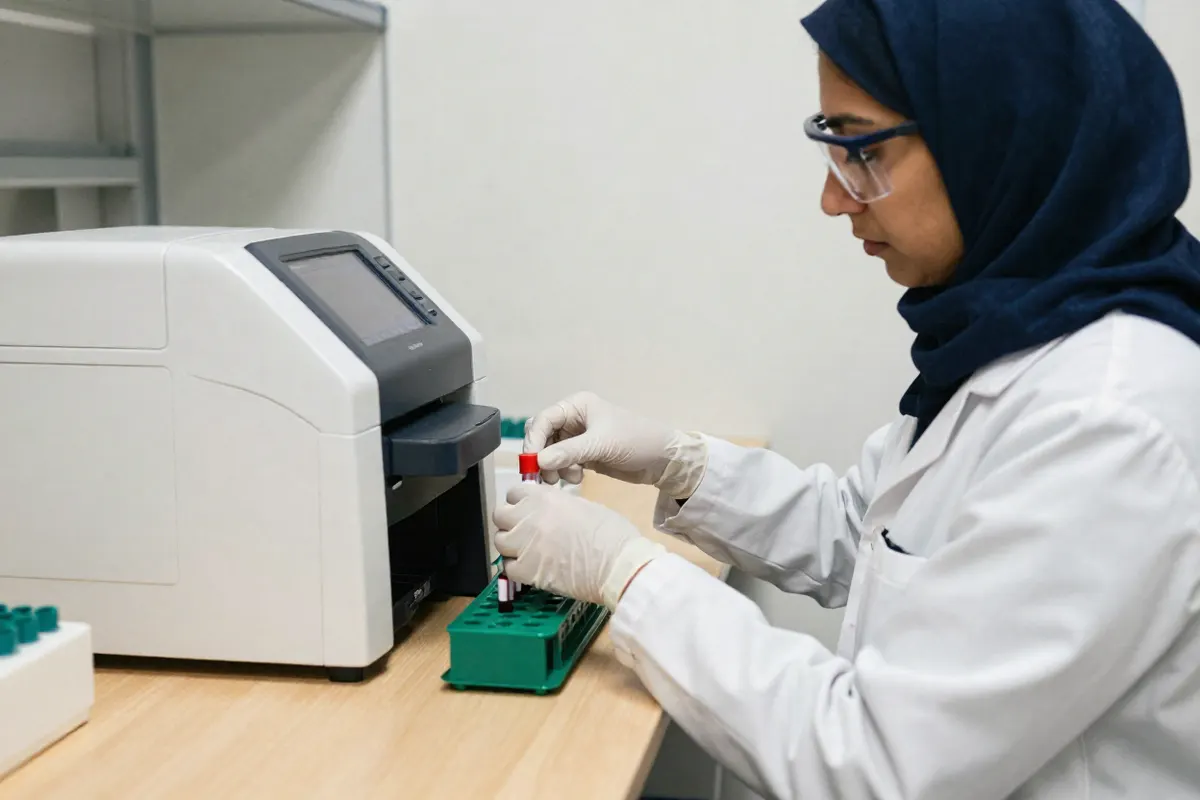
Phlebotomists, lab assistants, specimen processors, medical laboratory technicians and scientists (MLT, MLS) and histology techs. Phlebotomy and lab assistant jobs are among the quickest ways into healthcare, while lab scientist roles need a degree and certification.
Open lab jobs
Updated 20 Nov 2026, 05:56 UTC This job may have closed since. Check the employer's posting.
Medical Technologist - Full time (opens the job details)
Methodist Health System (Dallas) · Richardson, Texas · 1mo agoDetails

Medical Lab Tech (opens the job details)
University Medical Center of El Paso · El Paso, TX · 1mo agoDetails
Laboratory Assistant (opens the job details)
LCMC Health · East Jefferson General Hospital · 4w agoDetails

Laboratory Assistant - Maui Memorial Medical Center (opens the job details)
Sonic Healthcare USA · Wailuku, HI · 4w agoDetails
$19.74–$21.71/hrThis job may have closed since. Check the employer's posting.
Histotechnologist Apprentice (opens the job details)
Providence · Portland, OR · 1mo agoDetails
$25.23–$38.61/hr
Medical Laboratory Scientist I- Core (opens the job details)
Quest Diagnostics · San Antonio, TX · 3w agoDetails
$29.00+/hrLaboratory Assistant - Full Time - Mid Shift - 8hr QVH (opens the job details)
Emanate Health · Emanate Health Queen of the Valley Hospital - West Covina · 1mo agoDetails
$23.00–$34.50/hrThis job may have closed since. Check the employer's posting. This job may have closed since. Check the employer's posting.
Phlebotomist I - Pathology - PRN - Clearlake (opens the job details)
Houston Methodist · HM Primary Care Group - Comprehensive Care Center - Pearland · 1mo agoDetails
Laboratory Assistant Technical (opens the job details)
CommonSpirit Health · Northridge, CA · 1w agoDetails
$25–$34.20/hr
PHLEBOTOMIST (opens the job details)
North Mississippi Health Services · Tupelo - Pathology · 1mo agoDetails
$16.62–$24.93/hrThis job may have closed since. Check the employer's posting. This job may have closed since. Check the employer's posting.
MLT/MLS | Germantown | Days (Part-Time) (opens the job details)
Methodist Le Bonheur Healthcare · Methodist Le Bonheur Germantown Hospital · 1mo agoDetails
 $19.60–$30.25/hr
Selected agencies hiring now
All agencies and apps →
Alegiant Healthcare StaffingTravel nursing agency
Travel staffing agency placing nurses, pharmacists, imaging, lab, surgical and therapy professionals on contracts nationwide.
Places: Nurses, Therapy & rehab, Pharmacy, Imaging

NuWest GroupHealthcare staffing agency
A healthcare staffing firm placing travel and local nurses, allied and lab professionals, CNAs, medical assistants and non-clinical admin staff on assignments, temp-to-hire and permanent jobs.
Places: Nurses, CNAs & PCTs, Medical assistants, Front desk & admin
These agencies and apps pay CareJobs.Now a referral fee when someone we introduce is placed or signs up. It costs you nothing and never changes your pay. Hospital and clinic jobs below keep their own order.
Lab alerts
Lab: new openings every week
Every week we gather the newest Lab openings from the hospitals, clinics and care employers we follow, straight from their careers sites. Free, stop anytime.
Only job openings in your inbox. Leave anytime with one click.
In short
Lab Techs & Phlebotomists. Phlebotomists, lab assistants, specimen processors, medical laboratory technicians and scientists (MLT, MLS) and histology techs. Open jobs that post a rate typically pay $20–$60/hr, with a live median of $30/hr. 915 employers are hiring right now, including Quest Diagnostics, Labcorp and CSL Plasma.
What the job is
- Where you work
- Hospital labs, outpatient draw sites, blood banks and reference labs
- What you need
- Phlebotomy certification for most draw roles; a degree and ASCP certification for lab scientists
- A typical moment
- Draw blood for outpatients at a hospital's ambulatory lab on a day shift.
Median pay, lab technologists and technicians
BLS Occupational Outlook Handbook, May 2025 · as of 2026-10-13
Median pay, phlebotomists
BLS Occupational Outlook Handbook, May 2025 · as of 2026-10-13
Average openings a year, lab technologists and technicians
BLS Employment Projections, 2025 to 2035 · as of 2026-10-13
Top-paying state for lab technologists (mean)
BLS OEWS, May 2025 · as of 2026-10-13
Staff vacancy rate in histology labs
ASCP 2024 Vacancy Survey (AJCP) · as of 2026-10-13
Travel and per diem work for lab
Healthcare staffing agencies →Some agencies and apps here pay CareJobs.Now a referral fee when you sign up or work through our link. It costs you nothing and never changes your pay or any bonus they offer you. They are marked Selected and shown in their own block at the top of job lists; hospital and clinic jobs, and the agencies' own jobs, keep their own order.

AHS Staffing
ahsstaffing.comSelected
Places travel and local contract nurses and allied professionals.
- Hires
- Nurses, CNAs & PCTs, Therapy & rehab, Mental health, Imaging
- Refer a friend
- $300 to $1,000 per referral (source: Candidate Referral Program (Refer a friend, get a bonus), program page)

HealthTrust Workforce Solutions
healthtrustjobs.comSelected
HCA Healthcare's staffing arm, placing nurses, techs and CNAs in per diem and travel shifts at HCA hospitals.
- Hires
- Nurses, CNAs & PCTs, Surgical, EMS, Allied health
- Refer a friend
- $50 to $500 per referral (source: HealthTrust Referral Bonus Program (Refer-A-Friend portal), terms)

White Glove Placement
whiteglovecare.comSelected
Places travel, local, per diem and locum tenens clinicians across nursing, allied health, behavioral health and physician roles.
- Hires
- Nurses, NPs & PAs, Doctors, CNAs & PCTs, Caregivers
- Refer a friend
- $50 to $2,000 per referral (source: Refer a Friend, terms)
Who is hiring lab










Show every employer hiring
- WVU Medicine103 open
- Baptist Memorial Health Care102 open
- LifePoint Health101 open
- Beth Israel Lahey Health98 open · $25–$55/hr
- Cleveland Clinic96 open
- TRS Healthcare95 open
- UPMC93 open · $25–$50/hr
- PathGroup92 open
- UF Health92 open
- CHS (Community Health Systems)91 open
- Northwestern Medicine90 open
- AdventHealth87 open · $35–$60/hr
- Mayo Clinic87 open · $25–$50/hr
- University of Rochester Medical Center87 open · $25–$50/hr
- SSM Health86 open · $20–$40/hr
- Mercy Health (Ohio and Kentucky)82 open
- Sutter Health79 open · $40–$105/hr
- Kaiser Permanente75 open · $35–$85/hr
- Sonora Quest Laboratories74 open · $19–$35/hr
- Yale New Haven Health74 open · $25–$50/hr
- Endeavor Health71 open · $25–$55/hr
- Deaconess Health System70 open · $20–$40/hr
- Universal Health Services70 open · $25–$65/hr
- TriCore Reference Laboratories69 open
- Mercy67 open
- Baylor Scott & White Health65 open
- University of Miami65 open
- CHRISTUS Health63 open
- Ochsner Health63 open
- Sanford Health63 open · $20–$45/hr
- Keck Medicine of USC61 open · $25–$70/hr
- Tenet Healthcare61 open · $50–$85/hr
- UnitedHealth Group61 open · $20–$45/hr
- Baptist Health (Kentucky)60 open
- Hartford HealthCare60 open
- Ansible Government Solutions59 open · $25–$60/hr
- Geisinger59 open
- Centers Laboratory58 open · $17–$30/hr
- Piedmont Healthcare58 open
- Allegheny Health Network56 open
- Vanderbilt University Medical Center54 open
- UAB Medicine53 open · $25–$45/hr
- The Blood Connection52 open
- Bon Secours51 open · $20–$50/hr
- UnityPoint Health51 open
- BayCare Health System50 open
- Brown University Health50 open · $25–$55/hr
- Huntsville Hospital Health System50 open
- Penn State Health50 open
- UW Health50 open · $25–$45/hr
- Adventist Health49 open · $25–$75/hr
- IU Health49 open
- LCMC Health48 open
- Novant Health47 open
- University of Maryland Medical System47 open · $20–$60/hr
- NYU Langone Health46 open · $40–$70/hr
- Wellstar Health System45 open
- Fairview Health Services44 open · $30–$50/hr
- Natera44 open · $20–$60/hr
- Prisma Health44 open
- ProMedica44 open
- MyMichigan Health43 open
- ARMStaffing42 open
- Providence42 open · $25–$80/hr
- Duke Health41 open
- Health Network Laboratories41 open
- Northside Hospital41 open
- OneBlood41 open
- American Red Cross40 open · $20–$30/hr
- Baptist Health South Florida40 open · $20–$45/hr
- OSF HealthCare40 open · $20–$50/hr
- Premise Health40 open · $25–$35/hr
- UMass Memorial Health40 open · $20–$55/hr
- DOCS Health39 open
- OhioHealth39 open
- ScionHealth39 open · $25–$55/hr
- American Health Associates38 open
- Emory Healthcare38 open · $35–$45/hr
- Essentia Health38 open · $25–$40/hr
- Montefiore Einstein38 open · $45–$60/hr
- HealthPartners37 open · $25–$55/hr
- Patient First37 open · $25–$45/hr
- BJC HealthCare36 open · $20–$50/hr
- CompuNet Clinical Laboratories36 open · $25/hr
- RWJBarnabas Health36 open · $45–$70/hr
- Vitalant35 open · $19–$35/hr
- Sentara Health34 open · $25–$60/hr
- The US Oncology Network34 open · $20–$40/hr
- Versiti34 open · $17–$30/hr
- St. Elizabeth Healthcare33 open
- Mount Sinai Health System32 open · $40–$70/hr
- Sprinter Health32 open · $25–$35/hr
- Summit Health and CityMD32 open · $20–$45/hr
- Aspirus Health31 open · $25–$35/hr
- DHR Health31 open
- Houston Methodist31 open
- St. Luke's University Health Network31 open
- UW Medicine31 open · $40–$70/hr
- Ardent Health30 open · $25–$45/hr
- Cooper University Health Care30 open · $25–$55/hr
- Covenant Health30 open
- Northwell Health30 open · $25–$70/hr
- Orlando Health30 open
- University of Arkansas for Medical Sciences30 open · $16–$19/hr
- TriHealth29 open
- Henry Ford Health28 open
- Intermountain Health28 open · $25–$55/hr
- NeoGenomics28 open
- University of Mississippi Medical Center28 open
- UofL Health28 open
- Biodesix27 open
- Jackson Health System27 open
- Aculabs26 open · $19–$25/hr
- Avera Health26 open · $30–$45/hr
- ImpactLife26 open
- Inova26 open · $25–$55/hr
- Sea Mar Community Health Centers26 open · $20/hr
- AHMC Healthcare25 open · $25–$60/hr
- Cedars-Sinai25 open · $35–$80/hr
- HealthTrust Workforce Solutions25 open · $35–$50/hr
- Lifesouth Community Blood Centers25 open · $16–$40/hr
- MedStar Health25 open · $25–$65/hr
- The University of Kansas Health System25 open
- UChicago Medicine25 open · $25–$45/hr
- Guthrie24 open · $20–$55/hr
- Inspira Health24 open · $25–$45/hr
- Boston Medical Center23 open · $25–$55/hr
- DCH Health Care Authority23 open
- Grady Health System23 open
- Nationwide Children's Hospital23 open
- The Ohio State University Wexner Medical Center23 open
- Spartanburg Regional Healthcare System23 open
- Texas Health Resources23 open
- Albany Med Health System22 open · $30–$65/hr
- BioReference Health22 open
- Diamond Medical Laboratories22 open · $19–$35/hr
- FMOL Health22 open
- Johns Hopkins Medicine22 open
- Kettering Health22 open
- Lee Health22 open · $30–$50/hr
- Memorial Hermann Health System22 open
- Moffitt Cancer Center22 open · $25–$55/hr
- Sarasota Memorial Health Care System22 open
- Temple Health22 open
- UCLA Health22 open · $35–$80/hr
- University Hospitals22 open
- Children's Healthcare of Atlanta21 open
- Cone Health21 open
- Stanford Health Care21 open · $65–$90/hr
- Allina Health20 open · $35–$55/hr
- Baystate Health20 open · $25–$50/hr
- Life Line Screening20 open
- Memorial Healthcare System (South Florida)20 open
- MultiCare Health System20 open · $25–$65/hr
- Norton Healthcare20 open
- Tampa General Hospital20 open
- Aspen Dental19 open · $20–$25/hr
- Atlantic Health19 open · $30–$60/hr
- Baptist Health (Jacksonville)19 open
- Concord Hospital19 open
- Everleap Fertility19 open · $20–$25/hr
- Rochester Regional Health19 open · $20–$45/hr
- UC Health (Cincinnati)19 open
- Virtua Health19 open · $25–$50/hr
- WakeMed19 open
- Beacon Health System18 open
- Cape Cod Healthcare18 open
- Children's of Alabama18 open
- Hospital Sisters Health System18 open · $30–$45/hr
- Monument Health18 open · $20–$40/hr
- NewYork-Presbyterian18 open · $55–$70/hr
- PIH Health18 open
- University Health System - San Antonio18 open · $25–$45/hr
- Appalachian Regional Healthcare17 open
- Cincinnati Children's Hospital Medical Center17 open · $20–$25/hr
- Duly Health and Care17 open
- Kamada17 open
- Marshall Health Network17 open
- Mercyhealth17 open · $25–$45/hr
- North Mississippi Health Services17 open · $20–$35/hr
- Roper St. Francis Healthcare17 open
- Singing River Health System17 open
- Baptist Health Montgomery16 open
- Bassett Healthcare Network16 open · $25–$35/hr
- Care New England16 open
- Freeman Health System16 open
- Parkview Health16 open
- Riverside Health16 open · $19–$45/hr
- Tower Health16 open
- United Health Services (New York)16 open · $35–$55/hr
- Aegis Sciences15 open · $16–$18/hr
- Akron Children's15 open
- Baptist Health (Arkansas)15 open
- CoxHealth15 open
- Emerson Hospital15 open · $25–$45/hr
- Ideal Option15 open · $17–$25/hr
- Madison Core Laboratories15 open · $20/hr
- Munson Healthcare15 open
- Saint Luke's Health System15 open
- University of Michigan Health-Sparrow15 open
- WellSpan Health15 open
- Westchester Medical Center Health Network15 open · $50–$75/hr
- Adena Health System14 open
- CharterCARE Health Partners14 open
- Conway Medical Center14 open
- FirstHealth of the Carolinas14 open
- Hennepin Healthcare14 open · $25–$50/hr
- Luminis Health14 open · $20–$45/hr
- Methodist Health System (Dallas)14 open
- Mount Sinai Medical Center (Miami Beach)14 open
- Nebraska Medicine14 open
- Norman Regional Health System14 open · $20–$45/hr
- Shannon Health14 open
- St. Josephs Candler14 open · $25–$60/hr
- St. Jude Children's Research Hospital14 open · $35–$55/hr
- Stormont Vail Health14 open
- TidalHealth14 open · $20–$45/hr
- UT Health San Antonio14 open
- VCU Health14 open · $20–$55/hr
- VHC Health14 open
- Willis-Knighton Health System14 open
- City of Hope California13 open · $55–$80/hr
- Dartmouth Health13 open
- ECU Health13 open · $25–$45/hr
- Gundersen Health System13 open · $17–$45/hr
- Holyoke Medical Center13 open · $20–$45/hr
- Jefferson Health13 open · $35–$50/hr
- MerrimackHealth13 open · $25–$45/hr
- Nebraska Methodist Health System13 open
- Ochsner LSU Health System of North Louisiana13 open
- Renown Health13 open · $25–$50/hr
- Silver Cross Hospital13 open · $25–$35/hr
- Southcoast Health System13 open · $25–$45/hr
- UMC Health System13 open · $35–$65/hr
- USA Health13 open
- Baptist Health Care (Pensacola)12 open
- Bronson Healthcare12 open
- Capital Health12 open · $30–$55/hr
- Children's Hospital of The King's Daughters12 open · $30–$50/hr
- Forefront Dermatology12 open
- Halifax Health12 open
- OHSU12 open · $30–$40/hr
- Roswell Park Comprehensive Cancer Center12 open
- Saint Francis Health System12 open
- St. Luke's Hospital (St. Louis)12 open
- The Christ Hospital Health Network12 open
- UC Irvine Health12 open · $30–$85/hr
- Washington University in St. Louis12 open · $20–$35/hr
- Boston Children's Hospital11 open · $25–$55/hr
- Bryan Health11 open
- Carle Health11 open · $25–$55/hr
- DocGo11 open
- Florida Cancer Specialists & Research Institute11 open
- Hendrick Medical Center11 open
- Jupiter Medical Center11 open
- Lehigh Valley Health Network11 open
- Memorial Healthcare11 open
- Mercy Medical Center Baltimore11 open · $25–$65/hr
- Methodist Le Bonheur Healthcare11 open
- Northeast Georgia Health System11 open
- Pioneers Memorial Healthcare District11 open · $45–$55/hr
- Principle Health Systems11 open · $18–$30/hr
- Southern Illinois Healthcare11 open · $20–$35/hr
- St. Clair Hospital11 open
- SUNY Downstate University Hospital11 open
- UK King's Daughters11 open
- Alaska Native Tribal Health Consortium10 open
- American Oncology Network10 open · $20–$35/hr
- Blood Assurance10 open · $17–$19/hr
- Broward Health10 open
- Central Peninsula Hospital10 open · $25–$50/hr
- Eisenhower Health10 open · $25–$65/hr
- Glens Falls Hospital10 open · $25–$50/hr
- Medical Center Hospital10 open · $20–$35/hr
- MU Health Care10 open · $35–$50/hr
- New York Blood Center Enterprises10 open · $19–$30/hr
- One Medical10 open · $20–$25/hr
- Powers Health10 open · $25–$60/hr
- Saratoga Hospital10 open · $25–$45/hr
- Scripps Health10 open · $45–$85/hr
- St. Charles Health System10 open · $25–$30/hr
- Tidelands Health10 open
- University Medical Center of El Paso10 open
- UT Southwestern Medical Center10 open
- Williamson Health10 open
- AHRC Nassau9 open
- AIDS Healthcare Foundation9 open
- AnMed9 open
- Aultman Health Foundation9 open
- CarolinaEast Health System9 open
- Carteret Health Care9 open
- CentraCare9 open · $30–$50/hr
- Cottage Health9 open · $35–$70/hr
- Erlanger Health9 open
- Genesis HealthCare System9 open
- Granville Medical Center9 open
- Hoag9 open
- McLeod Health9 open
- Mosaic Life Care9 open
- OU Health9 open
- Sharp HealthCare9 open · $30–$90/hr
- Stony Brook Medicine9 open
- Advanced Dermatology and Cosmetic Surgery8 open
- Altru Health System8 open · $20–$25/hr
- Appalachian Regional Healthcare System8 open · $18–$25/hr
- Catholic Health (Buffalo)8 open
- Dana-Farber Cancer Institute8 open
- DaVita8 open
- Ellis Medicine8 open · $20–$55/hr
- Emerus8 open
- Forrest General Hospital8 open
- Foundation Health Partners8 open · $25–$70/hr
- Fred Hutchinson Cancer Center8 open · $30–$75/hr
- Genesis Reference Laboratories8 open · $20–$35/hr
- Heywood Hospital8 open
- HonorHealth8 open
- Main Line Health8 open
- Nemours Children's Health8 open
- Northeast Alabama Regional Medical Center8 open
- OakBend Medical Center8 open
- Palomar Health8 open · $40–$65/hr
- Sarah Bush Lincoln8 open · $20–$45/hr
- Shore Medical Center8 open · $30–$40/hr
- Southeastern Health8 open
- SynergenX Health Holdings8 open
- Tennessee Oncology8 open
- Texas Children's8 open
- The Methodist Hospitals8 open
- The MetroHealth System8 open
- UCSF Health8 open
- Union Health8 open
- United Surgical Partners International8 open
- Valley Health (Virginia)8 open · $20–$35/hr
- Ascension7 open · $20–$40/hr
- AtlantiCare7 open · $20–$55/hr
- Baxter Health7 open
- CaroMont Health7 open
- Children's Hospital of Philadelphia7 open · $35–$40/hr
- Children's National Hospital7 open · $30–$50/hr
- Community Memorial Hospital - Ventura7 open · $55–$75/hr
- Confluence Health7 open · $30–$65/hr
- Covenant Health (New England)7 open
- DePaul7 open
- Emanate Health7 open · $30–$45/hr
- Ethos Holding7 open · $20–$25/hr
- Exceptional Healthcare7 open
- Hattiesburg Clinic7 open
- Jackson County Hospital District7 open
- Kentucky Blood Center7 open · $18–$20/hr
- Labtech Diagnostics7 open · $18–$20/hr
- Logan Health7 open
- MarinHealth7 open · $75–$100/hr
- Memorial Health (Illinois)7 open · $20–$45/hr
- Memorial Sloan Kettering Cancer Center7 open · $60–$75/hr
- MemorialCare7 open · $30–$50/hr
- Northfield Hospital & Clinics7 open · $20–$45/hr
- Rady Children's Health7 open · $30–$85/hr
- Reid Health7 open
- Rush-Copley Medical Center7 open · $25–$55/hr
- SolutionHealth7 open
- South Shore Health7 open · $25–$50/hr
- Southern California Hospitals7 open · $30–$70/hr
- Southwest Mississippi Regional Medical Center7 open
- Tallahassee Memorial HealthCare7 open
- ThedaCare7 open
- Torrance Memorial Medical Center7 open · $35–$70/hr
- Unified Women's Healthcare7 open
- Valley Health System (New Jersey)7 open · $35–$50/hr
- Valleywise Health System7 open · $30–$45/hr
- Wellpath7 open
- White River Health7 open
- Wooster Community Hospital7 open
- B Positive National Blood Services6 open
- Bay Area Hospital6 open · $30–$60/hr
- Bayhealth6 open
- Berkshire Health Systems6 open · $30–$60/hr
- Boston Mountain Rural Health Center6 open
- Cambridge Health Alliance6 open
- Cape Fear Valley Health6 open
- Catawba Valley Health System6 open
- CCRM Fertility6 open · $20–$35/hr
- Citizens Memorial6 open
- CVS Health6 open · $25–$35/hr
- Dominion Diagnostics6 open
- Down East Community Hospital6 open
- EvergreenHealth6 open · $35–$70/hr
- HaysMed6 open · $25–$35/hr
- Holy Cross Medical Center6 open
- Hunterdon Health Care System6 open · $35–$65/hr
- Iredell Memorial Hospital6 open
- Jackson Hospital and Clinic6 open
- Loma Linda University Health6 open · $45–$75/hr
- Lurie Children's Hospital of Chicago6 open · $40–$65/hr
- Mercy Medical Center - Cedar Rapids6 open
- National Vision6 open
- Owensboro Health6 open
- Palmetto General Hospital6 open
- Personalis6 open · $50–$80/hr
- ProHealth Care6 open
- Samaritan Health Services6 open · $30–$50/hr
- San Antonio Regional Hospital6 open · $30–$60/hr
- Seattle Children's6 open · $45–$65/hr
- Southeast Health6 open
- Sturdy Health6 open · $25–$45/hr
- The Cancer & Hematology Centers6 open
- Upson Regional Medical Center6 open
- UVM Health6 open · $30–$55/hr
- Watson Clinic6 open
- Anne Arundel Dermatology5 open
- Auburn Community Hospital5 open · $30–$50/hr
- Baptist Health Deaconess Madisonville5 open
- Bozeman Health5 open
- CarePoint Health Management Associates5 open
- Cheshire Medical Center5 open · $25–$40/hr
- Clearview Cancer Institute5 open
- ColumbiaDoctors5 open · $45–$65/hr
- Denver Health5 open · $25–$35/hr
- El Rio Health5 open
- Florida Medical Center5 open
- Froedtert South5 open
- Great River Health5 open · $30–$35/hr
- Heritage Lab Services5 open · $20–$30/hr
- Jackson County Memorial Hospital Authority5 open
- KPC Health5 open · $50–$60/hr
- Lake Regional Health System5 open
- Lima Memorial Health System5 open
- Marshall Medical Center5 open · $30–$55/hr
- Mary Lanning Healthcare5 open
- Memorial Health System (Gulfport)5 open
- Morris Hospital5 open · $25–$45/hr
- Mosaic Health5 open · $20–$25/hr
- National Jewish Health5 open · $25–$35/hr
- North Shore Medical Center5 open
- Northern Arizona Healthcare5 open
- OSU Medical Center5 open
- Our Blood Institute5 open · $17–$25/hr
- Preferred Primary Care Physicians5 open
- Primary Care Solutions5 open
- Randolph Health5 open
- Riverwood Healthcare5 open · $25–$40/hr
- Saint Francis Healthcare System5 open
- Sampson Regional Medical Center5 open
- Schweiger Dermatology Group5 open · $25–$65/hr
- Signature Healthcare5 open
- Southwestern Vermont Health Care5 open · $20–$40/hr
- Springfield Clinic5 open · $20–$40/hr
- Stamford Health5 open · $30–$55/hr
- START Center for Cancer Research5 open
- Terrebonne General Health System5 open
- Thibodaux Regional Health System5 open
- Tift Regional Health System5 open
- UK St. Claire5 open
- Unity Health5 open
- University Hospital (Newark)5 open
- UVA Health5 open · $35–$60/hr
- Valley Medical5 open · $20–$30/hr
- Valor Healthcare5 open · $18–$25/hr
- Ventura MedStaff5 open
- Visionworks5 open · $12–$20/hr
- Arkansas Children's4 open
- Avita Health System4 open
- Bellin Health4 open
- Beloit Health System4 open · $30–$45/hr
- Benefis Health System4 open
- Bloom Healthcare4 open
- Box Butte General Hospital4 open
- Carson Tahoe Health4 open
- CentraState Healthcare System4 open · $25–$50/hr
- Children's Mercy KC4 open · $30–$35/hr
- Children's Minnesota4 open · $30–$50/hr
- Children's Wisconsin4 open
- City of Hope4 open
- Community Health Network4 open
- Cook Children's4 open
- Coral Gables Hospital4 open
- East Tennessee Children's Hospital4 open
- Eastern Nephrology4 open
- Effingham Hospital4 open
- El Camino Health4 open
- Epic Healthcare4 open · $18–$20/hr
- Epiphany Dermatology4 open
- Gateway Regional Medical Center4 open · $35–$45/hr
- GBMC HealthCare4 open · $35–$50/hr
- Grand River Health Main Campus4 open · $30–$45/hr
- Harrison County Hospital4 open
- Healthier Mississippi People4 open
- Hollywood Presbyterian Medical Center4 open · $60–$80/hr
- Hospitality Health ER4 open
- Hunt Regional Healthcare4 open
- Kingman Regional Medical Center4 open
- Lake Charles Memorial Health System4 open
- Liron4 open
- Madera Community Hospital4 open · $45–$60/hr
- Marion Health4 open
- Mid-Valley Hospital & Clinic4 open · $40–$50/hr
- Mississippi Blood Services4 open
- Mount Nittany Health4 open
- Onvida Health4 open
- Oswego Health4 open · $18–$35/hr
- Planned Parenthood Great Northwest, Hawai'i, Alaska, Indiana, Kentucky4 open · $25–$30/hr
- Prevea Health4 open
- Reliance Pathology Partners4 open
- South County Hospital4 open
- Southwest General4 open
- St. Josephs Medical Center4 open
- St. Tammany Health System4 open
- Tucson Medical Center4 open
- United Care ABA-Colorado4 open
- United Care ABA-New York4 open
- University of Utah Health4 open
- Vancouver Clinic4 open
- WhidbeyHealth4 open · $35–$60/hr
- York Hospital4 open · $25–$45/hr
- Ashtabula County Medical Center3 open
- Beatrice Community Hospital3 open
- Blessing Hospital3 open
- Boulder Community Hospital3 open · $30–$50/hr
- BronxCare Health System3 open
- Cabinet Peaks Medical Center3 open · $25–$40/hr
- Calais Community Hospital3 open
- Calvert Health System3 open · $25–$45/hr
- Cancer Specialists of North Florida3 open
- CareWell Health3 open
- Cary Medical Center3 open · $30–$45/hr
- Cheyenne Regional Medical Center3 open
- Coleman County Medical Center3 open
- Columbia Memorial Hospital3 open
- Community Health System (Fresno)3 open · $65–$80/hr
- Community Medical Group3 open
- East Alabama Medical Center3 open
- Family Health Centers of San Diego3 open · $25–$35/hr
- Glenwood Regional Medical Center3 open
- Good Samaritan Hospital (Vincennes)3 open
- Goodland Regional Medical Center3 open
- Great Plains Health3 open
- Henry County Memorial Hospital3 open
- Huntsville Memorial Hospital3 open
- Johnson Memorial Hospital3 open
- Le CYR Consulting3 open
- LMH Health3 open
- Madison Regional Health System3 open
- MaineGeneral Health3 open
- Med Center Health3 open
- Medical Center SE Texas Port Arthur3 open
- Midland Health3 open
- Mississippi County Hospital System3 open
- New York Oncology Hematology3 open · $20–$35/hr
- Northern Louisiana Medical Center3 open
- Northern Montana Hospital3 open
- Northwest Florida Community Hospital3 open
- Overlake Medical Center3 open · $30–$35/hr
- Pacifica Hospital of the Valley3 open
- Parkland Health3 open
- Parrish Medical Center3 open
- Pretorian Labs3 open
- Pullman Regional Hospital3 open · $25–$50/hr
- Quincy Medical Group3 open · $20–$30/hr
- Regional West Health Services3 open
- Rush Memorial Hospital3 open
- Saint Bernards Medical Center3 open
- Salem Health3 open
- Salinas Valley Health3 open · $65–$80/hr
- Sauk Prairie Healthcare3 open
- Select Medical3 open · $20–$25/hr
- Shoshone Medical Center3 open
- SIMEDHealth3 open
- Snoqualmie Valley Health3 open · $30–$40/hr
- Sonoma Valley Hospital3 open · $55–$80/hr
- South Central Regional Medical Center3 open
- SPCP/Southeast Medical Group3 open
- Springfield Hospital3 open · $25–$40/hr
- Stillwater Medical3 open
- Stony Brook Southampton Hospital3 open
- UNC Health Blue Ridge3 open
- United Hospital District3 open · $35–$50/hr
- University Health (Kansas City)3 open
- VitalCore Health Strategies3 open · $20–$30/hr
- WellNow Urgent Care3 open
- Western Missouri Medical Center3 open
- White Rock Medical Center3 open
- Whole Family Health Center3 open
- William Newton Hospital - Winfield, Kansas3 open
- Yosemite Pathology Medical Group3 open
- Advantis Medical2 open
- Alabama Oncology2 open
- Alameda Health System2 open
- Appalachian Mountain Community Health Centers2 open
- Appling Healthcare2 open
- Archbold Medical Center2 open
- Banner Health2 open
- Boone County Health Center2 open
- Brattleboro Memorial Hospital2 open
- Broadlawns Medical Center2 open
- Brooklyn Hospital Center2 open
- Burnett Medical Center2 open
- Carolina Oncology Specialists2 open
- Centra Health2 open
- Central Valley Specialty Hospital2 open
- CGH Medical Center2 open
- Champlain Valley Physicians Hospital2 open
- Children's Health Dallas2 open
- Claxton-Hepburn Medical Center2 open
- Clear Choice Dermatology2 open
- Colusa Medical Center2 open
- Connecticut Children's2 open
- ConvenientMD2 open
- Conway Regional Health System2 open
- Copley Hospital2 open
- Corewell Health2 open
- Covenant HealthCare2 open
- CVRMC2 open
- Dayton Children's Hospital2 open
- Encompass Health2 open
- EyeCare Partners2 open
- Finger Lakes Health2 open
- Franklin Medical Center2 open
- Good Shepherd Health Care System2 open
- Graham Hospital District2 open
- Granite County Medical Center2 open
- Group Health Cooperative of South Central Wisconsin2 open
- Hackensack Meridian Health2 open
- Hancock County Health System2 open
- Hannibal Regional Hospital2 open
- Harney District Hospital2 open
- Hillsboro Medical Center2 open
- Holland Hospital2 open
- Holzer Health System2 open
- Hospital for Special Surgery2 open
- Hot Springs County Memorial Hospital2 open
- Houston Healthcare2 open
- HRL & Epiarx2 open
- Hudson Regional Health2 open
- Humana2 open
- Imperial Health2 open
- Infirmary Health2 open
- Jefferson Regional2 open
- Jersey Community Hospital2 open
- Kaweah Health2 open
- Los Angeles Community Hospitals2 open
- Magnolia Regional Health Center2 open
- Mary Greeley Medical Center2 open
- Mary Washington Healthcare2 open
- McPherson Hospital2 open
- Medical Center Barbour2 open
- Medical College of Wisconsin2 open
- Mile Bluff Medical Center2 open
- Montage Health2 open
- Mt. Ascutney Hospital and Health Center2 open
- NaphCare2 open
- North Country Healthcare2 open
- North Kansas City Hospital2 open
- NorthBay Health2 open
- Northeastern Vermont Regional Hospital2 open
- Northern Light Health2 open
- Nutex Health2 open
- Oklahoma Arthritis Center2 open
- Osceola Medical Center2 open
- Panoramic Health2 open
- Pediatrics On Demand2 open
- Penobscot Valley Hospital2 open
- Perry Memorial Hospital2 open
- Pershing General Hospital2 open
- Private Medical2 open
- PruittHealth2 open
- Ray County Memorial Hospital2 open
- Residential Home Health and Hospice2 open
- Ridgecrest Regional Hospital2 open
- Riverside Healthcare (Kankakee)2 open
- San Gorgonio Memorial Hospital2 open
- Santa Cruz Community Health2 open
- SEARHC2 open
- Shirley Ryan AbilityLab2 open
- Slocum-Dickson Medical Group2 open
- Springhill Medical Center2 open
- St Croix Health2 open
- St. John's Riverside Hospital2 open
- St. Peter's Health2 open
- Surgery Partners2 open
- The Dermatology Specialists2 open
- The Toledo Clinic2 open
- True Health2 open
- Vail Health2 open
- Valley Regional Hospital2 open
- Vamos Health2 open
- Wagoner Community Hospital2 open
- Washington Hospital Healthcare System2 open
- Wayne Memorial Hospital2 open
- ACCESS Community Health Network1 open
- Adams Clinical1 open
- Adventist HealthCare1 open
- Aizer Health1 open
- Alice Peck Day Memorial Hospital1 open
- Altus Community Healthcare1 open
- Ashe Memorial Hospital1 open
- Aspen Valley Health1 open
- Atlanta Center for Reproductive Medicine1 open
- Bethany Medical1 open
- Better Health Group Services1 open
- Beyond Podiatry1 open
- Bitterroot Health1 open
- Bookmark Medical1 open
- Boyd Healthcare Services1 open
- Breckinridge Health1 open
- Brightstar Care of Ft. Myers/Naples1 open
- Bristol Bay Area Health Corporation1 open
- Brookings Health System1 open
- Carilion Clinic1 open
- Carson Valley Health1 open
- Casa Colina Hospital and Centers for Healthcare1 open
- Catalina Island Health1 open
- Cedar County Memorial Hospital1 open
- Central Ohio Urology Group1 open
- Central Ozarks Medical Center1 open
- Central Vermont Medical Center1 open
- ChristianaCare1 open
- Clark Fork Valley Hospital1 open
- Coalinga Regional Medical Center1 open
- Cody Regional Health1 open
- College Medical Center1 open
- Community Care Physicians1 open
- Connecticut Skinhealth1 open
- Crossing Rivers Health1 open
- Crossroads Treatment Centers1 open
- Decatur County Memorial Hospital1 open
- Dialysis Clinic, Inc.1 open
- Driscoll Children's Hospital1 open
- Eastern Connecticut Hematology and Oncology1 open
- Eastland Memorial Hospital District1 open
- El Camino Health Medical Network1 open
- Ephraim McDowell Health1 open
- Exer Urgent Care1 open
- Family Allergy & Asthma1 open
- Family Health Care Centers of Greater Los Angeles1 open
- Florida Medical Clinic1 open
- Florida Urology Partners Llp1 open
- Fresenius Medical Care1 open
- Friendly Faces Senior Care1 open
- Frontera Healthcare Network1 open
- Fulton County Health Center1 open
- Galveston County Health District1 open
- Garden County Health Services1 open
- Garnet Health1 open
- Gastro Health1 open
- Gastroenterology Associates of the Piedmont1 open
- GastroIntestinal Associates, S.C.1 open
- GastroMed1 open
- Gifford Health Care1 open
- Goshen Health1 open
- Gove County Medical Center1 open
- Greene County General Hospital1 open
- Harrison County Community Hospital District1 open
- Headlands Research1 open
- Healthcare Network1 open
- Hebrew SeniorLife1 open
- Helen Newberry Joy Hospital1 open
- Helio Health1 open
- Hematology Oncology1 open
- Heritage Care Center of Berkeley1 open
- Hialeah Hospital1 open
- Holton Community Hospital1 open
- Homewatch CareGivers1 open
- Hutchinson Regional Healthcare System1 open
- Ideal Home Care Services1 open
- Integrated Dermatology1 open
- Integrity Care Group1 open
- Iterative Health1 open
- Johnson Regional Medical Center1 open
- Jose E Peraza MD1 open
- Kelsey-Seybold Clinic1 open
- Kenaitze Indian Tribe1 open
- Kittitas Valley Healthcare1 open
- Kootenai Health1 open
- Legacy Community Health1 open
- Legacy Health1 open
- Lewis County General Hospital1 open
- Lighthouse Behavioral Health Solutions1 open
- Lompoc Valley Medical Center1 open
- M Physicians1 open
- Macon Community Hospital1 open
- Madison County Memorial Hospital1 open
- Madison Health1 open
- Madison Medical Affiliates1 open
- Madison Valley Hospital1 open
- Marshall Health1 open
- Martin County Hospital District1 open
- Mary Bird Perkins Cancer Center1 open
- Mason Health1 open
- McDonough District Hospital1 open
- Medical Associates Clinic1 open
- Medical Associates of NWA1 open
- Medical Clinic of Houston1 open
- Medical Essential Diagnostics1 open
- Medlink Georgia1 open
- Medlink Management Services1 open
- Memorial Hospital of Sweetwater County1 open
- Meridian HealthCare1 open
- Middle Flint Health & Wellness1 open
- Midwest Express Clinic1 open
- Mille Lacs Health System1 open
- Minden Medical Center1 open
- Minneola Healthcare1 open
- Minnesota Urology, P.A.1 open
- Mitchell County Regional Health Center1 open
- Montrose Regional Health1 open
- Moore County Hospital District1 open
- Morgan Medical Center1 open
- Mountain Lake Services1 open
- Mountrail County Health Center1 open
- Murfreesboro Medical Clinic1 open
- Muslim Community & Health Center1 open
- North Canyon Medical Center1 open
- North Shore Health1 open
- NorthLakes Community Clinic1 open
- Now Optics1 open
- ObjectiveHealth1 open
- OCLI Vision1 open
- Ocracoke Health Center1 open
- Okeene Municipal Hospital and Schallmo Trust Authority1 open
- Oklahoma Surgical Hospital1 open
- Opelousas General Health System1 open
- Optima Dermatology1 open
- OrthoIndy1 open
- Orthopaedic & Spine Center of the Rockies1 open
- OVP Health1 open
- Ozarks Healthcare1 open
- Pediatric Associates Family of Companies1 open
- Phelps Health1 open
- Phillips County Hospital1 open
- Phoebe Putney Health System1 open
- POD Health1 open
- Porter Medical Center1 open
- Prairie Band, LLC & Subsidiaries1 open
- Presbyterian Healthcare Services1 open
- Primary Care Associates of Appleton1 open
- Princeton Medical Group1 open
- Recovery Centers of Montana1 open
- Reedsburg Area Medical Center1 open
- Reeves County Hospital District1 open
- Regional Cancer Care Associates1 open
- Resolution Think1 open
- Revere Health1 open
- Richmond University Medical Center1 open
- Rockford Gastroenterology, Assc.1 open
- RPCI Oncology1 open
- Rutland Regional Medical Center1 open
- Saint Anthony Hospital1 open
- Saint Joseph's Medical Center1 open
- San Juan Regional Medical Center1 open
- San Luis Valley Health1 open
- San Ysidro Health1 open
- Sheppard Pratt1 open
- Sheridan Memorial Hospital1 open
- Shriners Children's1 open
- Sierra Pacific Orthopedics1 open
- Silver Lake Hospital1 open
- South Bend Clinic1 open
- South Sunflower County Hospital1 open
- South Texas Oncology and Hematology1 open
- Southern Coos Hospital & Health Center1 open
- Southern Humboldt Community Healthcare District1 open
- Southwest Health System1 open
- Sparta Community Hospital1 open
- Specialty Appliances1 open
- Spero Health1 open
- Spring Fertility1 open
- St. James Hospital1 open
- St. Joseph's Health1 open
- Stanford Medicine Children's Health1 open
- Ste Genevieve County Memorial Hospital1 open
- Subsero Health1 open
- Summit BHC1 open
- Suncoast Community Health Centers1 open
- Susan B. Allen Memorial Hospital1 open
- Ten Broeck Center for Rehabilitation & Nursing1 open
- Texas Health Care1 open
- The Center for Rheumatology Llp1 open
- The IMA Group1 open
- The Iowa Clinic1 open
- Tomah Health1 open
- Touchette Regional Hospital1 open
- Troy Regional1 open
- Tucson Dermatology1 open
- Tufts Medicine1 open
- United Regional (Wichita Falls)1 open
- University of Colorado1 open
- University of Kansas Medical Center1 open
- University Otolaryngologists1 open
- University Physicians' Association1 open
- Upper Connecticut Valley Hospital - DHA1 open
- Urology America, MSO1 open
- Valley Behavioral Health1 open
- Vibra Healthcare1 open
- Waccamaw Dermatology1 open
- Wasatch Behavioral Health1 open
- Waverly Health Center1 open
- Welia Health1 open
- Wendell Foster1 open
- West Florida Medical Center Clinic PA1 open
- Winnebago Comprehensive Healthcare System1 open
- Winner Regional Healthcare Center1 open
Open jobs and pay are read from each employer's own job board every night. How we read jobs and pay
Curious how it compares? Compare lab pay with every other kind of job using the pay explorer.
Lab: every occupation
Each occupation has its own page: its open jobs, the pay they post beside what BLS measures, where the jobs are, the licenses it takes and the outlook.
- Medical laboratory scientist2,769posted median $40.55/hr · BLS $30.26 (source: BLS OEWS, Medical laboratory scientist)
- Medical laboratory technician905posted median $31.71/hr · BLS $30.26 (source: BLS OEWS, Medical laboratory technician)
- Phlebotomist2,245posted median $22.71/hr · BLS $21.75 (source: BLS OEWS, Phlebotomist)
- Histotechnologist457posted median $36.29/hr · BLS $30.26 (source: BLS OEWS, Histotechnologist)
- Cytotechnologist122posted median $47.2/hr · BLS $30.26 (source: BLS OEWS, Cytotechnologist)
- Laboratory assistant1,100posted median $23.4/hr · BLS $30.26 (source: BLS OEWS, Laboratory assistant)
- Pathologists' assistant242posted median $53/hr · BLS $30.26 (source: BLS OEWS, Pathologists' assistant)
Lab tech and phlebotomist jobs by state
- Florida 777
- California 660
- Texas 650
- New York 496
- Ohio 487
- Pennsylvania 473
- Illinois 432
- Massachusetts 399
- Georgia 395
- North Carolina 354
- New Jersey 306
- Tennessee 295
- Indiana 276
- Alabama 274
- Michigan 252
- South Carolina 246
- Wisconsin 233
- Missouri 227
- Virginia 219
- Kentucky 211
- Washington 205
- Louisiana 201
- Arizona 189
- Maryland 186
- Minnesota 185
- Oklahoma 146
- Kansas 127
- Iowa 125
- Connecticut 123
- Mississippi 121
- New Mexico 118
- Arkansas 106
- Colorado 106
- West Virginia 90
- Oregon 87
- Rhode Island 87
- New Hampshire 86
- Nebraska 79
- Nevada 70
- Maine 53
- Alaska 50
- Hawaii 44
- Montana 44
- South Dakota 42
- Idaho 40
- Delaware 37
- District of Columbia 35
- North Dakota 35
- Utah 34
- Vermont 32
- Wyoming 16
A certified lab professional or phlebotomist?
One profile for every employer here. Hospitals, clinics and care companies ask us for people with a specific license, specialty, language or schedule: add yours once, and when a job fits, we introduce you, only with your yes. Free.
Written by CareJobs.Now
CareJobs.Now reads every job and the pay it states from the employer's own job board each night, and takes a job down once its employer does.
Lab work pays on two very different ladders. Phlebotomists, who draw the blood, earned a median of $21.75 an hour in May 2025 - BLS, while the medical laboratory technologists and technicians who run the tests earned a median of $30.26 an hour - BLS. That gap of about $8.51 an hour, roughly $17,700 a year at the two medians - BLS, is the single most important number in this guide, because it is the price of a college degree and a national certification in the lab.
This guide is about money and hiring: what lab jobs pay nationally and why the pay on a job posting often looks different, how pay changes by setting and by state, what nights, overtime and bonuses add, who does the hiring, what the outlook is, and how to compare two offers line by line. If you want to know what the work is like day to day and how to get trained, read the companion guide on how to become a phlebotomist or lab tech. Right now this site lists 15,888 open lab and phlebotomy jobs, and the ones that state pay typically offer $20 to $60 an hour.
What lab jobs pay nationally
The US Bureau of Labor Statistics tracks lab work as two occupations. The first, clinical laboratory technologists and technicians, covers the people who run, check and report tests: medical laboratory scientists (MLS, also called medical technologists or clinical laboratory scientists), medical laboratory technicians (MLT), histotechs and similar bench roles. The second, phlebotomists, covers the people who collect the specimens. Lab assistants and specimen processors are often paid in or near the phlebotomist range, and many postings combine the two jobs.
The national picture for May 2025 looks like this. Lab technologists and technicians earned a median of $62,930 a year, with the lowest-paid tenth under $38,910 and the highest-paid tenth above $100,990 - BLS. Phlebotomists earned a median of $45,230, with the lowest tenth at $35,780 and the top tenth at $58,780 - BLS. For comparison, the median for all US occupations was $50,980 in the same survey - BLS.
| Role (BLS occupation) | Median per year | Median per hour | Lowest 10% | Highest 10% | Jobs in 2025 | Growth 2025 to 2035 |
|---|---|---|---|---|---|---|
| Lab technologists and technicians (MLS, MLT, histotech) | $62,930 | $30.26 | under $38,910 | over $100,990 | 343,000 | 3% |
| Phlebotomists | $45,230 | $21.75 | $35,780 | $58,780 | 143,900 | 7% |
Source: BLS Occupational Outlook Handbook, May 2025 wages and 2025 to 2035 projections, for lab technologists and technicians and phlebotomists.
The spread inside each row matters as much as the median. The phlebotomist band is narrow: the top tenth earns about $23,000 more than the bottom tenth - BLS, so experience alone moves pay only so far. The lab technologist band is wide, more than $60,000 from bottom to top - BLS, because it mixes new MLTs in low-cost states with experienced scientists, specialists and leads in high-cost metros. If you are a phlebotomist who wants a big raise, the data says the raise usually comes from changing jobs within the lab (to MLT or MLS), not from staying at the draw station longer.
Why the pay on a posting looks different from BLS
BLS medians describe what employers actually paid everyone in the job in May 2025, from the first-week hire to the 25-year veteran. A job posting shows something else: the range an employer is offering for one opening today. Postings tend to lead the market when hiring is hard, because the employer is trying to win the next hire, and many pay-transparency postings show a wide band from the minimum of the grade to the maximum, where the maximum is rarely offered to a new hire.
That is why this site shows its own live band next to the BLS figures. The median posted hourly rate across lab jobs on this site right now is $30, measured only from postings that state a rate. Read both: BLS tells you where pay settles over a career, the live band tells you what employers are putting in writing this week. The pay page explains how the live figures are measured, and the methodology page explains which postings are counted.
Pay by setting
Where you work changes lab pay more than most people expect, and the pattern is different for the two jobs. For lab technologists and technicians, private general hospitals paid the highest median among the large employers in May 2025 at $69,190, ahead of colleges and universities at $63,690, medical and diagnostic laboratories at $58,320, physicians' offices at $56,850 and other ambulatory care at $48,140 - BLS. Hospitals also employ the most of them, about 36% of all jobs, with reference and diagnostic labs at 19% and physicians' offices at 10% - BLS.
Phlebotomy flips the order. Outpatient care centers paid phlebotomists the highest median at $48,030, followed by medical and diagnostic laboratories at $46,670, physicians' offices at $44,500, hospitals at $44,220 and other ambulatory services at $39,930 - BLS. Hospitals and reference labs are nearly tied as employers, at 36% and 33% of phlebotomist jobs - BLS.
Why would a hospital pay its scientists the most but its phlebotomists slightly less than a lab company? The likely reason is the shape of the work. A hospital lab runs high-complexity testing around the clock (blood bank, stat chemistry, microbiology), and it competes for a scarce pool of certified scientists. A hospital phlebotomy team, by contrast, can hire people straight out of a short program. But the hospital median hides the differentials: a hospital phlebotomist on the 4 a.m. draw rounds or the night shift often earns a premium on top of base pay that an outpatient draw site, open business hours only, never pays. So the honest comparison is total pay for the schedule you would actually work, not the base rate.
Specialty hospitals, government and the odd outliers
Below the big employers, BLS data shows smaller pockets that pay more. In May 2025, specialty hospitals (not psychiatric) paid lab technologists and technicians a mean of $82,780 a year and the federal government paid a mean of $82,270, against $71,820 at general medical and surgical hospitals - BLS OEWS. Specialty hospitals include cancer and children's hospitals, and the federal figure includes VA medical centers. These are means, not medians, so a few high earners pull them up, but the direction is consistent: specialized, high-complexity labs pay for specialized people.
For phlebotomists, the outliers are smaller. Outpatient care centers paid a mean of $51,780 and specialty hospitals $50,250 in May 2025 - BLS OEWS. Even the best-paying setting for phlebotomy sits below the overall median for lab technologists, which is the same lesson as the first table in different words.
Pay by state
Geography moves lab pay more than any other single factor. In May 2025 the top-paying states for lab technologists and technicians, by mean annual wage, were New York at $93,610, Oregon at $83,990, the District of Columbia at $81,650, Vermont at $80,100 and California at $78,840 - BLS OEWS. At the other end, Alabama's mean was $53,500 and Arkansas's $54,340 - BLS OEWS, so the same certified scientist can earn about $40,000 more a year in New York than in Alabama.
For phlebotomists, California led at a mean of $56,600 a year ( $27.21 an hour), followed by Massachusetts at $52,540, the District of Columbia at $52,070, New York at $51,830 and Washington at $51,490 - BLS OEWS. The lowest-paying states were Mississippi at $36,710, Louisiana at $37,420 and Alabama at $38,020 - BLS OEWS.
Metro areas stretch the range further. The San Jose metro area paid lab technologists and technicians a mean of $97,190 - BLS OEWS, and phlebotomists a mean of $69,000 in May 2025, the highest of any metro for both jobs - BLS OEWS. All ten of the best-paying metro and rural areas for phlebotomists were in California - BLS OEWS.
Two cautions before you move for a lab job. First, cost of living: a $93,610 mean in New York ( BLS OEWS) does not buy what it buys in Arkansas, and rent near a big academic medical center can swallow much of the premium. Compare take-home pay after housing, not gross pay. Second, licensing: several of the best-paying states also license lab staff. California, New York and Florida license lab scientists, and California, Louisiana, Nevada and Washington add their own rules for phlebotomists, so a move can mean an application, a fee and a wait before your first paycheck. The states page shows open jobs by state, and the lab careers guide has the licensing table.
Nights, overtime, bonuses, per diem and travel
Lab pay on paper is a base hourly rate, but lab pay in practice is base plus everything stacked on top. Hospital labs never close, and BLS notes that lab staff in hospitals may work nights, weekends and holidays - BLS. Those hours are the hardest to staff: in the 2024 ASCP vacancy survey, managers reported that night and overtime shifts in phlebotomy were difficult to fill - AJCP. Hard-to-fill hours are exactly where employers pay premiums.
Overtime rules are federal, and they matter more in the lab than people think. Nonexempt employees must be paid at least time and a half their regular rate for hours over 40 in a workweek, and hospitals may instead use a fixed 14-day period with overtime after 8 hours in a day and 80 hours in the period, if employees agree in advance - US Department of Labor. The same fact sheet says shift differential pay must be included when the regular rate is calculated, so overtime on a night shift is time and a half of base plus differential, not of base alone.
- Shift differentials: an extra amount per hour for evenings, nights or weekends, usually largest for nights.
- Overtime: time and a half of the regular rate, which includes the differential.
- Sign-on bonuses: a lump sum, usually paid in parts and repaid if you leave early.
- Per diem (PRN): a higher hourly rate with no guaranteed hours and often no benefits.
- Travel contracts: short assignments, mostly for certified MLS and MLT staff, with pay that varies by contract.
The practical reading of that list is that two jobs with the same base rate can differ by thousands of dollars a year. A night differential compounds through overtime. A per diem rate looks high until you price health insurance on your own. A sign-on bonus is real money, but the repayment clause is what decides whether it is a gift or a loan, so read it before you sign. The site's guides to shift differentials and per diem and PRN jobs work through each in detail. You can also search this site's lab postings for the words employers use: 836 open lab jobs mention nights right now.
Who hires lab staff
Lab hiring splits into four kinds of employer, and each hires a different mix of people. Hospitals and health systems hire the most of both jobs and are the main employer of certified scientists, because blood banks, microbiology and stat testing have to run around the clock. Reference laboratories hire large numbers of phlebotomists, processors and scientists to collect and test samples sent in from doctors' offices. Physicians' offices and outpatient centers hire phlebotomists and medical assistants who draw blood. A smaller and newer group sends phlebotomists to patients' homes.
The two national reference labs are big enough to shape the market. Quest Diagnostics reports about 2,400 patient service centers, many inside large retail stores, plus roughly 8,000 patient access points that include phlebotomists placed in physician offices, and it also offers mobile phlebotomy in many parts of the country - Quest Diagnostics 2025 annual report. The same filing counts approximately 25,000 phlebotomists, paramedics, nurses and other health and wellness professionals among its people - Quest Diagnostics 2025 annual report. Labcorp, the other national reference lab, also runs patient service centers and testing labs across the country. On this site, 1,628 Quest Diagnostics jobs are open now, and Labcorp's openings are a click away on the employers page.
Home draws and hospital-run schools
Home collection is a growing niche. Sprinter Health provides in-home blood collection and says its staff are certified full-time phlebotomists and LVNs trained in-house - Sprinter Health. Getlabs also sends mobile phlebotomists to patients' homes. These jobs trade the predictability of a draw station for driving, independent work and a schedule built around appointments, and they suit experienced phlebotomists who are confident drawing difficult veins without a colleague nearby.
Some hospitals also train their own scientists, which is a hiring channel as much as a school. Denver Health runs a School of Medical Laboratory Science whose graduates reported a 100% employment rate within three months in 2023, 2024 and 2025 among those who searched, with class sizes of four to seven graduates a year - Denver Health. Hospital-based programs like this are small, but they show how directly a lab can turn trainees into staff. The employers page lists every hospital, lab and care company this site reads jobs from.
Job outlook
The long-run outlook is steady for scientists and faster for phlebotomists. BLS projects lab technologist and technician jobs to grow 3% from 2025 to 2035, adding about 9,400 jobs, with about 20,800 openings a year once you count people who retire or change careers - BLS. Phlebotomist jobs are projected to grow 7%, much faster than average, with about 18,000 openings a year - BLS. BLS names an aging population and more genetic testing as the drivers for lab work, and notes that automation may slow demand.
Projections are a ten-year average, though, and the short-run picture is shaped by vacancies. The 2024 ASCP vacancy survey, answered by 1,027 managers reporting on 18,626 employees, found staff vacancy rates far above normal turnover in several departments - AJCP.
Two more numbers from that survey explain where the openings will come from. Managers expected 29.5% of molecular pathology staff, 25.3% of cytogenetics staff and 21.0% of histology staff to retire within five years, while phlebotomy had the lowest expected retirement rate at 8.4% - AJCP. In other words, phlebotomy openings come mostly from turnover, as people move on to nursing, MLT programs or other jobs, while the specialized benches face a wave of retirements that experienced scientists will be needed to fill. That is good news for anyone willing to train into histology, molecular or blood bank work. The pipeline of new scientists is limited too: NAACLS-accredited programs produce about 8,800 graduates a year across 614 programs, and programs name the shortage of clinical training sites as their top barrier to growing - NAACLS. For how lab work compares with other fast-growing healthcare jobs, see the guide to the fastest-growing healthcare jobs in 2026.
How to read a lab posting and compare offers
A lab job posting packs a lot into a few lines, and the line that matters most is often not the pay. Start with the title and the credential it asks for: " phlebotomist," "lab assistant," "MLT" and "MLS" are different jobs with different pay grades, and a posting that says "MLT or MLS" may pay the MLT grade unless you ask. Then read the schedule (days, evenings, nights, weekends, the 4 a.m. draw rounds), the certification requirement (in the ASCP survey only 24.4% of phlebotomy employers required certification for hire, against 73% in blood bank - AJCP), and the pay range.
Then turn the offer into a yearly number for the schedule you would really work. Here is a hypothetical phlebotomy example with made-up figures, the kind of sum the pay calculator runs on the pay jobs post. Offer A is an outpatient draw site paying $21.00 an hour, Monday to Friday days, 40 hours a week: $21.00 times 2,080 hours is $43,680 a year. Offer B is a hospital paying $20.00 base plus a $3.00 night differential, three 12-hour nights a week: $23.00 times 36 hours times 52 weeks is $43,056 a year. On paper A wins by $624. But if B lets you pick up one extra 12-hour night every week, those 12 hours push you to 48 hours, and the 8 hours over 40 are paid at time and a half of $23.00, which is $34.50. That week pays 40 times $23.00 plus 8 times $34.50, or $920 plus $276, which is $1,196, against $828 for a 36-hour week. A few extra shifts a month and B pulls well ahead, at the cost of your sleep.
Now a hypothetical scientist example, again with made-up figures. Offer A pays an MLS $35.00 an hour on day shift, 40 hours a week: $72,800 a year. Offer B pays $33.00 base, a $3.00 evening differential on every shift and a $2.00 weekend differential, with eight weekend hours a week on average. B's week is 40 times $36.00, or $1,440, plus 8 times $2.00, or $16, for $1,456, which is $75,712 a year, $2,912 more than A. But percentage raises apply to base: a 3% raise adds $1.05 an hour at A and $0.99 at B, and if you later move to days at B, the differentials disappear and you are on the lower base. The best offer is the one that is best for the schedule you will still be working in two years.
Questions to ask before you accept
Before accepting, ask questions the posting does not answer. The answers often decide which offer is really better, and asking them signals that you understand how lab pay works.
- Which grade is this? Confirm whether the offer is at the MLT or MLS grade, or phlebotomist I or II.
- How are differentials paid? Ask the amount for evenings, nights, weekends and holidays.
- What is the overtime system? Ask whether the unit uses the 40-hour week or the 14-day period.
- What does the bonus require? Ask how long you must stay and what you repay if you leave.
- Is there tuition help? Ask whether the employer pays toward an MLT or MLS degree.
Tuition help deserves more attention than it usually gets. For a phlebotomist, an employer that pays part of an MLT program is offering a route to the roughly $8.51 an hour gap between the two BLS medians - BLS, which is worth far more over a career than a slightly higher starting rate. The hospital hiring guide explains how offers and grades are set, and the interview guide covers how to ask about pay without hurting your chances.
How pay grows with experience and credentials
Lab pay grows in steps, and most of the steps are credentials. The first step, from phlebotomist to lab assistant or specimen processor, usually adds little. The big step is from the draw station to the bench: the national median for lab technologists and technicians is $62,930 against $45,230 for phlebotomists, a gap of $17,700 a year - BLS. Crossing it takes an associate degree for an MLT or a bachelor's degree for an MLS, plus certification, which is why so many phlebotomists study part time while they work. Federal lab rules let a person with an associate degree in laboratory science or medical laboratory technology perform even high-complexity testing - 42 CFR 493.1489, so the associate route is a real ladder rung, not a dead end, outside the states that narrow it.
After the bench, pay grows through specialization and responsibility. Specialty departments with high vacancy and retirement rates, such as histology and molecular diagnostics, give experienced staff leverage in negotiation. Lead technologist, supervisor and manager roles add pay for running a shift or a department. The upper end of the BLS range, above $100,990 for the top tenth - BLS, is mostly made of these experienced specialists, leads and managers in high-paying states. Moving between states is the other lever, as the state section shows, but licensure states require their own credentials, so plan the move around the license.
Experience alone, without a new credential, moves pay more slowly. In a hospital, annual merit raises and step increases add a few percent a year. In phlebotomy, where the BLS band from the lowest tenth to the highest tenth is about $23,000 - BLS, the fastest way to the top of the band is to take the hard shifts, become the person who can draw from infants and difficult veins, and move into a lead or trainer role. If you are deciding whether to invest in the degree, the lab careers guide lays out how long each step takes, and the imaging jobs guide and medical assistant jobs guide show what nearby jobs pay. Lab scientists with a biology or chemistry degree can also earn on the side reviewing AI models' life-science answers, and AI-training roles for biologists on AITraining.jobs, a site that belongs to us too, lists that remote work.
How to use this site's live lab jobs
This site reads open jobs every night from hospital, lab and care-company job boards, and files every posting whose title names lab or phlebotomy work into this category. That gives you a live market check that no survey can: the BLS figures are a year old by the time they are published, while the band at the top of this page reflects postings that are open now. Use the two together. If the live band sits well above the BLS median, employers are competing for hires and you have room to negotiate.
The fastest way to use the board is to narrow it. Search the lab category for the job you want, then filter for postings that state pay: 6,703 lab postings state a rate right now, and those are the ones that feed the live band. Search for " phlebotomist" to see draw jobs ( 5,244 open now), and compare employers on the employers page. If you are still choosing between lab work and other entry routes, the roles hub compares all seventeen kinds of healthcare job on this site side by side.
The decision is simpler than the numbers make it look. If you want to start earning in weeks, phlebotomy pays a modest but steady wage almost anywhere, and the best-paying versions are hospital night shifts and high-cost states. If you want the bigger paycheck, the money is at the bench, and the path there runs through a degree and certification. Either way, compare offers on total pay for the schedule you will actually work, and ask about tuition help before you ask about the sign-on bonus.
This guide reflects BLS May 2025 wage data, the 2025 to 2035 BLS projections and the 2024 ASCP vacancy survey as of October 2026. Pay and rules change: check the linked source before you rely on a figure.
Sources
- US Bureau of Labor Statistics: Clinical Laboratory Technologists and Technicians, Occupational Outlook Handbook
- US Bureau of Labor Statistics: Phlebotomists, Occupational Outlook Handbook
- US Bureau of Labor Statistics: OEWS May 2025 profile, Clinical Laboratory Technologists and Technicians
- US Bureau of Labor Statistics: OEWS May 2025 profile, Phlebotomists
- American Journal of Clinical Pathology: ASCP 2024 Vacancy Survey of Medical Laboratories in the United States
- US Department of Labor: Fact Sheet 54, The Health Care Industry and Calculating Overtime Pay
- Quest Diagnostics: Form 10-K for fiscal year 2025 (SEC)
- Sprinter Health: In-home blood collection
- Denver Health: School of Medical Laboratory Science outcome measures
- American Medical Technologists: Phlebotomy Technician RPT(AMT) certification
- NAACLS: CEO's Corner, Findings from the 2024 Annual Survey
- eCFR via Cornell LII: 42 CFR 493.1489, Testing personnel qualifications
Lab Techs & Phlebotomists in our research
Rows from the research reports, computed every night from every open job we read and every apply click on this site, as of 11 Nov 2026. Each figure opens the table row it comes from, with the report's method and window.
| Measure | Figures | Report |
|---|---|---|
| Applicant demand per open job on this site (1.00x is the average job) | Index: 1.83x · Clicks: 59 | Applicant demand |
| Apply clicks on this site | Apply clicks: 59 · Share of clicks: 6.1% | Applicant demand |
| How hard these jobs are to fill | Hard-to-fill index: 31.3 · Listed 90 days or more: 13.9% · Sign-on bonus (described jobs): 11.4% | Hard-to-fill jobs |
| Posted hourly pay | Median: $29.31 · 25th percentile: $22.48 · 75th percentile: $40.84 | Pay rate card |
| Posted pay against what BLS measures | Posted median: $29.31 · BLS median (employment-weighted across its occupations): $27.70 | Posted pay vs BLS wages |
| The change in posted pay | Change: 0.0% · 10 Nov 2026: $30.00 | Pay trends |
| How often these jobs state their pay | Jobs stating any pay: 49.9% · Stating an hourly rate: 41.7% | Pay transparency |
| How long these jobs stay listed | Median days to removal: 19.0 days · Still listed at 7 days: 75.6% | How long jobs stay open |
| How busy hiring is | New listings per 100 open: 74.4 · Net change, same employers: +4.6% | Where hiring is busiest |
| Night and weekend work | Nights: 4.8% · Weekends: 0.6% | Shifts and schedules |
| What nights and weekends pay extra | Night shift: -8.2% · Weekend position: -31.4% | Pay premiums |
| Entry-level jobs | Share with an entry-level title: 1.1% · Median per hour, entry-level: $19.00 | Jobs without experience |
What our research finds about lab jobs
From the CareJobs.Now research reports, recomputed every night from the open jobs and what job seekers do on this site, as of 11 Nov 2026. Each figure opens the table it is read from.
On the employers tracked throughout, open lab tech and phlebotomist jobs went down 2.0% between the week of 12 Oct 2026 and the week of 9 Nov 2026.
Employers listed 9,077 new lab tech and phlebotomist jobs and took down 9,696 during 14 Oct 2026 to 10 Nov 2026; a removed job had been up for a median of 16.2 days.
Lab Techs & Phlebotomists are Quest Diagnostics's largest job type (94.6% of its open jobs, 9.0% of all open jobs of that type on the board).
Quest Diagnostics lists the most lab tech and phlebotomist jobs (1,406, 9.0% of the employers' total); the job type is unconcentrated (HHI 195).
Lab tech and phlebotomist jobs post a median of $29.31/hr (middle half $22.48/hr to $40.84/hr), against $34.61/hr for all healthcare jobs.
11.0% of open lab tech and phlebotomist jobs are PRN or per diem, and 4.8% name night shifts.
Frequently asked questions
How much does a phlebotomist make an hour?
The national median was $21.75 an hour ($45,230 a year) in May 2025, with the lowest-paid tenth at $35,780 a year and the top tenth at $58,780 (BLS). Hospital night shifts, high-cost states and overtime push real earnings above the median. The live band at the top of this page shows what open postings on this site offer today.
How much do MLTs and medical laboratory scientists make?
BLS reports technologists and technicians together: their median was $62,930 a year, or $30.26 an hour, in May 2025, with the top tenth above $100,990 (BLS). Scientists (MLS) with a bachelor's degree generally sit higher in that range than technicians (MLT) with an associate degree, and specialists, leads and managers make up the top of it.
Which state pays lab techs the most?
New York had the highest mean wage for lab technologists and technicians in May 2025 at $93,610 a year, followed by Oregon at $83,990 (BLS OEWS). For phlebotomists, California led at $56,600 a year (BLS OEWS). Weigh those figures against housing costs and state licensing rules before you move.
Do hospitals pay more than Quest or Labcorp?
For lab technologists and technicians, yes at the median: private general hospitals paid $69,190 against $58,320 at medical and diagnostic laboratories in May 2025 (BLS). For phlebotomists it is nearly even, with labs at $46,670 and hospitals at $44,220 (BLS), although hospital night differentials can change the comparison for a given job.
Is there a shortage of lab workers?
In several departments, yes. The 2024 ASCP vacancy survey found staff vacancy rates of 28.6% in anatomic pathology, 21.0% in histology and 16.8% in chemistry, with phlebotomy at 9.9% (AJCP). Managers also expected large shares of molecular, cytogenetics and histology staff to retire within five years.
Do I need a certification to get hired as a phlebotomist?
Many employers hire without it: in the ASCP survey only 24.4% of phlebotomy employers required certification for hire (AJCP). But a few states, including California, set their own rules, and certified candidates have more options. Certification is not expensive next to the pay it unlocks: AMT's RPT application costs $125, including the exam and the first annual fee (AMT). See the licensing table in the lab careers guide.
Do lab jobs pay overtime and night differentials?
Hourly lab staff are generally nonexempt, so overtime is at least time and a half for hours over 40 a week, or over 8 a day and 80 in 14 days where a hospital uses that system by prior agreement (US Department of Labor). Shift differentials must be included in the regular rate used for overtime. Differential amounts are set by each employer, so ask before you accept. Our guide to shift differentials explains how they work.
What is the job outlook for lab work?
BLS projects phlebotomist jobs to grow 7% from 2025 to 2035, much faster than average, with about 18,000 openings a year (BLS). Lab technologist and technician jobs are projected to grow 3%, with about 20,800 openings a year as people retire or change careers (BLS).
Can I work as a mobile phlebotomist?
Yes. Quest Diagnostics reports that it offers mobile phlebotomy in many parts of the United States (Quest Diagnostics), and home-draw companies such as Sprinter Health and Getlabs send phlebotomists to patients' homes. These jobs usually want experienced, certified phlebotomists who are comfortable working alone and driving between appointments.
Where can I see current lab pay and openings?
This page's live band and job count come from the open lab and phlebotomy postings on this site, updated every night. Browse them on lab tech and phlebotomist jobs, compare all categories on the pay page, and read how the figures are measured.