Tests, technology and the business of care
How to Become a Surgical Tech or Sterile Processing Tech
Set up and pass the instruments in surgery, or clean, inspect and sterilize them for the next case.
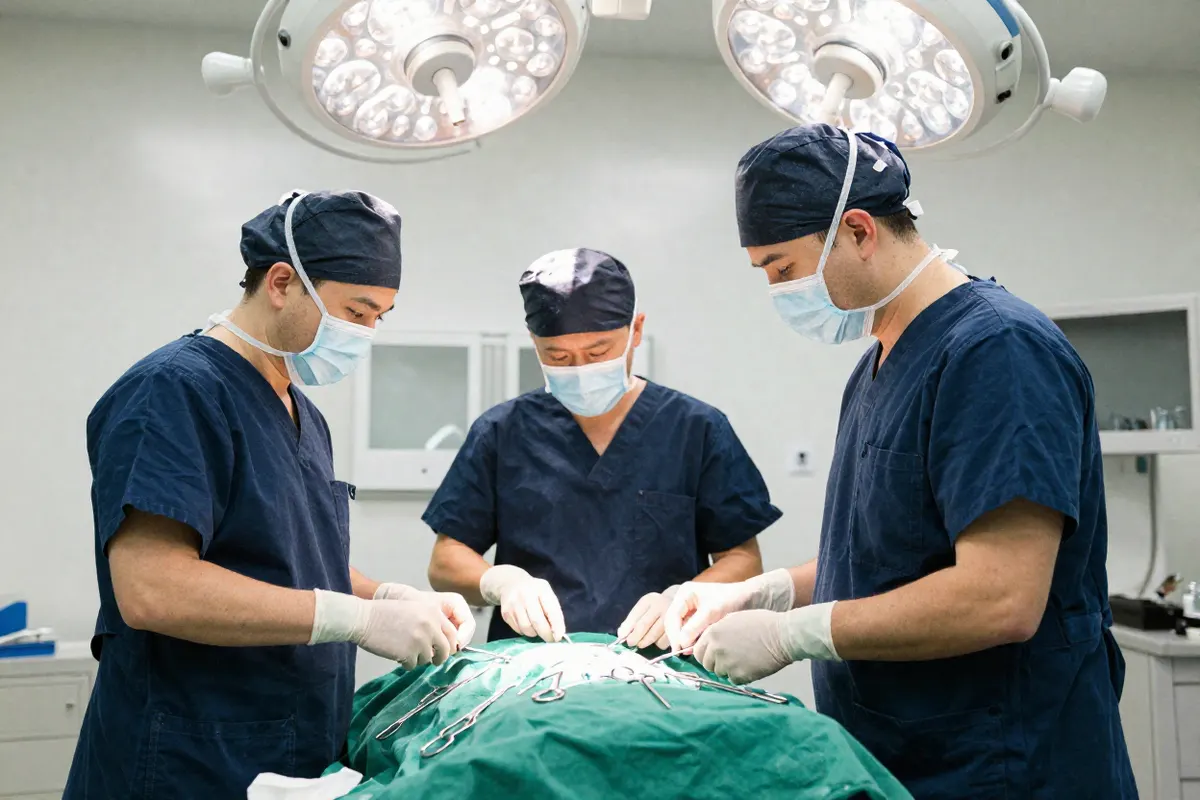
What the job is
Every operation depends on a sterile field and the right instruments at the right moment. Surgical technologists, often called scrub techs, set up the operating room, keep the field sterile and hand the surgeon instruments during the case, while surgical first assistants help the surgeon directly. Sterile processing techs work behind the scenes, decontaminating, inspecting, assembling and sterilizing every instrument tray. Surgical tech jobs usually need a certificate or associate degree from an accredited program, while sterile processing is one of the faster ways into hospital work.
A typical shift
- Open sterile supplies, set up instrument trays and count sponges, sharps and instruments with the circulating nurse before the first incision
- Gown and glove the surgeon, then anticipate and pass instruments, sutures and supplies throughout the case
- Watch the sterile field constantly and speak up the moment anything is contaminated
- Handle specimens, prepare medications on the field as directed and help close and dress the wound
- In sterile processing, sort and decontaminate used instruments, inspect them under magnification and assemble trays to a count sheet
- Run and document sterilizer loads, check biological and chemical indicators and deliver ready trays to the operating rooms
What a shift looks like
A hip replacement
A surgical tech at an orthopedic hospital sets up four instrument trays and the implant system before the patient arrives. During the case she reads the surgeon's rhythm, has the next broach ready before it is asked for, and leads the final count before closing.
A missing instrument
In sterile processing, a tech assembling a laparoscopic tray finds that one grasper is missing from the count sheet. He flags the tray as incomplete instead of sending it up, finds the grasper in the decontamination sink, and reprocesses it so the 7 a.m. case starts on time.
A night call case
At 2 a.m. the on-call scrub tech is called in for an emergency appendectomy. She arrives within the required response time, opens the laparoscopy setup and is scrubbed and ready when the surgeon walks in.
Who does well in this job
Surgical work suits people who stay calm under pressure, notice small details and like being part of a tight team where everyone has a defined role. Scrub techs need stamina to stand through long cases and the confidence to stop a surgeon who has broken sterile technique. Sterile processing suits people who like methodical, hands-on work out of the spotlight, and it is a common first hospital job for people coming from retail, warehouse or military work. Many surgical techs later move into first assisting, nursing or leadership.
You will likely enjoy it if
- You can focus intensely for hours and anticipate what comes next
- Blood, tissue and strong smells do not bother you
- You follow procedures exactly and double-check counts without being told
- You are comfortable standing for long periods and lifting heavy instrument trays
What you need
- A high school diploma or GED for training programs and certification exams
- For surgical techs: an accredited surgical technology program or military training, then a certification exam such as the CST
- For sterile processing: a training course or on-the-job experience, then a certification such as CRCST, required in some states
- CPR or Basic Life Support for many jobs, a background check, drug screen and hospital immunizations
Skills that help
Your path into the job
- 1Choose your entry point: sterile processing to start working within months, or a surgical technology program if you want to scrub in
- 2Check whether your state regulates surgical techs or requires sterile processing certification before you pick a program
- 3For surgical tech, enroll in a CAAHEP- or ABHES-accredited program so you can sit for the CST exam, and log every case in your clinical rotation
- 4For sterile processing, take a course or get hired as a trainee, then complete the hands-on hours your certification requires
- 5Pass your certification exam, keep your CPR card current and apply to hospitals and surgery centers
- 6Say yes to evenings, weekends or call if that gets you hired, and ask about tuition help for first assisting or nursing later
Common misconceptions
Myth: Surgical techs just hand the surgeon tools.
Reality: Passing instruments is the visible part. Scrub techs also set up and protect the sterile field, run the counts that prevent retained items, handle specimens and anticipate each step so the case moves safely.
Myth: Sterile processing is a cleaning job.
Reality: It is technical work with strict standards: techs inspect instruments for damage, assemble complex trays, run sterilizers and document every load. A tray that is wrong or not sterile can cancel a surgery or cause an infection.
Myth: Anyone can be trained to scrub on the job.
Reality: Some hospitals once trained techs in-house, but many states now require graduation from an accredited program, the CST credential or registration, and most employers prefer certified techs.
What it pays
Open surgical jobs that post a rate typically pay $25–$55/hr today, with a live median of $35 an hour across the 3,212 open jobs that state one.
The complete guide
Everything about surgical jobs
Written by CareJobs.Now
CareJobs.Now reads every job and the pay it states from the employer's own job board each night, and takes a job down once its employer does.
How to become a surgical tech or sterile processing tech in 2026: the work, the training, the exams and the first job
About 118,400 people worked as surgical technologists in the United States in 2025, and another 24,400 as surgical assistants - BLS. Behind them, tens of thousands of sterile processing techs clean, inspect and sterilize every instrument that touches a patient: the Healthcare Sterile Processing Association counted 54,525 current holders of its main certification at the end of 2025 - HSPA. Without either group, no operating room in the country could run a single case.
These are some of the least understood jobs in a hospital. People picture a surgical tech as someone who hands the surgeon a scalpel on command, and a sterile processing tech as a dishwasher for instruments. Both pictures are wrong. Scrub techs build and guard the sterile field, run the counts that keep sponges and needles from being left inside patients, and anticipate each step of the operation. Sterile processing techs run a technical, standards-driven department where one missing instrument or one failed sterilizer load can cancel a surgery or cause an infection.
This guide is for anyone deciding whether to work in the operating room or sterile processing, choosing a program, or trying to land a first job. It covers what each role really is and how it differs from the jobs next to it, what a shift looks like hour by hour, the training routes, the certification exams and the states that require them, what employers screen for, the career ladder, and the hard parts nobody puts in the brochure. If you mainly want pay figures by state and setting, the companion guide on surgical tech and sterile processing jobs and pay covers that in depth.
Contents
- What surgical and sterile processing work really is
- An operating room shift, hour by hour
- Training paths: accredited programs, the military and sterile processing routes
- Certification and state laws
- Getting your first operating room or sterile processing job
- The career ladder and what each step takes
- The hard parts and how people handle them
- Outlook and how to decide
1. What surgical and sterile processing work really is
An operation is a team effort with sharply defined roles. The surgeon operates. The anesthesia provider keeps the patient asleep and safe. The circulating nurse, a registered nurse, manages the room outside the sterile field: checks the patient in, documents the case, and fetches anything the sterile team needs. The surgical technologist, or scrub tech, works inside the sterile field: sets up the instruments and supplies, gowns and gloves the surgeon, passes instruments, handles specimens and keeps the field sterile from incision to closing. A surgical first assistant, when there is one, works beside the surgeon, retracting tissue, controlling bleeding and helping close.
Behind the operating room is sterile processing, sometimes called central service or SPD. Every instrument used in a case comes back dirty, goes through decontamination, is inspected (often under magnification), reassembled into trays against a count sheet, packaged, sterilized and stored until the next case. Sterile processing techs also reprocess flexible endoscopes and supply instruments to the emergency department, labor and delivery and clinics. Anesthesia techs, a third group in this category, prepare and maintain anesthesia equipment.
How the roles differ
The roles overlap in the same suite of rooms, so the clearest way to separate them is by training, credential and where they stand during a case.
| Role | Typical training | Usual credential | Core work |
|---|---|---|---|
| Surgical technologist | Accredited certificate or associate degree program, or military training | CST from NBSTSA, required or preferred by many employers and some states | Sterile field, instruments, counts, specimens |
| Surgical first assistant | Surgical tech or nursing background plus first assistant training | CSFA or a similar credential; state licensure in a few states | Retracting, exposure, hemostasis, closing |
| Sterile processing tech | Short course or on-the-job training plus hands-on hours | CRCST from HSPA, required in five states | Decontamination, inspection, tray assembly, sterilization |
| Circulating nurse | Nursing degree | RN license | Patient advocacy, room management, documentation |
| Anesthesia tech | On-the-job training or a short program | Varies by employer | Anesthesia equipment set-up, supplies, turnover |
Surgical technologists typically need a certificate or associate degree from an accredited program, and certification typically requires completing an accredited formal education program or military training program and passing an exam - BLS. Sterile processing has a lower formal barrier, but its main certification requires 400 hours of hands-on experience - HSPA.
How the pay compares
Pay across these jobs is closer than many people expect at the scrub tech level, and much higher at the nursing level. The chart below shows May 2025 national medians for surgical technologists and several occupations the BLS lists as similar.
Sterile processing techs, counted by the BLS as medical equipment preparers, earned a median of $47,700 in May 2025 - BLS OEWS, close to dental and medical assistants. The jump from sterile processing to scrub tech is about $17,000 a year at the median, and the jump from scrub tech to registered nurse is about $33,000. Those two gaps explain most of the career moves in this field.
2. An operating room shift, hour by hour
No two hospitals run their operating rooms exactly alike, but most follow the same rhythm: early starts, back-to-back cases, quick room turnovers, and an evening tail of add-on and emergency cases. The examples below are composites of a hospital scrub tech's day with call and a sterile processing tech's evening, not one real person's day.
Most surgical technologists work in hospitals and full time, and hospital staff may work or be on call during nights, weekends and holidays, sometimes on shifts longer than 8 hours - BLS.
A hospital scrub tech, day shift with call
6:15 a.m. Assignment and pull. You check your room assignment and the surgeon's preference card for your first case, a laparoscopic gallbladder removal. You confirm the instrument trays and supplies are in the room, check sterilizer indicators on each tray, and look for anything special the surgeon uses.
6:45 a.m. Setting up. You scrub, gown and glove, open the trays onto the back table and the Mayo stand, and arrange instruments the way you will need them. With the circulating nurse you perform the first count of sponges, sharps and instruments, out loud, and the nurse documents it.
7:30 a.m. First incision. After the surgical time-out confirms the patient, the procedure and the site, the case begins. You pass instruments before they are asked for, load clip appliers, manage the camera cords, keep the field dry and organized, and watch everyone near it. If a glove touches something non-sterile, you say so at once, even to the surgeon.
8:30 a.m. Closing and turnover. You count again before the cavity is closed and again at skin closure, hand off the specimen correctly labeled, dress the wound, and break down the field, sending sharps to the container and instruments to sterile processing. Then the room is cleaned, and you set up for the next case.
11:00 a.m. to 3:00 p.m. More cases. A hernia repair, then an add-on appendectomy. You eat when the schedule allows, which is not always when you are hungry.
3:30 p.m. Call begins. You are first call tonight. You go home, keep your phone loud, and stay within the response time your hospital sets. At 1:00 a.m. the phone rings: a ruptured ectopic pregnancy. You are scrubbed and set up when the surgeon walks in, and home again by 3:30 a.m.
A sterile processing tech, evening shift
2:30 p.m. Decontamination. You put on fluid-resistant gown, gloves, face shield and shoe covers and take carts of used instruments from the day's cases. You sort, open every hinge, brush lumens, and load washers, following each instrument's instructions for use.
5:00 p.m. Inspection and assembly. On the clean side, you inspect each instrument for bioburden, cracks and damaged tips, test function, and assemble trays against count sheets. A tray missing one instrument is not "close enough": you find it, replace it, or flag the tray as incomplete.
8:00 p.m. Sterilization. You package trays, load sterilizers, run cycles, and record each load with its chemical and biological indicators. A failed indicator means the load is quarantined and reprocessed.
10:00 p.m. Tomorrow's cases. You check tomorrow's surgical schedule against what is on the shelves, build case carts, and flag anything that will not be ready for the first 7:30 a.m. start.
How the day changes by setting
In an ambulatory surgery center, the day is shorter and more predictable: mostly elective orthopedic, eye, gastrointestinal or plastic cases, quick turnovers, and little or no call. In a labor and delivery unit, scrub techs cover cesarean sections around the clock. On a specialty team (open heart, neurosurgery, transplant, robotics), the cases are longer and more complex, and the team usually takes its own call. In a large sterile processing department, techs may specialize in endoscope reprocessing, case cart assembly or instrument repair coordination.
3. Training paths: accredited programs, the military and sterile processing routes
There are three main ways into this field, and the right one depends on whether you want to scrub in or work behind the scenes, and how quickly you need to earn. The surgical tech route takes longer and costs more, but it leads to higher pay and the operating room itself. The sterile processing route gets you into a hospital fast, and many people use it as a stepping stone.
Each route also limits what comes next. A surgical tech who skips accreditation may be shut out of the CST exam and out of jobs in states with surgical tech laws. A sterile processing tech without certification may be unemployable in the five states that require it.
- Accredited surgical technology program: a certificate or associate degree program accredited by CAAHEP or ABHES, with operating room rotations.
- Military training: a military surgical technology program, which also qualifies you for the CST exam.
- Sterile processing course: a short course at a community college or technical school, followed by hands-on hours.
- Sterile processing trainee job: a hospital hires you, trains you on the job and supports your certification.
The accredited program is the standard surgical tech route and the one that keeps the most doors open. Military training is a strong route for people who serve, because it counts toward the same exam. The sterile processing course is the quickest classroom path, and a trainee job is the best deal when you can get one, because you are paid while you collect the hands-on hours.
Surgical technology programs
The accreditation question comes first. NBSTSA requires you to graduate from a CAAHEP- or ABHES-accredited surgical technology program, or a military program, to sit for the CST exam - NBSTSA. The Association of Surgical Technologists campaigns for state laws that require both an accredited program and the CST for new hires - AST, so graduating from an accredited program protects you if your state changes its rules.
Accredited programs include a substantial amount of real operating room time. NBSTSA describes 120 cases on real patients and 300 to 400 hours of operating room experience as part of the education behind its credential - NBSTSA. Those cases are where you learn instrument names, surgeon preferences, sterile technique under pressure, and how to recover when a case goes sideways.
How to choose a program
Beyond accreditation, a few questions separate strong programs from weak ones. Ask each program for its CST pass rate, its graduation rate and the share of graduates working in the field within six months. Ask how clinical sites are assigned, how many cases students typically scrub, and whether students rotate through specialties such as orthopedics, obstetrics, cardiac and neurosurgery. Ask whether the program's clinical partners hire its graduates.
Then look at fit and cost. Programs are typically full time, with clinical days that start before 7 a.m., which makes holding a regular job difficult. Compare the full cost (tuition, books, scrubs, exam fees, background check, immunizations, travel to clinical sites), not just the advertised tuition, and ask about financial aid. If a program will not give clear answers on pass rates and placement, treat that as an answer.
Sterile processing routes
Sterile processing has a shorter, more flexible entry. HSPA's CRCST requires 400 hours of hands-on experience, which can be completed on a paid or volunteer basis - HSPA. You can take the exam before you finish those hours, but you then have six months to document them, during which you are considered provisionally certified; if you miss the deadline, the certification is revoked and you must retest.
That rule opens two practical paths. One is a course followed by an externship or volunteer placement to log the hours. The other is a hospital trainee job, where you log the hours while being paid. Either way, plan your exam timing carefully: once your application is approved, HSPA gives you a 120-day testing window, and missing it forfeits the exam fee - HSPA. On this site, 21 surgical and sterile processing jobs mention a trainee role right now.
4. Certification and state laws
Certification is close to standard in this field, even where the law does not require it. NBSTSA says its CST credential is preferred or required by most employers nationwide and required by many states - NBSTSA, and many surgical tech jobs also require CPR or Basic Life Support certification - BLS.
The credentials you will see most often in postings are the CST and CSFA for the operating room and the CRCST for sterile processing. The table below compares them.
| Credential | Issued by | Who can sit for it | Exam | Keeping it current |
|---|---|---|---|---|
| CST (Certified Surgical Technologist) | NBSTSA | Graduates of CAAHEP- or ABHES-accredited programs or military programs - NBSTSA | 4 hours, 175 questions, 150 scored; pass with 98 correct - NBSTSA | 30 CE credits every two years, 4 of them live - NBSTSA; $40 renewal fee - NBSTSA |
| CSFA (Certified Surgical First Assistant) | NBSTSA | Set by NBSTSA's first assistant eligibility rules | Separate NBSTSA exam | 38 CE credits per cycle, 8 of them live - NBSTSA; $45 renewal fee - NBSTSA |
| CRCST (Certified Registered Central Service Technician) | HSPA | Anyone completing 400 hands-on hours (before or within six months after the exam) - HSPA | Computer-based exam within a 120-day window | 12 CE credits and $50 every year - HSPA |
What the exams involve
The CST exam is a serious test. It runs 4 hours with 175 multiple-choice questions, of which 150 are scored, and you pass with 98 correct on the scored questions - NBSTSA. About 65% of the scored items cover perioperative care (before, during and after the operation), 20% cover basic science such as anatomy, microbiology and pharmacology, and 15% cover ancillary duties, including equipment sterilization and maintenance - NBSTSA. NBSTSA offers a free self-evaluation tool and an optional practice platform at $75, with a 150-question timed practice exam - NBSTSA.
The CRCST has a track record that should keep anyone from treating it lightly. Of the 15,369 CRCST exams taken in 2025, 10,083 were passed, a pass rate of about 66% - HSPA. Study the official manual, work through practice questions on decontamination, sterilization methods and instrument identification, and if you can, take the exam after you have real hands-on hours behind you, which HSPA itself recommends where possible.
State laws
The states regulate this field unevenly, so where you live changes what you need. AST lists the states with surgical technologist laws, and the separate list of states requiring sterile processing certification comes from HSPA.
| Rule | States | Source |
|---|---|---|
| Surgical tech education or certification laws | Connecticut, Idaho, Indiana, Massachusetts, Nevada, New Jersey, New York, Oregon, Pennsylvania, South Carolina, Tennessee, Texas, Virginia | AST |
| Surgical tech registration laws | Arkansas, Colorado, Illinois, North Dakota, Washington | AST |
| Surgical assistant laws | Texas (licensure), Kentucky (certification) | AST |
| Sterile processing certification required | Connecticut, New Jersey, New York, Pennsylvania, Tennessee | HSPA |
Two cautions about that table. First, the details vary: some laws require the CST, others accept other credentials or exempt people already working when the law passed, and AST itself says its list may not be complete or current. Second, even in states with no law, hospitals and surgery centers set their own credentialing requirements, and AST notes that facilities face considerable liability if untrained people perform surgical tech functions. Check your state's current rules before you choose a program, and again before you move. The states page shows where jobs in this category are open right now.
5. Getting your first operating room or sterile processing job
The good news is that operating rooms and sterile processing departments hire new people every year. The BLS projects about 8,600 openings a year for surgical assistants and technologists through 2035 - BLS, and right now this site lists 8,849 open surgical and sterile processing jobs.
Employers screen new people on a short list of things, and most of them you can control before you apply.
- Your credential or exam date: CST or CRCST, or a scheduled exam within weeks.
- Your program and case log: an accredited program and the cases you scrubbed by specialty.
- A CPR or BLS card: many jobs require one - BLS.
- Call availability: willingness to take call, evenings and weekends.
- Reliability: attendance and punctuality, because a missing scrub tech can delay a whole operating room.
The credential and program lines are filters, especially in states with surgical tech laws, so put your exam date on your application if you are not yet certified. Your case log is where you stand out: a manager who sees that you scrubbed orthopedic, obstetric and laparoscopic cases knows you can be placed in several services. Call availability often decides a close race, because the newest tech on the team is usually expected to take a full share of call.
Expect onboarding checks too. Most employers run a background check and drug screen and review your immunizations, and the federal bloodborne pathogens standard requires employers to offer the hepatitis B vaccine at no cost within 10 working days of initial assignment to anyone with occupational exposure - OSHA. Have your vaccination records ready so your start date does not slip.
Where new people get hired
Hospitals hire most surgical technologists: about 71% work in hospitals, 11% in physicians' offices and 10% in outpatient care centers - BLS. Your clinical rotation site is the most common first employer, so treat each rotation as a long job interview: arrive early, know the preference card, ask to scrub the harder cases, and tell the charge person you want to be hired. Surgery centers more often look for experience, but some hire strong new graduates for a single specialty.
Sterile processing departments hire trainees and new graduates in large hospitals especially, because they run around the clock and need evening and night staff. If you are applying from outside healthcare, highlight work that shows attention to detail and standards: warehouse quality control, food safety, manufacturing or military logistics. The employers page lists every hospital and care company this site reads jobs from, and 1,579 open postings mention sterile processing right now. If you want to understand how a large system moves you from application to offer, read how hospital hiring works.
Resume and interview points specific to the OR
An operating room resume should be short and concrete. Put your credential (or exam date) and CPR card at the top. Under your clinical training, list your sites and your case numbers by specialty, any specialty procedures (robotic, cardiac, neuro, orthopedic implants), and the instrument sets you know well. For sterile processing, list the hands-on hours, the equipment you have used (washers, sterilizers, endoscope reprocessors) and any tracking systems.
Operating room interviews test judgment and composure. Expect questions such as: what do you do if the count is off, what do you do if you see the surgeon contaminate a glove, how do you handle a surgeon who is short with you, how do you pass sharps safely, and what would you do if you realized a tray had a failed indicator. The strongest answers share one idea: patient safety outranks speed and hierarchy, and you speak up every time. The healthcare job interview guide covers common questions and how to answer them.
6. The career ladder and what each step takes
This field has a clear ladder with two starting rungs, and most of the steps are credentials and specialty skills rather than years. Many people start in sterile processing, move into the operating room, and go on from there.
In sterile processing, the first rung is certification, and after that come specialty credentials and leadership. HSPA counted 6,215 current holders of its instrument specialist credential and 4,084 holders of its healthcare leader credential at the end of 2025 - HSPA, against more than 54,000 CRCSTs, which shows how much smaller and more specialized the upper rungs are. Lead tech, educator, supervisor and manager roles reward people who know the standards cold and can keep a department calm during a rush.
From the sterile field to first assisting
For scrub techs, the ladder runs through specialty and then first assisting. Specialty teams such as open heart, neurosurgery, transplant and robotics take techs who have mastered general cases, and the cases are longer and the stakes higher. First assisting is the biggest step within the field: surgical assistants earned a median of $66,800 in May 2025, and those working for physicians' offices earned $80,210 - BLS. It takes added training and a credential such as the CSFA, and Texas and Kentucky regulate surgical assistants - AST.
Nursing and other exits
Many surgical techs eventually go to nursing school, often aiming to return to the operating room as a circulating nurse or RN first assistant. The pay difference is large: registered nurses earned a median of $97,550 in May 2025 - BLS. Operating room experience gives you a head start, because you already know the flow of a case, sterile technique and the people. The nurses guide covers that path from start to finish. Others move into surgical device companies, instrument management or teaching in a surgical technology program. If you are weighing a different technical path, the guides to imaging careers, lab careers and allied health jobs compare the options.
7. The hard parts and how people handle them
Operating room and sterile processing work is satisfying, but it has real hard parts, and the people who last go in knowing them. The biggest are injury risk, the physical load, sharps and body fluids, call and long days, and the pressure of working where mistakes harm patients.
None of these is a reason to avoid the field. They are reasons to choose your employer carefully, build good habits in your first weeks, and plan your path up the ladder.
Injuries and the physical load
The physical risk is real. Surgical technologists have one of the highest rates of injuries and illnesses of all occupations, and common causes include slips, falls and overexertion - BLS. The work involves long periods on your feet and lifting heavy instrument trays, and techs may be exposed to communicable diseases and unpleasant sights, odors and materials. Orthopedic trays in particular can be heavy, and wet floors in the operating room and in decontamination are a constant slip hazard.
How people handle it: use lift assists and carts rather than carrying heavy trays, ask for help moving patients and equipment, wear supportive, fluid-resistant shoes, use anti-fatigue mats where you stand for long cases, and shift your weight and posture during long procedures. Report injuries right away, even small ones, so they are documented.
Sharps and body fluids
Scrub techs handle scalpels, needles and sharp instruments all day, and sterile processing techs sort contaminated sharp instruments by the cartful. The CDC estimates about 385,000 needlesticks and other sharps injuries to hospital-based healthcare personnel each year - CDC. Under the OSHA bloodborne pathogens standard, contaminated needles and sharps must not be bent, recapped or removed unless no alternative is feasible, and training must be repeated at least annually - OSHA.
How people handle it: use a neutral zone or tray to pass sharps instead of hand to hand, announce sharps when you pass them, use blunt suture needles and safety scalpels where the surgeon allows, and in decontamination, never reach blindly into a basin. Report every exposure immediately so it can be evaluated and treated.
Call, long days and pressure
Call is the part of the job that most changes your life outside work. A busy call night can mean coming in at midnight and working a full schedule the next day. Night work carries a higher risk of accidents and errors: NIOSH training material reports a 28% higher risk on night shifts compared with day shifts, and 28% on 12-hour shifts compared with 8-hour shifts - NIOSH. Under federal rules, call at home usually is not paid as working time until you are called in, while call on the employer's premises is - US Department of Labor, which is why call pay structures vary so much. The guide to shift differentials covers what extra hours should pay.
The pressure is the other strain. Surgeons can be demanding, cases can go badly, and a scrub tech who speaks up about a broken sterile field or a wrong count may face irritation in the moment. People who thrive treat the counts and sterile technique as non-negotiable, find mentors on the team, and learn not to take a tense moment personally. Sterile processing has its own pressure: the first cases of the morning depend on the work done overnight, and a missing tray is visible to everyone.
8. Outlook and how to decide
The outlook is steady. The BLS projects surgical technologist jobs to grow 5% from 2025 to 2035, adding about 5,900 jobs, and surgical assistant jobs 6%, adding about 1,500 - BLS. Most of the openings will come from people retiring or changing careers, which is why hospitals hire new techs every year even in a steady market.
Growth does not make every job a good one, and the operating room is not for everyone. For how this field compares with other growing healthcare jobs, see the guide to the fastest-growing healthcare jobs in 2026. The decision comes down to a few honest questions about you.
A decision framework
Operating room or sterile processing work is probably a good fit if most of these are true:
- You can focus for hours: long cases and long trays do not wear down your attention.
- You are fine with blood: tissue, body fluids and strong smells do not bother you.
- You follow procedures exactly: counts and standards feel like protection, not paperwork.
- You can handle call: your life allows nights and weekends on call, at least early on.
If you want long conversations with awake patients, nursing or medical assisting may suit you better, because most of your patients will be asleep. If call is impossible for you, look for surgery centers or sterile processing day shifts, and accept that they may be harder to land as a new graduate. If you need to start earning quickly, sterile processing gets you into a hospital in months and lets you test the environment before committing to a surgical technology program.
How to start this month
If you decide to go ahead, start with your state and your entry point. Check whether your state has a surgical tech law or requires sterile processing certification, using the tables above. Then choose: a CAAHEP- or ABHES-accredited surgical technology program if you want to scrub in, or a sterile processing course or trainee job if you want to start sooner. Ask each program for its CST pass rate, its clinical sites and its typical case numbers.
At the same time, look at the market. Browse the surgical and sterile processing jobs on this site to see which credentials employers near you ask for; postings that state pay currently offer $25 to $55 an hour. Then take the first concrete step, whether that is an application, a prerequisite course or a call to a hospital's sterile processing manager. The operating room rewards people who are steady, precise and willing to speak up, and it has room for every step of that climb.
This guide reflects surgical technology and sterile processing training, certification and state rules as of October 2026. Rules, fees and pay change: check the linked source before you rely on a figure.
Frequently asked questions
Do I need to be certified to work as a surgical tech?
It depends on your state and employer. AST lists 13 states with laws on surgical technologist education or certification, including New York, New Jersey, Texas and Pennsylvania, and 5 more with registration laws (AST). Even elsewhere, NBSTSA says its CST credential is preferred or required by most employers (NBSTSA).
What is on the CST exam?
The CST is a 4-hour computer exam with 175 multiple-choice questions, 150 of them scored, and you pass with 98 correct on the scored questions (NBSTSA). To sit for it you must graduate from a CAAHEP- or ABHES-accredited surgical technology program or a military program (NBSTSA). Keeping it takes 30 continuing education credits every two years (NBSTSA).
How do I become a sterile processing tech?
Most people take a short course or start as a trainee, then certify. HSPA's CRCST requires 400 hours of hands-on experience; you can test first, but you then have six months to document the hours (HSPA). Connecticut, New Jersey, New York, Pennsylvania and Tennessee require sterile processing techs to be certified (HSPA).
What is the difference between a surgical tech and a surgical first assistant?
The scrub tech manages the sterile field and instruments, while the first assistant helps the surgeon directly, for example by retracting and suturing. Surgical assistants earned a median of $66,800 in May 2025, against $64,650 for surgical technologists (BLS). Texas and Kentucky regulate surgical assistants (AST).
How much do surgical techs and sterile processing techs make?
Surgical technologists earned a median of $64,650 a year in May 2025 (BLS). Medical equipment preparers, the BLS category for sterile processing techs, earned a median of $47,700 (BLS OEWS). See pay by state and setting on surgical tech and sterile processing jobs.
Related kinds of job
Registered Nurses & LPNs
Licensed nurses who assess, treat, give medications and watch over patients around the clock.
Radiology & Imaging Techs
Take the X-rays, CT and MRI scans and ultrasounds that doctors use to find what is wrong inside the body.
More Allied Health
The specialists who feed, monitor, interpret for, counsel and support patients beside the nurses and doctors.