Diagnose, treat and counsel
How to Become a Nurse Practitioner or Physician Assistant
Advanced practice providers who examine, diagnose, order tests and prescribe, often with their own patients.
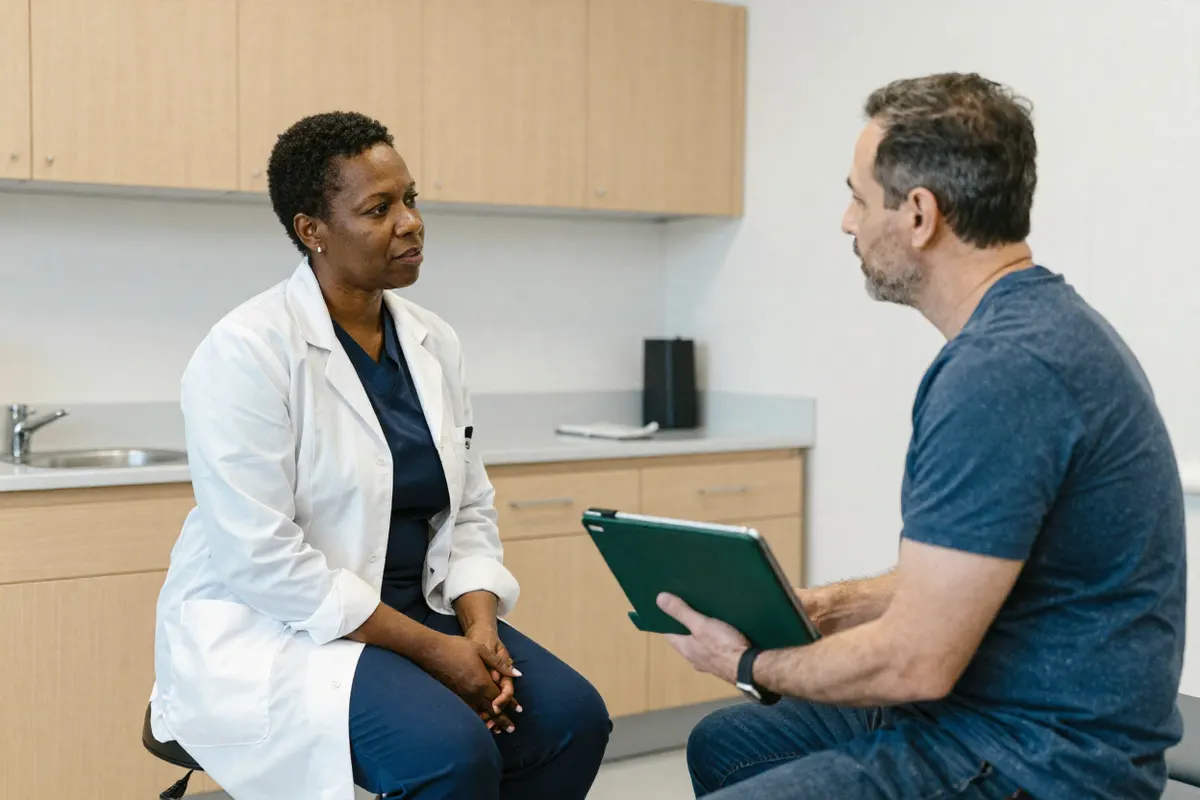
What the job is
Nurse practitioners (NPs) and physician assistants (PAs) are licensed providers who do much of what people picture a doctor doing: they take a history, examine, diagnose, order and read tests, and prescribe. An NP is an experienced registered nurse with a graduate degree and a national board certification; a PA graduates from an accredited PA program and passes a national exam. Hospitals and clinics hire both as advanced practice providers (APPs). Nurse anesthetists (CRNAs) and certified nurse midwives (CNMs) are advanced practice nurses too, with their own programs and exams.
A typical shift
- See your own schedule of patients: take the history, examine, and decide what is going on
- Order labs and imaging, read the results, and explain them to the patient
- Prescribe medicines, adjust doses and manage chronic conditions over many visits
- Write the visit note and code it so the practice can bill for it
- Round on hospital patients, admit and discharge, or assist in surgery, depending on the specialty
- Talk with the physicians, nurses and specialists on your team about patients who need more
What a shift looks like
A primary care morning
Your first patient has diabetes and a rising A1c. You review the labs, change one medicine, order a kidney test and set a follow-up in three months. The next patient is a child with an ear infection and a worried parent who needs a clear plan. If a GLP-1 medicine comes up with that first patient, GLPcompare's table of results, a site we operate as well, lists A1c and weight figures from each medicine's own trial, separate trials rather than a ranking.
An urgent care evening
A construction worker comes in with a deep cut on his hand. You check the tendons and nerves, numb and close the wound, update his tetanus shot and decide he does not need a hand surgeon tonight, then explain what signs should bring him back.
Hospital medicine
On a hospitalist team you pick up overnight admissions at 7 a.m., examine each patient, adjust IV fluids and antibiotics, and call the cardiologist about a troponin that went up. By afternoon you are writing discharge orders and medicine lists for three patients going home.
Who does well in this job
People who want to make the clinical decisions, not only carry them out, and who are ready for years of graduate study first. Most NPs come from bedside nursing (ICU, emergency, med-surg, labor and delivery, psych). Many PAs worked as medical assistants, EMTs, scribes, CNAs or techs before PA school. Those who thrive like puzzles, can say "I don't know yet, let's find out" to a patient, and are comfortable owning a decision and its follow-up.
You will likely enjoy it if
- You already work in patient care and keep wanting to know why a doctor chose a treatment
- You can sit through a long graduate program with clinical rotations while managing money and family
- You are comfortable being the one who signs the prescription and answers for it
- You like steady relationships with patients, or the pace of urgent and acute care, and can tell which
What you need
- NP: an RN license, a BSN, and a graduate NP degree (MSN or DNP) from an accredited program
- PA: a bachelor's degree with science prerequisites, then a graduate program accredited by ARC-PA
- A national board exam: AANPCB or ANCC (NPs), the PANCE (PAs), the NCE (CRNAs) or the AMCB exam (midwives)
- A state license to practice, plus a DEA registration to prescribe controlled substances
Skills that help
Your path into the job
- 1Pick the route that fits where you are: NP if you are (or will be) an RN, PA if you are coming from another background
- 2Get the base: a BSN and RN license with real bedside experience for NP, or a bachelor's degree, science prerequisites and paid patient care hours for PA
- 3Choose an accredited program (CCNE or ACEN for NP, ARC-PA for PA) and check its board pass rate, clinical placements and cost
- 4Finish the program, then pass your national board exam and apply for your state license and DEA registration
- 5Apply to new-graduate APP fellowships or to clinics that train new grads, and start credentialing as soon as you have an offer
- 6Use the first year to build speed and judgment with a collaborating physician or senior APP you can call
Common misconceptions
Myth: NPs and PAs are just assistants who follow a doctor's orders.
Reality: Both diagnose, treat and prescribe on their own license. How much physician involvement the law requires depends on the state and the role, and many NPs practice with full authority.
Myth: An NP and a PA are the same job with different letters.
Reality: The day-to-day work often looks alike, but the training differs: NPs are nurses trained in one patient population (family, adult, psych, pediatrics), while PAs train generalist in the medical model and can move between specialties more easily.
Myth: Online NP programs mean you can become an NP quickly without experience.
Reality: Every NP program requires supervised clinical hours with real patients, and graduates still need to pass a board exam. New NPs with little nursing experience often find the first job hardest to land.
What it pays
Open NPs & PAs jobs that post a rate typically pay $65–$150/hr today, with a live median of $75 an hour across the 5,320 open jobs that state one.
The complete guide
Everything about NPs & PAs jobs
Written by CareJobs.Now
CareJobs.Now reads every job and the pay it states from the employer's own job board each night, and takes a job down once its employer does.
How to become a nurse practitioner or physician assistant in 2026: the work, the programs, the boards and the first job
[Nurse practitioners are the fastest-growing occupation in the United States: BLS projects their jobs to grow 41% from 2025 to 2035](https://www.bls.gov/emp/tables/fastest-growing-occupations.htm) - BLS. Physician assistants are not far behind at 21.1% - BLS, and together the two professions now count more than 461,000 licensed NPs - AANP and more than 201,000 board-certified PAs - NCCPA.
Those numbers draw a lot of people in, and many of them are surprised by what the path really takes. An NP is a registered nurse who goes back to graduate school; a PA is trained in a medical-model graduate program after a bachelor's degree and real patient care experience. Both spend years in school with hundreds or thousands of supervised clinical hours, pass a national board exam, and then face a first year in which they make diagnoses and prescribe medicines on their own license, often faster than they feel ready to.
This guide is for nurses, techs, medical assistants, EMTs, scribes and career changers deciding whether to become an NP, PA, nurse anesthetist (CRNA) or nurse midwife (CNM). It covers what each provider actually does, a clinic day hour by hour, the training routes and how to choose a program, the board exams and state licenses (including how practice authority differs by state), getting the first job, the career ladder, and the hard parts. If you mainly want pay figures by state, setting and specialty, the companion guide on NP and PA jobs and pay covers that in depth.
Contents
- What NPs, PAs, CRNAs and midwives really do
- A primary care day, hour by hour
- Training paths: the NP, PA, CRNA and midwife routes
- Board exams, state licenses and practice authority
- Getting your first NP or PA job
- The career ladder and what each step takes
- The hard parts and how providers handle them
- Outlook and how to decide
1. What NPs, PAs, CRNAs and midwives really do
Hospitals and clinics call this whole group advanced practice providers (APPs). They examine patients, diagnose, order and interpret tests, and prescribe treatment, which is most of what people picture a doctor doing. The differences between them come from how they were trained, which board licenses them and, for NPs, which patient population they are certified to treat.
Nurse practitioners are one of four advanced practice registered nurse (APRN) roles. Under the national APRN Consensus Model, the four roles are certified nurse practitioner, certified nurse midwife, certified registered nurse anesthetist and clinical nurse specialist, and each NP is educated and certified in one of six population foci: family/individual across the life span, adult-gerontology, women's health/gender-related, pediatrics, neonatal, or psychiatric/mental health - NCSBN. Adult-gerontology and pediatric NPs are further split into primary care and acute care tracks.
That population focus is the first thing to understand about the NP route. A family NP (FNP) can see patients of any age in primary care, but an acute care NP certification is what many hospital ICU and inpatient jobs ask for, and a psychiatric NP (PMHNP) is the only NP certified to specialize in mental health. Choosing a track is choosing which jobs you will be eligible for.
NP versus PA
Physician assistants train differently. A PA program is a graduate program in the medical model, generalist by design, covering every specialty in rotations, and graduates take a single national exam. PAs who pass may use the credential PA-C, and every state requires a license - BLS. Because the training is generalist, a PA can move from orthopedics to emergency medicine to dermatology without a new certification, while an NP who wants to switch populations usually needs a post-graduate certificate.
| Role | Who it suits | Program | Accreditor | National exam | Licensed by |
|---|---|---|---|---|---|
| Nurse practitioner (NP) | Working RNs | Master's or DNP in one population focus | CCNE or ACEN | AANPCB or ANCC board exam | State board of nursing |
| Physician assistant (PA) | Bachelor's graduates with patient care experience | Master's, about 27 months | ARC-PA | PANCE (NCCPA) | State medical or PA board |
| Nurse anesthetist (CRNA) | ICU nurses | Doctorate | COA | NCE (NBCRNA) | State board of nursing |
| Nurse midwife (CNM) | RNs drawn to pregnancy and women's health | Master's or doctorate | ACME | AMCB exam | State board of nursing |
Sources: NCSBN, BLS, Physician Assistants, AAPA and COA standards.
In day-to-day work, NPs and PAs often hold the same job. Many hospitals post one "APP" opening and hire either. The differences that remain are legal: who licenses you, what your state requires for collaboration with a physician, and whether you can practice without one.
Where they work
Physician offices employ 46% of APRNs and hospitals 25%, with outpatient centers, other practitioners' offices and schools making up most of the rest - BLS. For PAs the split is 53% physician offices and 26% hospitals - BLS. Primary care, urgent care, hospital medicine, emergency medicine, surgery, orthopedics, cardiology, oncology, dermatology, psychiatry and women's health all hire APPs, and telehealth has added a large remote market.
CRNAs are the exception to the clinic pattern. They work in operating rooms, labor and delivery, endoscopy suites and procedure areas, giving anesthesia and managing patients through surgery. Nurse midwives manage pregnancy, birth and gynecologic care in hospitals, birth centers and clinics. Both are highly specialized from day one.
2. A primary care day, hour by hour
APP days vary enormously by specialty. The example below is a plausible day for a family NP or PA in a busy outpatient primary care practice seeing about 20 patients. It is a composite, not one real provider's day.
7:30 a.m. Inbox and prep. You log in before the first patient and clear the overnight inbox: lab results to review and sign, refill requests, patient portal messages, forms. You look at the day's schedule with your medical assistant, flag the patients due for diabetes labs, vaccines or cancer screening, and note anyone who needs an interpreter.
8:00 a.m. First patients. Your medical assistant rooms the first patient and takes vital signs. You walk in having read the chart: a 58-year-old with diabetes whose A1c has climbed. You take a focused history, examine her feet, review her medications and talk through options. You add a medicine, order a kidney test and schedule follow-up in three months. The visit lasts 20 minutes; the note will take five more.
9:00 a.m. Same-day sick visits. A child with ear pain and a fever, a worker with a back strain, a woman with urinary symptoms. Each needs a quick, accurate decision: treat, test or refer. You prescribe an antibiotic for one and explain why the next one does not need one, which takes longer than writing the prescription would have.
10:30 a.m. A visit that changes the day. A man in for a medication refill mentions chest tightness when he climbs stairs. You get an EKG in the room, examine him, and decide he needs same-day evaluation. You call the cardiology office, arrange the next steps, explain the plan to him and his wife, and document everything carefully. Your schedule is now 30 minutes behind.
12:00 p.m. Lunch and callbacks. You eat at your desk while returning calls about abnormal labs and signing prior authorization forms so patients can get their medications covered. If your state requires a collaborating physician, this is often when you run a complicated case by them.
1:00 p.m. Afternoon panel. Annual physicals, a depression follow-up where you adjust a medication and screen for safety, a pre-operative clearance, a new patient with years of untreated high blood pressure. Every visit ends with orders, a plan and a note, and many end with coding the visit so the practice can bill for it.
4:30 p.m. Charting. The last patient leaves. You finish notes, review afternoon results and answer the portal messages that arrived during the day. Many primary care providers spend an hour or more on documentation after clinic, sometimes from home. Reducing that "pajama time" is one of the main things to ask about when you interview.
Hospital, emergency and procedural APP jobs look entirely different. A hospitalist NP or PA rounds on a list of admitted patients, writes orders, admits from the emergency department and plans discharges, often on seven-days-on, seven-days-off blocks. An emergency PA works shifts and sees whoever comes through the door. A CRNA's day is a series of anesthetics in operating rooms. If you can, shadow in two or three settings before you choose a program track.
3. Training paths: the NP, PA, CRNA and midwife routes
Every advanced practice route requires graduate school, but the starting points differ. The NP, CRNA and midwife routes start with a registered nurse license, which means first becoming an RN (our guide to becoming a nurse covers that). The PA route starts with a bachelor's degree in any subject plus science prerequisites and patient care experience.
APRNs must earn at least a master's degree in one of the APRN roles, hold an RN license and a state APRN license, and pass a national certification exam - BLS. PA programs typically require a bachelor's degree and patient care experience, and run at least two years of postbaccalaureate study - BLS.
The NP route
NP programs come in several shapes, and the choice affects time and cost more than the final job. Most students follow one of these routes:
- MSN with an NP track: the most common credential, usually two to three years part time for a working RN.
- BSN-to-DNP: a doctoral route that adds leadership, quality and research coursework; 322 schools offered this post-baccalaureate DNP in 2025 - AACN.
- Post-graduate certificate: for NPs adding a second population focus, such as an FNP adding psychiatric certification.
- RN-to-MSN bridge: for ADN or diploma nurses, with BSN-level coursework built in - BLS.
The DNP is growing fast: 44,976 students were enrolled in DNP programs in 2025, and 452 schools enroll DNP students - AACN. A DNP does not give you a different license or a different scope of practice than an MSN NP. It does give you a terminal degree that helps with leadership and faculty roles, and DNP graduates had the highest first-time pass rate on the AANPCB family NP exam (see Section 4).
Clinical hours are where NP programs differ most, and where the quality of your education is decided. The 2022 national task force standards for NP education require every NP track to include at least 750 direct patient care clinical hours, and simulation does not count toward that total - APEA. Schools are still phasing the standard in.
The single biggest warning about NP programs is clinical placement. Many programs, especially large online ones, require students to find their own preceptors: practicing NPs or physicians willing to supervise them for free, for hundreds of hours. Students who cannot find a preceptor can be stuck for a semester or more. Before you enroll, ask directly: does the school guarantee and arrange clinical placements, or do I find my own? A program that places its students is often worth a higher price.
The PA route
PA school is a full-time, intense, two-plus-year sprint. A typical program runs about 27 continuous months, and by graduation students have completed roughly 2,000 hours of supervised clinical practice across specialties - AAPA. The first year is classroom work (anatomy, physiology, pharmacology, clinical medicine); the second is rotations in family medicine, internal medicine, surgery, emergency medicine, pediatrics, women's health, behavioral health and electives.
It is also expensive. Average tuition for a 27-month program was about $98,075 for residents and $107,288 for nonresidents in the 2025 to 2026 cycle, citing PAEA data - SoFi. Because programs are full time and discourage outside work, living costs usually go on loans as well. PA applicants should plan the finances as carefully as the application.
Getting in is competitive. Programs look for strong science grades, prerequisite courses, and paid, hands-on patient care experience before admission. That is why so many PAs start as medical assistants, EMTs, CNAs, scribes, phlebotomists or techs: those jobs are both the experience programs want and a test of whether you like patient care. Our guides to becoming a medical assistant and becoming an EMT or paramedic cover two of the most common starting jobs.
The CRNA route
Nurse anesthesia is the longest and most selective APRN route. Programs admit RNs with a bachelor's or graduate degree, an unencumbered RN license and at least one year of full-time critical care experience, and students accepted on or after January 1, 2022 must graduate with a doctoral degree - COA. Many applicants bring more than the minimum.
The clinical training is heavy and precisely counted. Accredited programs require at least 2,000 clinical hours and a minimum of 700 anesthetic cases across patient types and procedures - COA. Most programs ask students not to work during the program, so the route requires real savings.
The midwife route
Certified nurse midwives are RNs who complete a graduate midwifery program accredited by ACME and pass the American Midwifery Certification Board (AMCB) exam, whose fee is $425 - AMCB. Midwifery is a small field, with about 8,200 jobs in 2025 - BLS, so programs and jobs are concentrated in particular regions. Labor and delivery nursing experience is the usual starting point.
How to choose a program
For every route, the same few questions separate strong programs from weak ones. Ask each program for real numbers before you commit.
- Accreditation: CCNE or ACEN for NP programs, ARC-PA for PA, COA for nurse anesthesia, ACME for midwifery.
- Board pass rate: first-time pass rates for the last three to five years, compared with the national rate.
- Clinical placements: whether the school arranges them, and in which settings.
- Total cost: tuition, fees, equipment, travel to rotations and months without income.
- Outcomes: attrition, and where recent graduates got jobs.
Clinical placements and pass rates matter most. A cheap online NP program that leaves you searching for preceptors, or a PA program with board results well below the national rate, can cost you a year of income. Also check that the program meets the licensing rules of the state where you plan to work, which matters most for online programs.
Paying for it
Many employers help working RNs pay for NP school through tuition assistance, and some hospital systems offer it in exchange for a commitment to stay after graduation. Read those agreements carefully: a commitment to remain in an RN role for two years after you graduate can delay your first NP job. Federal and state loan repayment programs exist for providers who work in shortage areas, and they can be worth more than a higher salary early on.
4. Board exams, state licenses and practice authority
After graduation, every advanced practice provider goes through the same three gates: a national board exam, a state license, and (for most) a federal DEA registration to prescribe controlled substances. Credentialing with the employer and with insurers comes after that.
NP board exams
NPs certify through one of two main boards. For family NPs, the American Academy of Nurse Practitioners Certification Board (AANPCB) exam costs $240 for AANP members and $315 for others when you apply online, and the ANCC exam costs $395 for non-members, $295 for ANA members and $340 for AANP members - UWorld. Both lead to national board certification; compare their test outlines and pick the one whose format suits you.
AANPCB reports that 81% of first-time takers passed its family NP exam in 2025, out of 15,395 initial exams, with 85% passing its psychiatric NP exam and 82% its adult-gerontology primary care exam - AANPCB. Pass rates also differed by degree:
About one in five first-time family NP candidates fails, which is a much higher failure rate than many students expect. Treat board preparation as a separate project: a structured review course, thousands of practice questions and a scheduled exam date within a few months of graduation, while the material is fresh.
PA board exam
PAs take the Physician Assistant National Certifying Examination (PANCE), given by NCCPA, after graduating from an ARC-PA accredited program. The national first-time pass rate was 91% in 2025, after 92% in each of the three years before - NCCPA report, via Missouri State. PAs then maintain certification with continuing education and a recertification exam on a set cycle - BLS.
CRNA and midwife exams
New nurse anesthetists take the National Certification Examination from NBCRNA, a computerized adaptive test of 100 to 170 questions with a three-hour limit, which can be taken up to four times in the year after finishing a program - NBCRNA. NBCRNA certifies more than 63,000 CRNAs - NBCRNA. Midwives take the AMCB exam described above.
| Exam | Who takes it | Fee | Latest first-time pass rate |
|---|---|---|---|
| AANPCB family NP | Family NPs | $240 member, $315 non-member - UWorld | 81% in 2025 - AANPCB |
| ANCC FNP-BC | Family NPs | $295 to $395 by membership - UWorld | Check ANCC |
| AANPCB psychiatric NP | Psychiatric NPs | Check AANPCB | 85% in 2025 - AANPCB |
| PANCE | PAs | Check NCCPA | 91% in 2025 - NCCPA report |
| NCE | CRNAs | Check NBCRNA | Check NBCRNA |
| AMCB | Nurse midwives | $425 - AMCB | Check AMCB |
Fees and pass rates change every year, so check the certifying board's own site before you register. The cells marked "check" are figures we could not confirm from the board itself.
State licenses and practice authority
The national exam makes you board certified; the state makes you licensed. NPs apply to the state board of nursing for APRN licensure (on top of their RN license), and PAs apply to the state medical or PA board. Note that the multistate Nurse Licensure Compact covers RN and LPN licenses only: NP authority is still granted state by state.
What you may do with that license depends heavily on the state. The American Association of Nurse Practitioners sorts states into three groups - AANP:
- Full practice: NPs evaluate, diagnose, order tests and prescribe under the state board of nursing alone.
- Reduced practice: state law requires a career-long collaborative agreement, or limits the setting of at least one element of practice.
- Restricted practice: state law requires career-long supervision, delegation or team management by another provider.
Roughly 30 states and Washington, D.C., grant NPs some form of full practice authority, up from 22 in 2020 - CMF Group. Many full practice states still require a transition period first. Florida, for example, lets NPs register for autonomous practice only after 3,000 clinical practice hours within the previous five years plus graduate coursework in differential diagnosis and pharmacology, and only in primary care fields - Florida Statutes 464.0123.
PAs work under a different framework. Most states require PAs to practice in some kind of relationship with physicians, called supervision, collaboration or a practice agreement depending on the state, and the details are set by the state medical or PA board. In practice, most PAs work inside physician-led groups or hospital departments, so the paperwork matters more than the day-to-day reality.
DEA registration and credentialing
To prescribe controlled substances (for pain, ADHD, anxiety or addiction treatment, for example), you need a state controlled substance registration in some states and a federal DEA registration, which costs $888 for three years for a medical practitioner - DOJ Office of the Inspector General. Many employers reimburse it.
After licensing comes credentialing: the employer verifies your education, license, board certification and history, and enrolls you with insurers so it can bill for your visits. It often takes months and is a common reason new APPs start later than planned. Start credentialing paperwork the day you sign an offer.
5. Getting your first NP or PA job
New APPs do get hired, but the first job is harder to land than the national growth numbers suggest. The supply of new NPs is growing quickly, and new graduates in popular metro areas often compete with experienced providers. Rural areas, psychiatry, hospital medicine and primary care for underserved communities are usually easier entry points.
Employers screening new graduates look for evidence that you will be safe and productive quickly. The strongest signals are your prior clinical experience (as an RN, or as a medical assistant, EMT or tech before PA school), your rotations in the specialty you are applying for, strong preceptor references, and board certification or a scheduled exam date.
Fellowships and residencies
The best on-ramp for a new APP is a postgraduate fellowship or residency: a paid year of structured training in a specialty, with protected learning time and close supervision. CCNE accredits nurse practitioner fellowship and residency programs as a distinct program type - CCNE, and many large health systems run fellowships for both NPs and PAs in emergency medicine, critical care, hospital medicine, surgery, oncology, psychiatry and primary care.
Fellowships often pay less than a regular job for that year, but they shorten the painful part of the transition and open specialties that rarely hire new graduates directly. Right now 81 NP and PA jobs on this site mention a fellowship, and 98 mention new graduates.
Where new APPs get hired
Primary care practices, urgent care chains, hospital medicine groups, retail and community health clinics, and telehealth companies hire the most new graduates. Specialty practices hire new graduates when you rotated with them or completed a fellowship. Large systems such as Kaiser Permanente, Mayo Clinic and Cleveland Clinic post APP jobs across many specialties; browse every hiring company in our employer directory and narrow by state on our state pages.
Right now 25,063 NP, PA, CRNA and midwife jobs are open on this site. Read new-graduate postings carefully: look for words like "onboarding," "orientation" or "mentorship," and a named collaborating physician or senior APP, and be cautious about jobs where a new graduate would be the only provider on site.
Resume and interview points
A new APP resume leads with your board certification and license status, then your clinical rotations by specialty and hours, then your prior healthcare experience (your RN years by unit, or your patient care jobs before PA school). Name what you did in each rotation: procedures, patient volumes, the kinds of patients you managed. Keep it to two pages.
APP interviews often include clinical case questions: a patient with chest pain in clinic, a febrile infant, an elderly patient on ten medications. Interviewers want to see your reasoning, your safety net (what would make you escalate) and your honesty about what you do not know. Ask your own questions too: how many patients a day new providers see in the first month and the sixth month, how much time is protected for charting, who you call with a question, and how productivity bonuses work. Our guides to how hospital hiring works and healthcare job interviews cover the process step by step.
6. The career ladder and what each step takes
The advanced practice ladder starts long before graduate school. For the NP route, it starts with years as an RN; for the PA route, with patient care jobs that build the hours programs want.
Before school. NP applicants usually benefit from at least two years of RN experience in the area they plan to practice: ICU or emergency for acute care tracks, mental health units for psychiatric tracks, primary care or med-surg for family tracks. Some programs admit new RNs, but students with little nursing experience often struggle in clinical rotations and in their first job search. PA applicants build patient care hours through paid jobs.
First years in practice. The first year is about building speed and judgment. Most new APPs start with a lighter schedule that ramps up over three to six months. By year two or three, most providers carry a full schedule and have a sense of whether they want to stay in their specialty.
Specialty and second certifications. NPs who want to switch populations add a post-graduate certificate (for example, an FNP adding psychiatric certification, one of the most common moves). PAs can move between specialties by changing jobs, often with a short training period, and can earn optional specialty certificates.
Leadership and teaching. Experienced APPs move into lead APP and APP director roles that manage scheduling, onboarding and quality for a department. Others teach: NP and PA programs need faculty and clinical preceptors, and a DNP or doctoral degree helps for faculty roles.
Independent practice. In full practice states, NPs can open their own practices after meeting the state's transition requirements. That is a business decision as much as a clinical one: billing, insurance contracts, staff and marketing all become your job.
The CRNA path. For NPs and RNs, nurse anesthesia is a separate route rather than a next step: you return to school for a doctorate after ICU experience. The median nurse anesthetist earned $236,590 in May 2025, against $132,300 for NPs - BLS, and the companion pay guide breaks down what each role earns by setting and state.
7. The hard parts and how providers handle them
Advanced practice is a rewarding career, and many APPs say they would choose it again. It also carries specific strains that are worth knowing in advance.
The responsibility jump
The hardest part of the first year is not a skill; it is being the person who decides. As an RN or a tech, someone else signed the order. As an APP, you diagnose, prescribe and answer for it, often with a full schedule and limited time per patient. The transition is hardest in settings where a new provider works alone or the collaborating physician is rarely on site.
What helps is structure. A fellowship or a job with formal onboarding, a named person to call, regular case review and a ramped schedule makes an enormous difference. When you choose your first job, weigh those things more heavily than a salary difference of a few thousand dollars.
Productivity pressure and documentation
Many APP jobs are paid partly on productivity, and productivity expectations keep rising. MGMA found that APPs in private practice saw encounters rise 39.33% in 2024 alone - MGMA. More visits mean more notes, more inbox messages and more prior authorizations, and documentation takes a large share of every day.
People cope by negotiating protected administrative time, using templates and smart phrases, working with a strong medical assistant, and choosing settings that use scribes or documentation tools. Ask about all of these before you accept an offer, and be wary of jobs that expect new graduates to reach full productivity in the first month.
Physical and emotional strain
APRN work can be physically demanding and stressful because of the critical decisions involved, and providers face infection risks such as needle sticks; hospital APPs may work nights, weekends, holidays and on call - BLS. CRNAs and hospital APPs face long shifts and high-acuity patients; outpatient APPs face long days of back-to-back visits.
Burnout prevention looks similar to nursing: schedules that allow recovery, a team you can debrief with, limits on how much charting happens at home, and willingness to change settings if one is wearing you down. One advantage of advanced practice is how portable the role is: an emergency PA who needs a change can move to urgent care or a specialty clinic without retraining.
Liability and scope
Because you hold your own license and prescribe, you carry malpractice risk. Make sure your employer provides adequate malpractice coverage and understand whether it includes tail coverage if you leave. Stay within your scope of practice and your training: an FNP who takes an inpatient ICU job without acute care certification, or a provider who prescribes outside the state rules, puts both patients and their license at risk.
Debt and opportunity cost
Graduate school costs money and income. A working RN who studies part time keeps earning, but a PA student, an accelerated NP student or a CRNA student usually stops working for two to three years. Run the numbers before you apply: tuition, living costs, lost income and the realistic first-job salary in your area. The NP and PA jobs and pay guide has the salary side.
8. Outlook and how to decide
The long-term outlook is excellent. BLS projects 41% growth in NP jobs and 21.1% in PA jobs from 2025 to 2035 - BLS, and about 32,200 openings a year for the APRN group as a whole - BLS. BLS ties the growth to an aging population, more chronic disease, team-based care, states widening APRN practice authority and growing acceptance of APRNs as primary care providers - BLS.
Hospital APPs are also among the most stable workers in healthcare. In NSI's 2026 hospital survey, annual turnover was 9.8% for NPs and 10.3% for PAs, well below the 17.6% for staff RNs - NSI Nursing Solutions. The main risk is local: new graduates in crowded markets may need to be flexible about setting or location for their first job.
Telehealth keeps widening the market, especially for psychiatric NPs. Right now 461 NP and PA jobs on this site are listed as remote, which our remote healthcare jobs page gathers in one place. Our guide to the fastest-growing healthcare jobs in 2026 puts these roles in context with the rest of the field.
A decision framework
Advanced practice is probably a good fit if most of these are true:
- You want to decide: you want to make the diagnosis and the plan, not carry out someone else's.
- You can afford school: you can fund two to four years of graduate study, or keep working while you study.
- You like reasoning under uncertainty: you are comfortable saying "I'm not sure yet, let's find out."
- You have, or will get, patient care experience: years as an RN, or real hours as a medical assistant, EMT or tech.
Then choose the route that matches where you are now. If you are already an RN, the NP route builds on your license and your experience, and the CRNA route rewards ICU nurses willing to commit to a doctorate. If you are not a nurse and want the fastest route to a provider role, PA school is usually shorter than becoming an RN and then an NP. If you want the broadest flexibility to switch specialties over a career, the PA's generalist training is an advantage. And if you want to lead the whole medical team, own the most complex cases or perform major surgery, compare these routes with the physician path.
How to start this month
There are concrete steps you can take in the next few weeks. If you are an RN, ask your manager and two NPs you work with what they would do differently, check your employer's tuition benefits, and shortlist accredited programs that arrange clinical placements. If you are heading for PA school, start tracking your patient care hours, check prerequisite courses against three target programs, and shadow a PA. Whichever route you choose, look at the NP and PA jobs on this site in the city where you want to work and note which certifications and specialties employers ask for; right now postings that state pay typically offer $65 to $150 an hour.
Advanced practice takes years of school and a hard first year. In return, it gives you the authority to diagnose and treat, one of the fastest-growing job markets in the country, and a career that can move between clinics, hospitals, specialties and states.
This guide reflects NP, PA, CRNA and midwife education, board exam and state practice rules as of October 2026. Rules, fees and pay change: check the linked source before you rely on a figure.
Frequently asked questions
What is the difference between an NP and a PA?
An NP is a registered nurse with a graduate NP degree and board certification in a patient population, licensed by the state board of nursing. A PA graduates from an ARC-PA accredited program, passes the PANCE from the NCCPA, and is licensed by the state medical or PA board. See the full comparison in our NP and PA guide.
Can NPs practice without a doctor?
It depends on the state. In 2026 AANP classes 27 states and Washington, D.C. as full practice, 12 states as reduced practice and 11 as restricted, where a career-long collaboration or supervision agreement is required - AANP.
How much do NPs and PAs earn?
The US median was $132,300 a year for nurse practitioners and $135,880 for physician assistants in May 2025 - BLS. For pay by state and what open jobs offer right now, see NP and PA jobs and pay.
Is there demand for new nurse practitioners?
Yes. BLS projects nurse practitioner jobs to grow 41% from 2025 to 2035, the fastest of any occupation it tracks - BLS. New grads still compete for the best posts, so a fellowship or a strong clinical rotation helps.
Do CRNAs need a doctorate?
Yes, for anyone starting school now. Students accepted into accredited nurse anesthesia programs on or after January 1, 2022 must graduate with a doctoral degree, and programs require at least one year of full-time critical care RN experience - COA standards.
Related kinds of job
Registered Nurses & LPNs
Licensed nurses who assess, treat, give medications and watch over patients around the clock.
Physicians & Surgeons
Doctors who diagnose and treat illness, lead the care team and take final responsibility for complex patients.
Mental Health & Social Work
Help people through mental illness, addiction and crisis, from the psych unit floor to the therapy room.